Quick Answer
A biscuit production line upgrade should target the loss that takes the most saleable product out of a representative shift. Start by linking timestamped events to actual finished output. A former that never stops can still be the underlying cause of packer rejects if it sends irregular pieces downstream. A visually worn conveyor may need maintenance without limiting dispatch. Decide which fault initiates the loss, what should remain, and which measure will prove the improvement.
Review mixing and feeding when dough batches arrive late or unevenly. Review forming tools and transfers when defects recur by lane or speed. Investigate baking where color or moisture variation begins in the oven. Target cooling and packing when acceptable biscuits reach the exit but fail before the warehouse. A controls update can be useful if it preserves the required product settings and improves diagnosis or coordination.
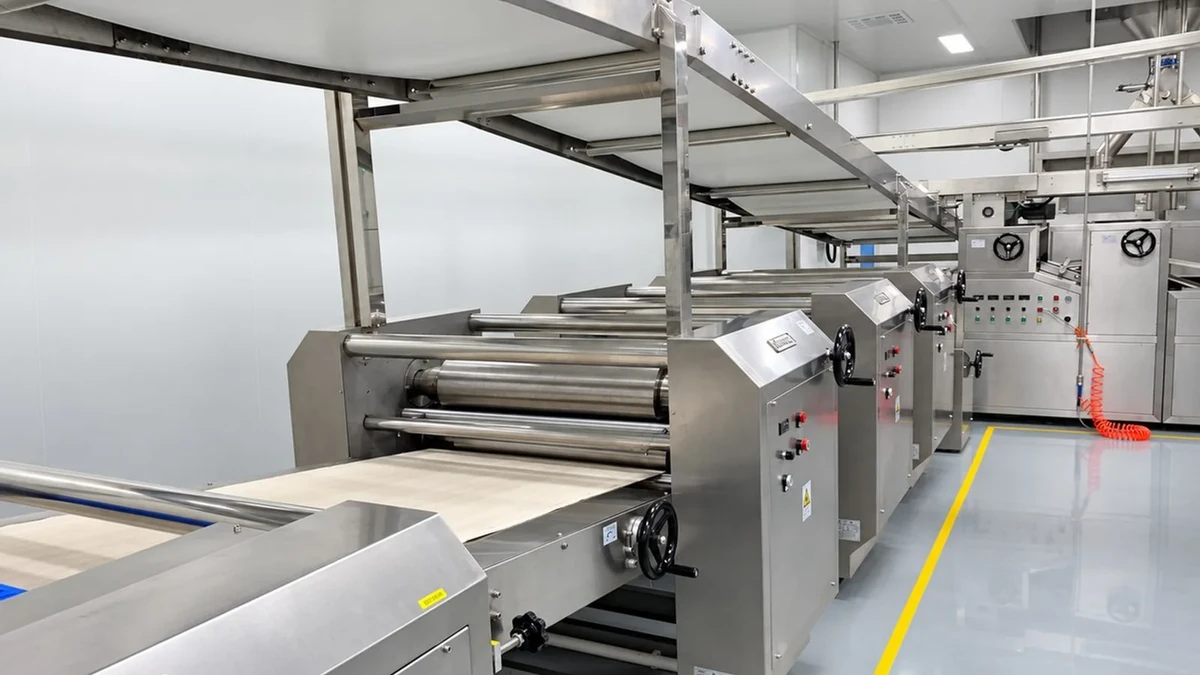
The owner of every retained interface should participate in the specification. Use the Wanttone complete biscuit line category to identify module boundaries, and compare them with your own layout and serial-number records. Agree the baseline, expected output and compatibility checks before ordering an upgrade.
Keep the work tied to a decision. If record quality is too low to separate lost time from lost yield, begin with measurement rather than naming a replacement station. Have maintenance, production and quality agree where the first observable failure occurred.
How Do You Build a Baseline That Separates Causes From Symptoms?
Choose at least one recurring product and take data across normal starts, steady production, planned changes and recovery from faults. Use a common clock on line events and quality records. Record planned opportunity, stopped or restricted minutes, raw input, good pieces and accepted packed weight. Record when a feeder was starved and whether downstream equipment had already requested a stop.
Use the following sample to understand the arithmetic. In a hypothetical 420-minute opportunity window, an analyst assigns 78 minutes of interruption to four nonoverlapping initiating causes. Assign each interval once. Oven cleanup or cooling congestion can extend the interval, so record its consequences in a separate field rather than adding a second event with the same time span.
The forming transfer represents about 54% of the sample interruption total and 10% of the opportunity window. It deserves investigation before the next capital decision. Confirm whether a change in dough, tooling, conveyor alignment or upstream loading explains the behavior, then observe a controlled trial. This example compares time only. A different problem may deserve first priority if it creates more rejects, hygiene risk or customer returns.
| First verified cause | Minutes lost | Share of 78 lost minutes |
|---|---|---|
| Forming transfer fault | 42 | 53.8% |
| Packer indexing recovery | 18 | 23.1% |
| Dough feed wait | 12 | 15.4% |
| Other distinct events | 6 | 7.7% |
Which Station Should You Upgrade for Each Repeated Loss?
Follow a product sample and a stop event through the relevant stages. An upstream station may produce a subtle defect that only becomes visible later. Compare raw-piece mass and geometry with baked dimensions and the position of breakage. If the fault moves with a tooling lane, inspect that lane. If it moves with batch or recipe, investigate the material and setup before ordering equipment.
Ask which measurable variable the upgrade changes. A feed control package targets a supply problem only if representative dough arrives in a repeatable condition. A conveyor change should alter transfer behavior or changeover access. A packing modification should address a documented mismatch between product arrival and available cycles. A general requirement such as better efficiency is difficult to commission.
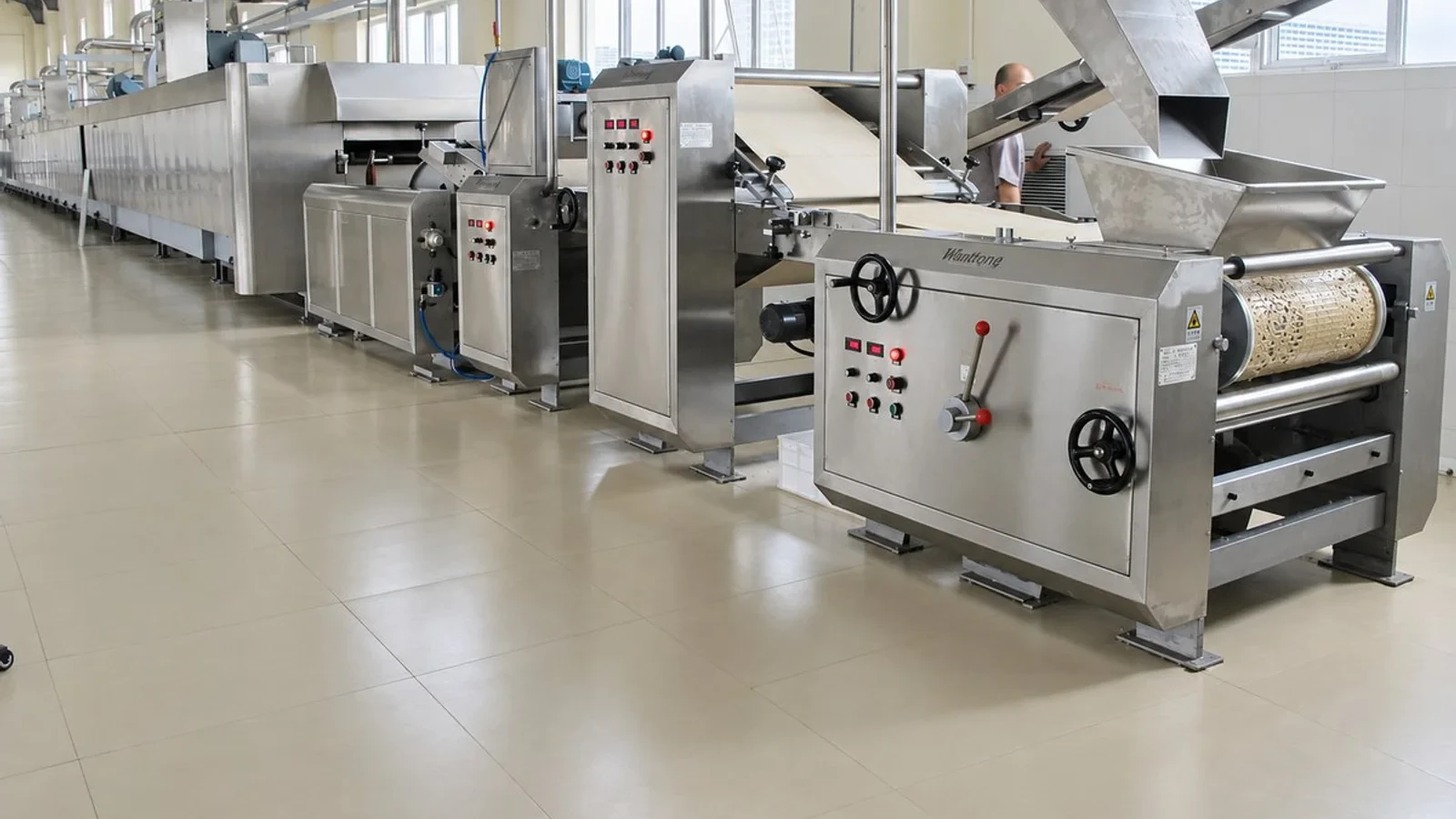
The manufacturer publishes different forming configurations for its soft and hard biscuit production line. Confirm which route and stations are in your plant. A tooling strategy for moulded short dough has different requirements from a sheeted hard-biscuit route.
| Symptom | Check before ordering | Candidate work boundary |
|---|---|---|
| Batch starvation | Mixer discharge timing and feeder coverage | Buffer, transfer or feed controls |
| Distribution error across lanes | Piece mass by lane and tooling positions | Forming setup, tooling or transfer |
| Color or residual moisture drift | Zone history, loading and dwell | Oven or thermal control intervention |
| Clean exit, damaged packs | Fragile handling and wrapper cadence | Cooling transfer, accumulation or infeed |
| Long restarts | Alarm sequence and operator settings | Controls, documentation and training |
When Does Maintenance Solve More Than a Machine Upgrade?
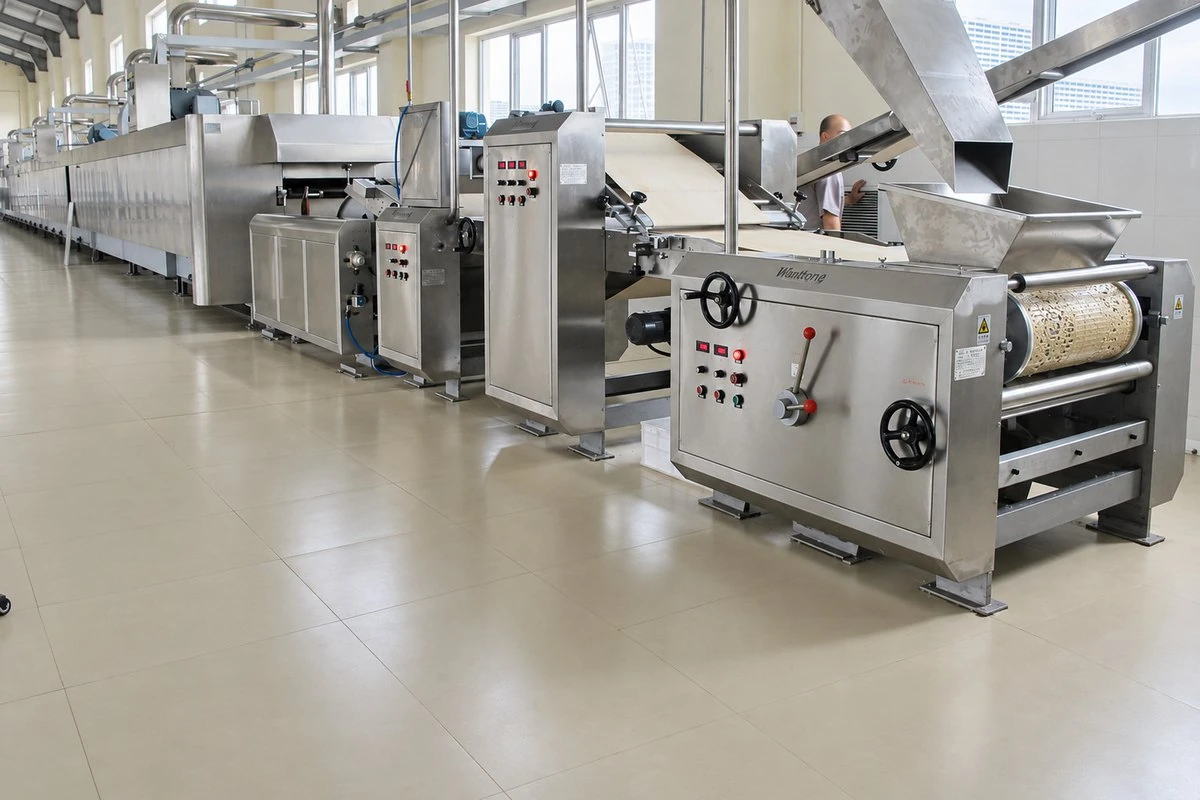
Preserve the approved performance envelope whenever the machine still suits the product and the cause can be corrected reliably. Returning a worn part to its documented function can eliminate a loss without creating new interfaces. Follow inspection history, recurring repairs and measured condition. Several like-for-like replacements that fail for the same reason are a signal to investigate the system around the part.
An upgrade changes a capability or addresses a repeatable limitation that maintenance alone cannot resolve. For example, poor hopper feed distribution might return after every repair if the upstream discharge method consistently concentrates dough on one side. Confirm the cause and ask the proposed supplier what product and width it used to validate a change. Leaving that question open creates the risk of buying a package with little effect on the production condition.
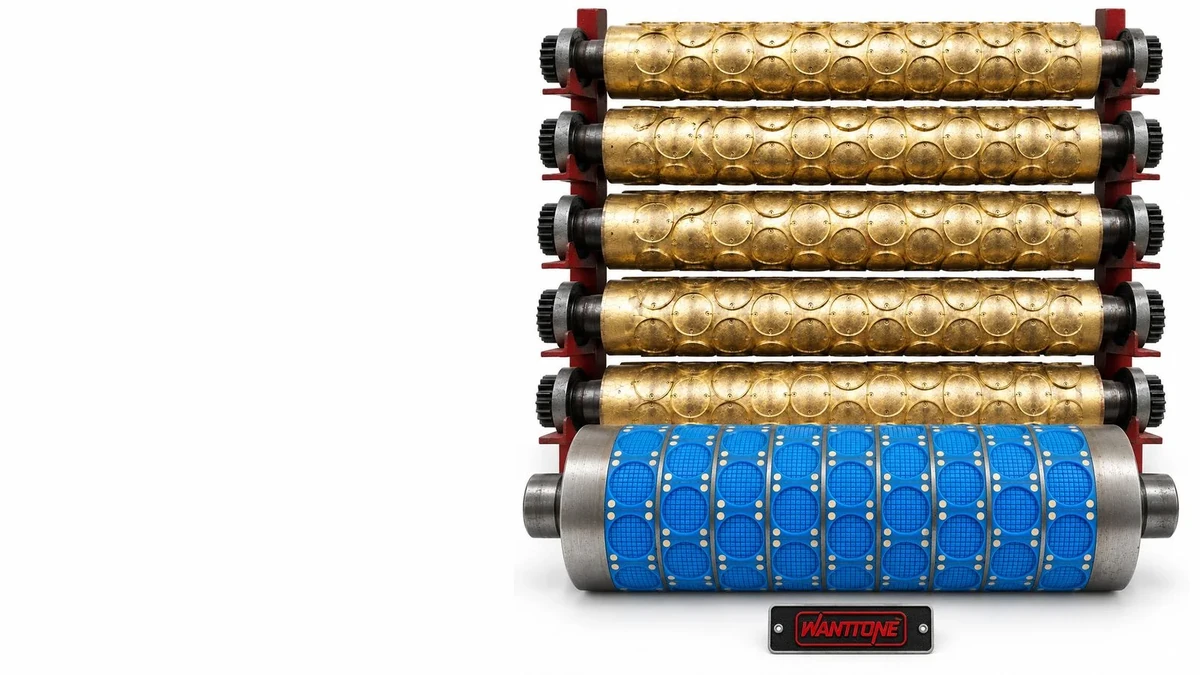
Correct immediately any issue that the responsible team identifies as affecting safe operation or product release. For everything else, compare evidence from the current machine, expected improvements and the effect on neighboring stations. Ask which changes can be reversed during testing and which will require a planned outage. The Wanttone forming equipment range is useful for separating a tool, a former and its feeding equipment in that discussion.
| Decision | Maintenance | Targeted upgrade |
|---|---|---|
| Objective | Restore established function | Change documented capability |
| Evidence | Wear, damage or drift from approved condition | Repeatable limit after good condition confirmed |
| Interfaces | Confirm correct part and existing setting | Verify mechanical, utilities, controls and operating states |
| Trial focus | Recovery of existing behavior | Sustained gain without shifting the loss |
How Do You Specify a New Module for a Retained Line?
Survey the physical line during stable product running and at changeover. Record centerline, belt width and product-bearing height at both ends of the work boundary. Document normal and minimum speeds, direction and the batch or continuous flow mode. Allow the manufacturer to inspect the product transfer itself, including any bridge, scraper, support or gap that affects fragile pieces.
Build a concise controls description. List the producer and consumer of each relevant request, such as downstream ready, controlled stop and fault clearance. Capture what happens to product already committed to an oven when a forming section changes state. Verify the operation under expected interruptions with the equipment supplier and plant engineering team. An identical connector can carry different timing or logic.
Collect manuals, serials, current drawings and any previous modifications. Compare the survey with the retained drawing and mark which dimensions came from observation. Label photographs with the direction of product flow. The instrumentation list should say where each existing signal originates and whether it will be retained, remapped or removed with the station.
For hard products, inspect the route between sheeting and cutter and the web return with the supplier. For moulded products, verify extraction and the first transfer after release. Discuss acceptable interfaces using the rotary cutter or rotary moulder reference to make the proposed boundary easier to communicate. Exact machine variants and drawings govern the replacement module.
How Can You Estimate Recovered Output Before Ordering?
Treat the first event log as a diagnostic, then build conservative and stronger cases for recovered minutes. In the sample baseline, suppose improvement captures 25%, 50% or 75% of the 42 minutes lost to the forming transfer. Assume the rest of the line can use the recovered intervals at a verified 450 accepted kg per running hour. The resulting model is roughly 78.8, 157.5 or 236.3 kg of extra accepted product per opportunity window.
That calculation deliberately uses accepted packed kilograms as its flow rate. Do not multiply by yield again if your measured rate is already net. A separate rate should be used if the improvement changes yield or line speed. Keep assumptions about availability distinct from any planning change in staffing or shift length.
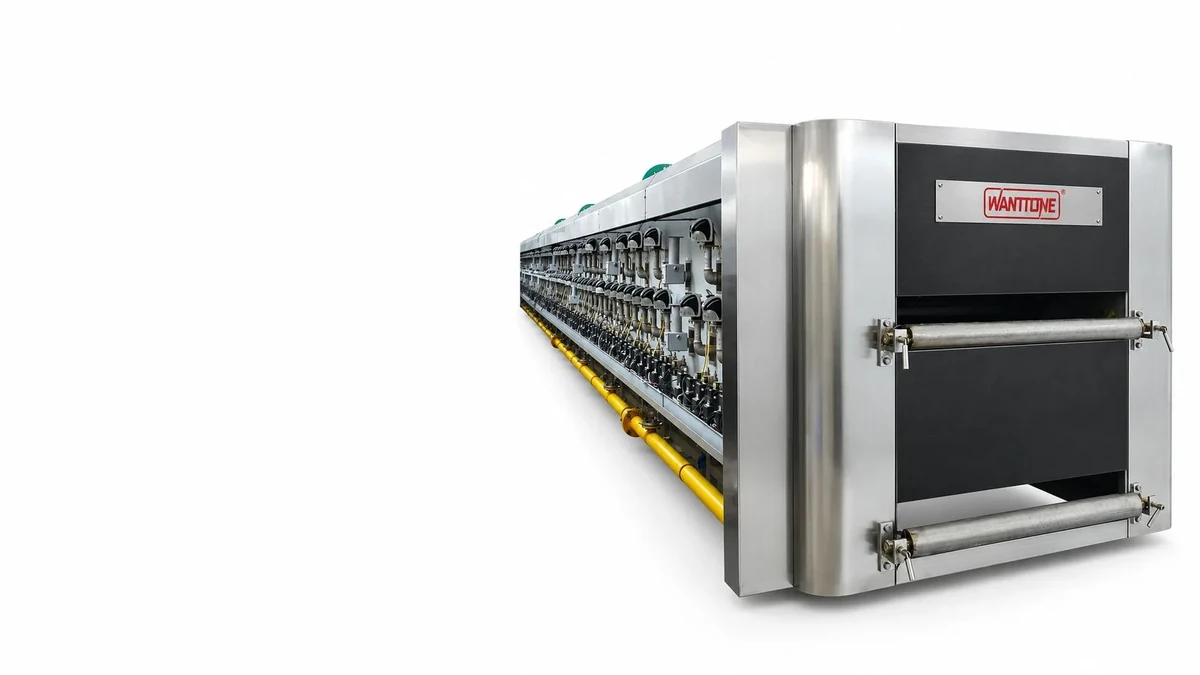
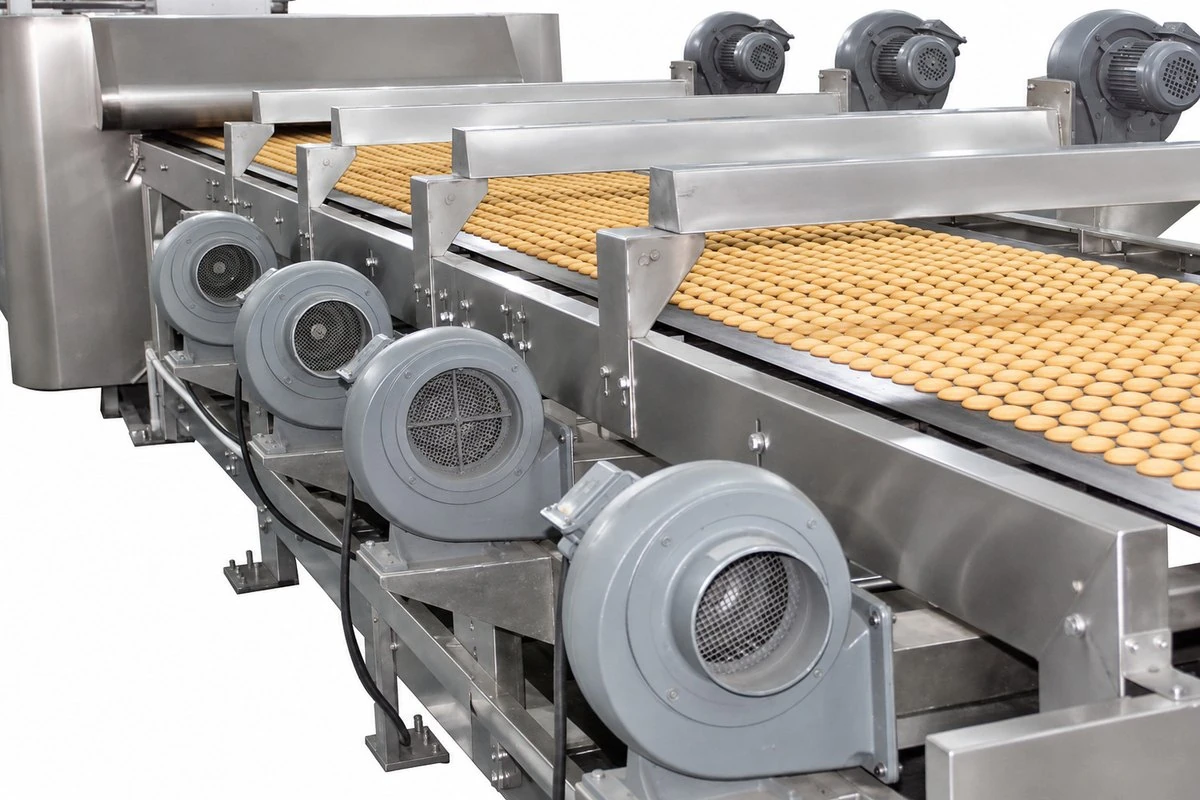
Some recovered intervals are too short to run product through the whole line. Check which events become usable manufacturing time after recovery and whether the next station can absorb the extra product. If restart output must be held pending release, count only product that passes the same standards used in the baseline. The new limit may be an oven rate, cooler or wrapper.
Test the conversion at peak pack demand. At the assumed 450 kg/h, a 30 g pack requires 250 accepted packs per minute. A 50 g pack requires 150. Both use the same mass flow, but the smaller pack requires about 67% more accepted packs per minute. These figures exclude wrapper stoppages and rejected packs. If the bakery commonly runs both formats, it needs format-specific evidence rather than one nominal wrapper speed. Ask the packer operator for normal stop, film change and recovery records before deciding how much of the modeled gain can reach customers.
If the line is otherwise stable, isolate the fastest observable product group and a difficult group as separate upgrade cases. The value of the modeled improvement can differ by recipe and pack, particularly when changing the first station reduces room for accumulation.
| Share of transfer minutes restored | Effective minutes restored | Additional accepted product |
|---|---|---|
| 25% | 10.5 | 78.75 kg |
| 50% | 21 | 157.50 kg |
| 75% | 31.5 | 236.25 kg |
How Should You Verify the Upgrade During a Planned Outage?
Set the outage scope by station and name the owner for every retained boundary. Count cooldown or emptying, isolation, access, fitting and testing time, then assign recovery margin. Include a mechanical fit review and an approved controls test before running saleable product. Review whether the existing product can run if part of the upgrade must be postponed.
Plan the acceptance comparison before dismantling the line. Use the same product, pack format, measurement point and relevant window as the baseline. Record event counts, stopping time, net packed rate and rejected product at the chosen inspection points. Include familiar changeovers and a permitted normal restart so that improvement applies to the real production calendar.
One good afternoon provides limited proof. Review enough normal shifts and recipe states to detect the treated issue, and agree how unusual events will enter the record. The operator training should include approved settings, alarms and what to report when an issue starts. Update the maintenance documentation and bill of materials for the equipment actually installed.
Use the Wanttone capacity expansion application to discuss the project boundaries, planned windows and technical deliverables. Specify how commissioning responsibilities are split with the owner of the retained system. The upgrade is ready for production when the agreed interface and product expectations are met and the plant accepts its documented obligations.
How Do Local Buying Conditions Change an Upgrade Plan?
United States
A Pennsylvania or Midwestern cookie producer with retailer promotions should compare proposed outage dates with its signed dispatch schedules. Reading Bakery Systems promotes maintenance and technical support programs in the U.S. Treat local service as measurable scope. Ask who will restore a failed transfer, which evidence is needed and how spares will be stocked for the installed equipment.
United Kingdom
A UK biscuit factory around the Midlands can decide whether support for existing forming equipment is available before changing the process boundary. Baker Perkins publishes upgrades for certain TruClean rotary moulders, including feeding and tracking options. Ask for eligibility by serial and fit, then compare the proposed work against the product fault your data shows.
Saudi Arabia
A Saudi baked-goods manufacturer that supplies multiple retail or catering formats should model the number of changeovers in its actual schedule. Almarai’s bakery report describes retail and foodservice expansion across its business. A purchasing team in Riyadh should estimate agreed orders by pack format and verify which improvements shorten its qualified setup in practice.
Nigeria
Nigeria’s Beloxxi publishes 30 g cracker packs and 40 g cookie products and gives its factory location in Ogun State. Multiple pack formats can change downstream cycle demand even when the baked mass stays the same. An Ogun or Lagos plant can use its own pack list and current wrapper records to decide whether a faster former has any clear output benefit.
China
For a biscuit production line upgrade manufacturer in China, discuss the actual interface with Wanttone in Yangjiang. Provide videos of the defect and normal run, the asset list and measured geometry. Ask which changes can be validated using your product and how the local team will check assembly and accepted output after the outage.
How Can Wanttone Help Define the Scope of a Biscuit Line Upgrade?
Wanttone manufactures forming equipment and complete lines and operates its own biscuit factory. The Wanttone company profile describes roots in the Yangjiang machinery business in 1981 and its own biscuit factory in 1993. For an upgrade, combine that process perspective with direct inspection of the equipment that will stay in service.
Send a trend report, a current drawing and representative defect samples. Choose the fault with the strongest evidence and explain which products and shifts show it. Ask Wanttone to state the proposed boundary, retained components, expected site work and method of verifying a second station has not become restricted. The plant should allocate the people who will be responsible for settings, spare parts and quality release.
Record uncertainties and assign them in the quotation request. Examples include a retained conveyor without a dependable drawing or a recipe that has never run at the proposed pace. Arrange a survey or product trial to close each item. Contact Wanttone to discuss the upgrade after collecting examples of both acceptable and failed production.
FAQ — What Do Buyers Ask About Upgrading a Biscuit Line?
Which part of the line should be changed first?
Investigate the station that initiates the most important repeatable loss in saleable output. Quality, hygiene and safe operation issues should be assessed on their own criteria.
Should a former be upgraded when a wrapper stops repeatedly?
Trace product dimensions, transfer and accumulation through the actual run. A wrapper event may follow an upstream issue or its own mechanical or control limit.
How do you estimate upgrade capacity?
Apply the net verified accepted rate to the effective minutes restored. Use separate assumptions for speed, yield or schedule effects, then check compatibility with the downstream stations.
What information is needed for a retrofit module?
Include drawings, serial data, speed range, working width, product-bearing height and states of the retained controls. Add actual product samples and loading patterns.
When can an upgrade be released?
After documented fit, control-state and product trials meet the agreed criteria. Replicate expected recipes, operating conditions and events before closing acceptance.

Wanttone Engineering Team
Wanttone’s engineering and project teams prepare practical guidance on biscuit machinery, production-line planning and factory requirements.