Quick Answer
To compare gas vs electric rotary ovens, check which equipment your bakery can connect, then compare energy per accepted batch and the product result. An electric rack oven can suit a site with verified electrical headroom and a workable tariff. A gas rack oven can suit a site with dependable fuel, a compatible exhaust design and on-site service. Both may require electric power for fans and controls. Both should be tested with the same product, loading and finish targets.
Start by asking facilities and suppliers to check the heating package against the property. In a mixed production room, the oven can share electrical demand with proofers, chillers and mixers. A gas model has separate fuel and combustion requirements and also needs the correct electrical supply for its auxiliary loads. Specify what will run concurrently and what has to restart after an outage.
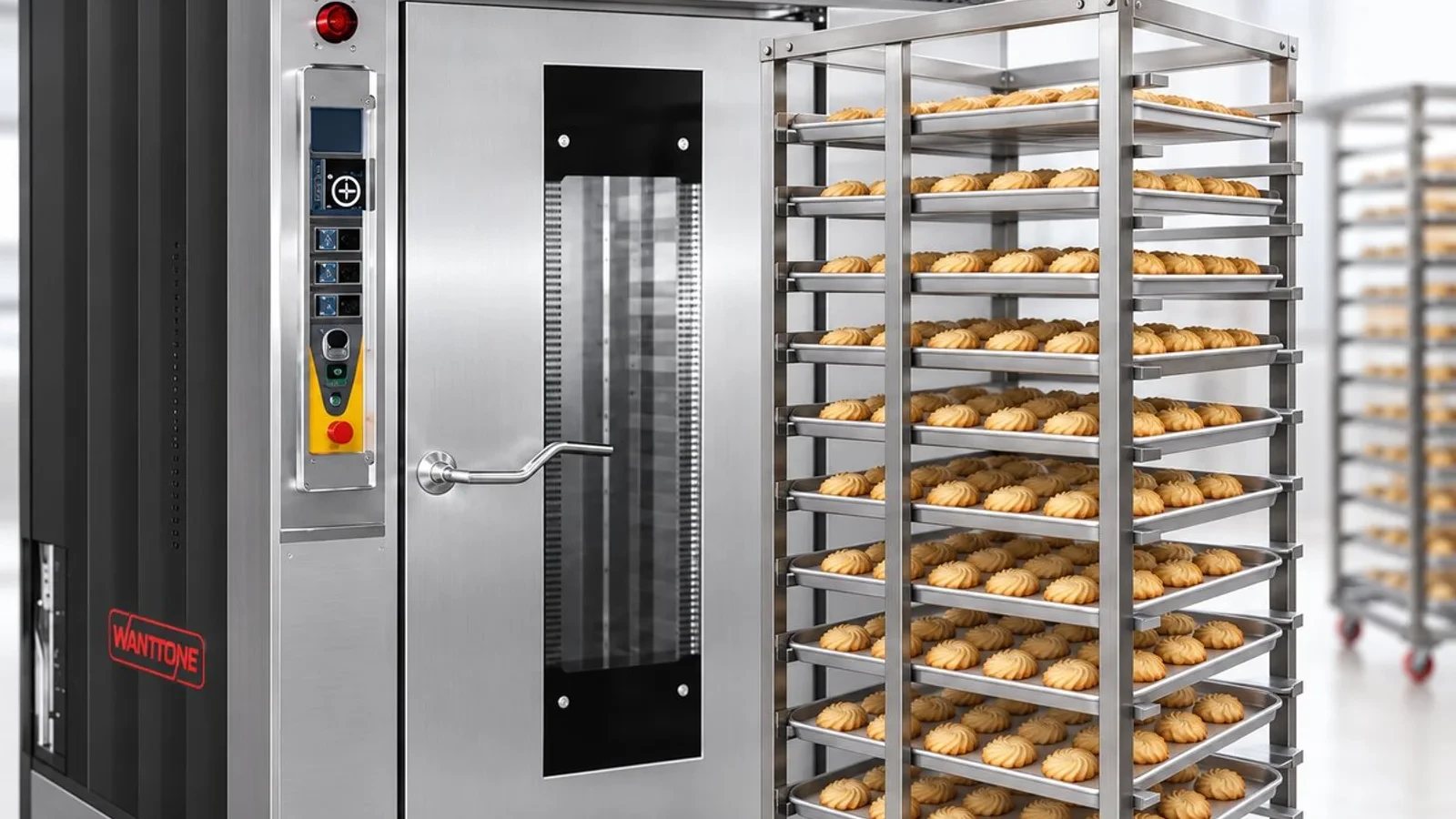
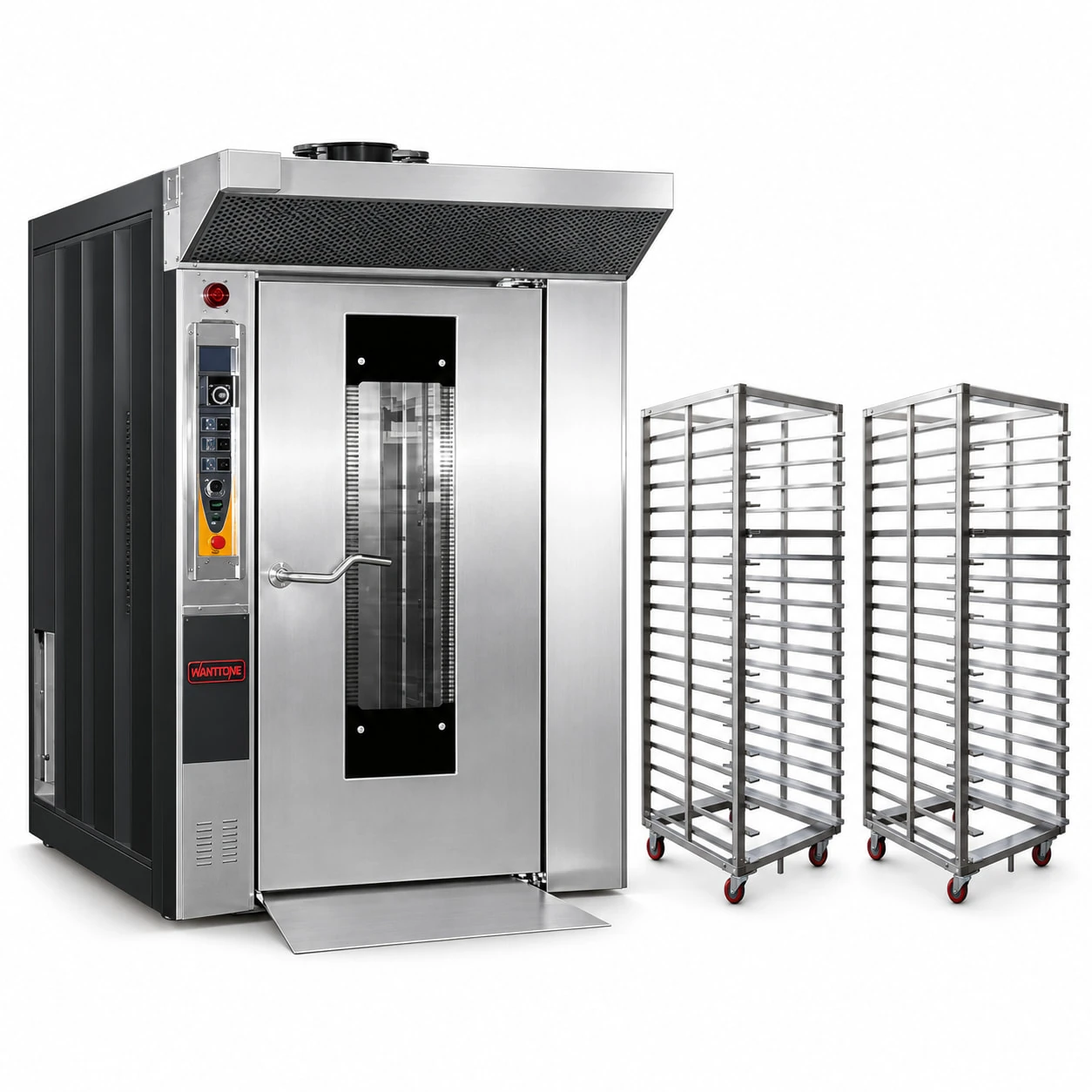
Wanttone’s tray rotary oven product information lists electricity, gas and diesel options, model-dependent 16–32 trays per trolley and a 400 × 600 mm standard pan. Those are configuration choices. Request the required utility loads and usable rack arrangement for the exact oven rather than transferring ratings or results from a different model into your site design.
Test the two candidate ovens with high and low loading, preheat, a representative idle interval and the production cycle your team expects. Record the finished amount that passes inspection as well as the energy consumed.
How Do Gas and Electric Rotary Ovens Differ at the Site?
The oven chamber, rack engagement and circulation system determine how a loaded batch moves and bakes. The heat source changes the facility connections and maintenance tasks. A gas model needs a fuel supply suitable for the selected equipment and an installation that meets the oven maker’s combustion and exhaust requirements. Electric heating needs a compatible supply that can support the ordered electrical load alongside the other plant equipment.
Ask the facility team to format the assessment as two written lists, one for electricity and one for gas. Under each list name the services, location constraints, installer and permit or approval responsibilities for the actual premises. A shaft or roof path that looked clear on the plan may already be used by another tenant. A switchboard may have space for a breaker without having usable aggregate capacity. Ask the responsible design professionals to verify the property before you accept a proposal.
The table describes typical questions to ask. Apply them to the model-specific drawings. For either heat source, confirm ventilation for heat, moisture and other expected emissions with the installation team. Start with the Wanttone oven range if the project might also include a separate continuous line.
| Subject | Gas rack oven | Electric rack oven |
|---|---|---|
| Main heat supply | Specified fuel, pressure and available gas service | Specified voltage, phase and electrical capacity |
| Auxiliaries | Confirm power needed by fans, lift and control system | Confirm total oven input and facility load overlap |
| Ventilation | Confirm combustion and process exhaust design | Confirm process heat and moisture ventilation |
| Service | Qualified burner and controls support | Electrical heating and controls support |
| Acceptance | Trial with actual gas and approved installation | Trial with actual supply and approved installation |
What Does the Oven Nameplate Tell You About Energy Use?
The nameplate represents an engineering input for supplying the equipment. It has a different purpose from the meter reading when the oven is holding or baking. Baxter’s OV500 operating manual gives a single-rack gas rating of 180,000 Btu/h for OV500G1 and a 25.7–34.2 kW rating for OV500E1. They belong to a named commercial family with gas and electric variants, making them a useful example of the different units used for capacity planning.
Converting 180,000 Btu/h using about 3,412 Btu per kWh gives a fuel input rate of approximately 52.75 kW. The conversion aligns energy units and makes no assumption about heat reaching the product. It also excludes any separate electric use by mechanical and control systems. Neither rating indicates energy consumed by a full shift of intermittent loads.
EPA ENERGY STAR Version 3.0 separates total idle energy rate and baking-energy efficiency for eligible gas rack ovens. Its gas single-rack thresholds are at most 25,000 Btu/h at idle and at least 48% baking-energy efficiency under the specified method. Double-rack gas limits are 30,000 Btu/h and at least 52%. Those are qualification criteria. Use model-level test results where available, and ask which load and cycle they describe. Do not apply the gas criteria to an electric rack configuration.
| Item | Published input or criteria | Application |
|---|---|---|
| Baxter OV500G1 single gas | 180,000 Btu/h, about 52.75 kW of fuel input | Capacity check for offered gas version |
| Baxter OV500E1 single electric | 25.7–34.2 kW | Electrical service check for exact option |
| EPA eligible gas single rack | Idle ≤25,000 Btu/h, efficiency ≥48% | Test threshold, not a utility estimate |
| EPA eligible gas double rack | Idle ≤30,000 Btu/h, efficiency ≥52% | Separate test threshold by rack size |
How Can You Calculate Energy per Accepted Kilogram?
The example below uses two hypothetical shifts, each producing 150 kg of acceptable bakery product in the same elapsed time. Meter preheat, loaded production and the planned idle interval separately. For a gas configuration, capture gas fuel and electricity on individual channels because the two units enter the utility bill differently. Here the gas has already been expressed in kilowatt-hour equivalents using its billing energy basis.
The sample electric shift totals 110 kWh and the sample gas shift 161 kWh equivalent of fuel plus 10 kWh of electricity. Dividing each channel by the 150 kg release weight gives 0.733 kWh/kg for electric versus 1.073 kWh-equivalent fuel/kg plus 0.067 kWh of electricity/kg for gas. These are transparent planning inputs, not measured performance of either Wanttone or Baxter.
For the variable energy comparison, let E be the site electricity rate per kWh and G the site gas rate per kWh-equivalent. The electric cost for the sample shift is 110 × E. The gas option is 161 × G + 10 × E. They cross when G/E is about 0.621. This ratio is specific to the assumed meter data and equal accepted output. Contract demand, fixed charges, building works and maintenance sit outside the ratio.
| Stage | Electric configuration electricity | Gas configuration fuel equivalent | Gas configuration electricity |
|---|---|---|---|
| Preheat | 18 kWh | 28 kWh eq. | 2 kWh |
| Loaded batches | 82 kWh | 118 kWh eq. | 6 kWh |
| Planned idle | 10 kWh | 15 kWh eq. | 2 kWh |
| Total | 110 kWh | 161 kWh eq. | 10 kWh |
| Per 150 kg accepted | 0.733 kWh/kg | 1.073 kWh eq./kg | 0.067 kWh/kg |
Why Does the Electricity or Fuel Bill Depend on Your Schedule?
Compare the meters against the operating week. A small pastry room may return from ambient temperature every morning, remain hot between a few orders and share staff across several processes. A central bakery can keep the chamber loaded during nearly all of its planned baking hours. These schedules can yield very different energy per acceptable kilogram on the same equipment. Ask each oven supplier about recovery after opening the door and how the standby mode safely resumes baking.
Count consecutive batches, empty time, cold starts and long shutdowns. Prepare one schedule for normal orders and one for the busiest practical shift. For electricity, inspect any time-varying energy rate and the way billed demand is measured, including how the oven overlaps with other equipment. A kWh rate alone may omit a charge based on peak demand. Request the applicable commercial tariff from the utility for the installation address. Capture the relevant gas unit and heat value using the same billing basis as the supplier.
Use plants’ real operating patterns to discuss whether staggering high-load equipment is feasible. Moving preheat to an earlier period can affect staffing or result in additional holding. Ask production to verify the start time, material arrivals and pack-out deadlines before assigning a saving. Try the revised shift plan with a test run and keep a record of the operating changes that made it work.
If the plan includes making trays upstream, compare the output of Wanttone’s small cookie machine with the real load calendar. A fast former may free staff during loading but requires tray space to keep the batch schedule stable.
How Should You Compare Bake Quality and Recovery?
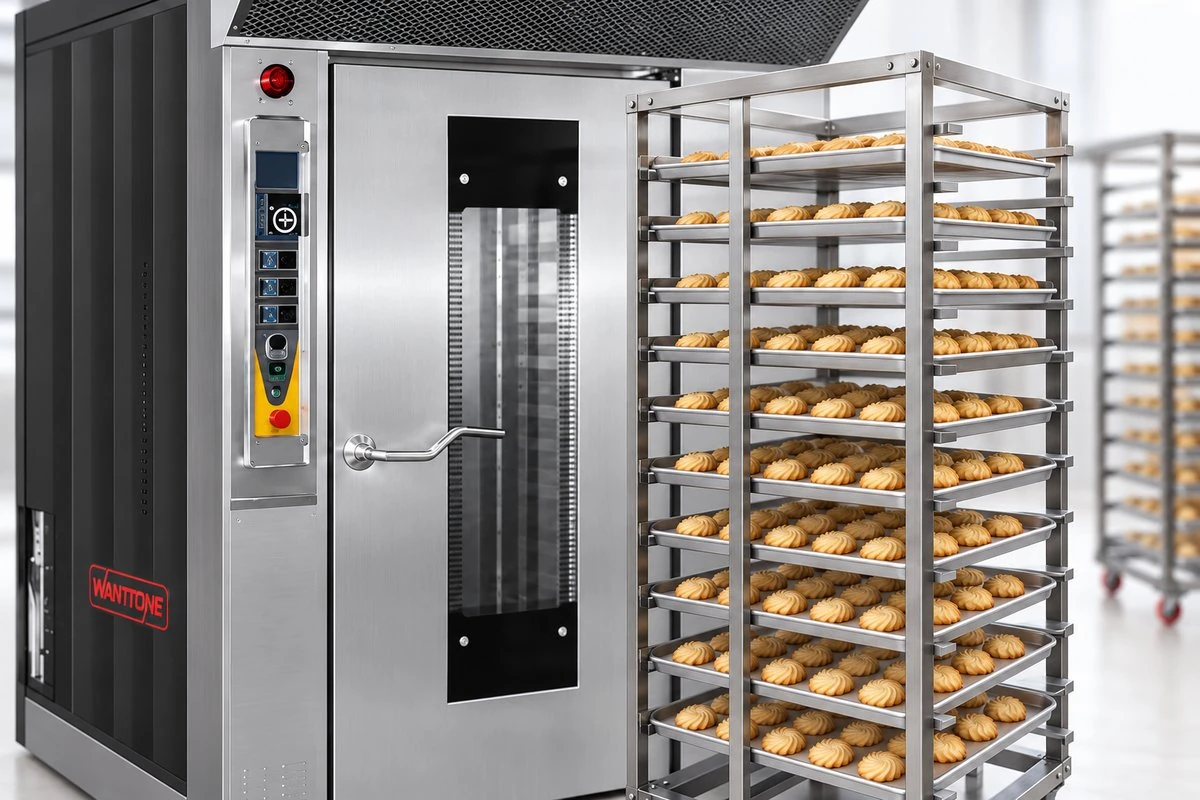
Choose a demanding cookie and a second product that behaves differently, such as a bread or moist pastry if that is in scope. Bake both candidates from the same batch of dough using the same tray arrangement and recorded raw weights. Specify what the quality team will measure, such as color spread, piece loss, performance at loading extremes and recovery to a production-ready state for the next rack.
Record temperature with the oven maker’s agreed measurement method. Loading and unloading time should be recorded consistently, because a longer door opening changes the recovery comparison. Ensure both ovens start the planned measurement windows in equivalent conditions. Repeat product and position checks through consecutive batches. Include an agreed failure and retest rule so the operator knows how to handle an interruption.
Where optional steam is relevant, agree which recipe uses it and how its water and energy use will be recorded. A model can list steam without including that option in the exact offer. Where products need dry baking, observe the result in that program using the load size selected for production. End with released batches and a documented meter record, rather than relying on a single set-point reading.
Make sure your comparison follows the anticipated use. A heavily watered test load can say little about crispness and weight loss for your actual cookie. Report the recipe, loading, wet or dry operating mode, batch mass, trays used, meter basis and acceptance limits alongside the energy result.
What Should the Supplier and the Local Installation Team Confirm?
Name the people who own the oven order, building preparation, hookup and final checks. Share the utility schedule and site drawing among buyer, equipment vendor and the responsible local installers. Ask the vendor to identify which equipment, controls and connection points are within its scope. Document where its responsibilities end and who will sign each completed item.
Ask for a run-through of the supplier’s normal product and utility checks. Buyers should request a technical schedule covering rated input, operating mode, auxiliary requirements, accessibility and necessary clearances. Consider the route for fitting the oven into the room and for maintaining its heating system after startup. The facilities team should confirm sufficient service space and authorized access.
Describe the backup arrangement for interruptions and what happens to in-process trays. Gas equipment can still need its controls and drive after a loss of electrical service. A generator plan must handle the exact sequence and loads if it is expected to restore production. Have the local engineering team validate it. Agree what to inspect and record when power or fuel returns.
If this oven is one part of a new bakery, gather product, utility and layout information using the Wanttone startup application. For an existing site, include its measured electrical loads and any previous service failures. Those records help the team decide which candidate can be commissioned with a credible timetable.
What Local Evidence Matters Before Choosing a Rack Oven?
Check tariffs and service conditions at the intended site. Manufacturer offerings and bakery activity give context for which equipment to evaluate. The installation decision depends on the actual facility, order profile and local support.
United States
A U.S. supermarket bakery or commissary can compare the local Baxter OV500 gas and electric families with the models it can actually service. Obtain the utility rate schedule for the address, including any demand calculation. For two options with comparable baked output, ask which peaks coincide with other refrigeration and preparation loads. Use EPA gas test criteria only for the eligible comparison.
United Kingdom
For UK bakeries around Manchester or Birmingham, identify the bakery’s imported or local pan format as well as the verified electrical service. Revent’s ONE26 documentation separates UK and U.S. versions and gas and electric data sheets. Ask bidders to use the actual ordered regional variant. Facilities should check site demand and the landlord’s restrictions before counting the proposed oven as a candidate.
Saudi Arabia
Saudi Arabia’s Almarai reports increasing artisanal activity in its bakery market. A bakery adding a pastry program in Riyadh can test early morning batches and short late-order runs, measuring idle time and preheat independently. Obtain the local utility and ventilation design for the premises and identify the installer before specifying fuel. The national channel context gives no indication of an individual oven’s average load.
Nigeria
For Lagos or Ogun bread-oriented projects, the USDA Grain and Feed report provides context on bread’s role in local flour consumption. The site’s own interruptions and production schedule determine recovery needs. Collect a voltage and supply history with the facility team and have it assess any alternative fuel and electric backup arrangements for the exact oven and auxiliary loads.
China
When sourcing a gas or electric rack oven from China, ask Wanttone in Yangjiang for both versions with matching rack layout, if available for the project. Provide the destination fuel description, voltage and frequency. Ask for model-specific loads and product trial notes, then reconcile them with the site’s electrical and gas advisers so the selected version can be installed and serviced.
Why Ask Wanttone to Compare Both Heating Packages?
Wanttone combines biscuit machinery manufacturing with its own baked-goods operations. Its company profile traces the machinery business to 1981 and its own biscuit factory to 1993. Discuss the rack oven in the context of the production room where it will operate. Confirm configurations and support arrangements with the project team.
Send a menu, the busiest delivery window and the actual pans planned for the oven. Attach the available utilities, the room layout and the list of other loads. Ask the supplier to show the planned rack positions, required services and a heat-source comparison for the offered models. Provide the same acceptance worksheet to both teams if separate installers are involved.
If energy is a deciding factor, make the required meter stages part of the trial brief. Have the team record acceptance mass and the meter basis together. Ask what can be demonstrated on a prepared test site and what must wait for the actual installation. When sales or factory planning reaches the decision stage, contact Wanttone to request the utility and trial schedule for your plant.
FAQ — What Do Buyers Ask About Gas and Electric Rotary Ovens?
Is a gas rotary oven always cheaper to run?
Compare both energy channels and any demand or fixed charges with your site’s tariff. The decision requires matched accepted output, meter results and realistic operating schedules.
Does a gas rack oven require electricity?
Gas models generally have electric auxiliaries such as fans, controls and rack rotation. Verify the entire power requirement and behavior after utility interruption for the exact model.
What does a 34.2 kW electric oven rating mean?
It describes a rated power input for a named variant, not the energy taken during a batch. Measure kWh over a complete representative test and include preheat and holding if both occur in service.
How do I compare baking uniformity?
Control dough batch, pan type, load, sample positions and the finished acceptance criteria. Record several loads and use the saleable yield with the meter readings.
What does Wanttone need for a heat-source comparison?
Provide product, pans, load pattern, room plan, voltage and frequency, local fuel details and the schedule of other site loads. Include your planned oven test and handover dates.

Wanttone Engineering Team
Wanttone’s engineering and project teams prepare practical guidance on biscuit machinery, production-line planning and factory requirements.