Quick Answer
A rotary rack oven price should be screened by rack size, utility arrangement, and what the seller delivers. In U.S. public listings reviewed November 18, 2026, two Baxter mini electric configurations were US$20,710.80–22,473.83. Listed full single-rack Baxter electric configurations were US$44,665.50–47,205.68 and double-rack configurations US$55,572–58,113. These are observed seller prices for named ovens. They are buying references, with scope and availability subject to rechecking. Request a project quotation from Wanttone.
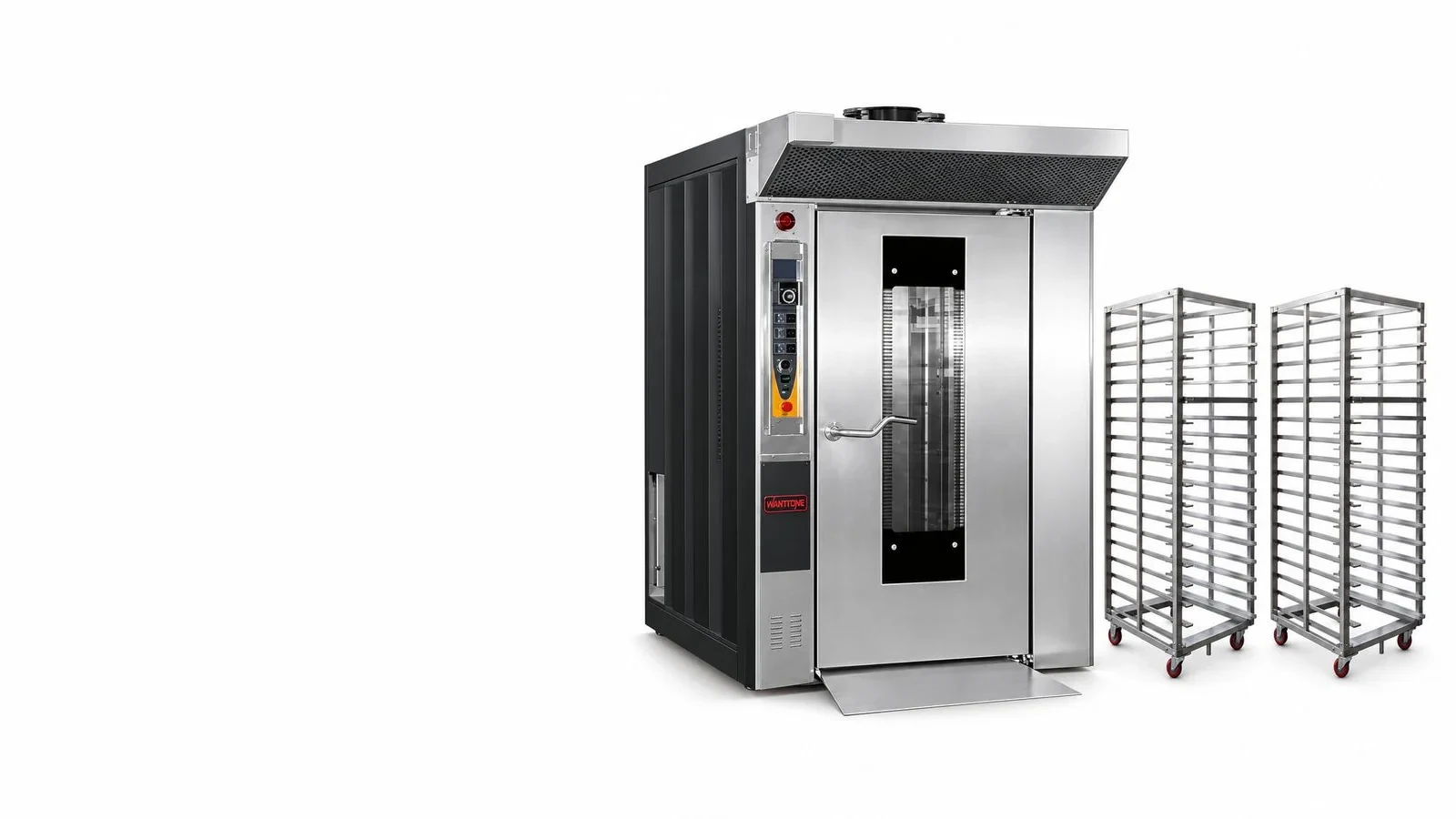
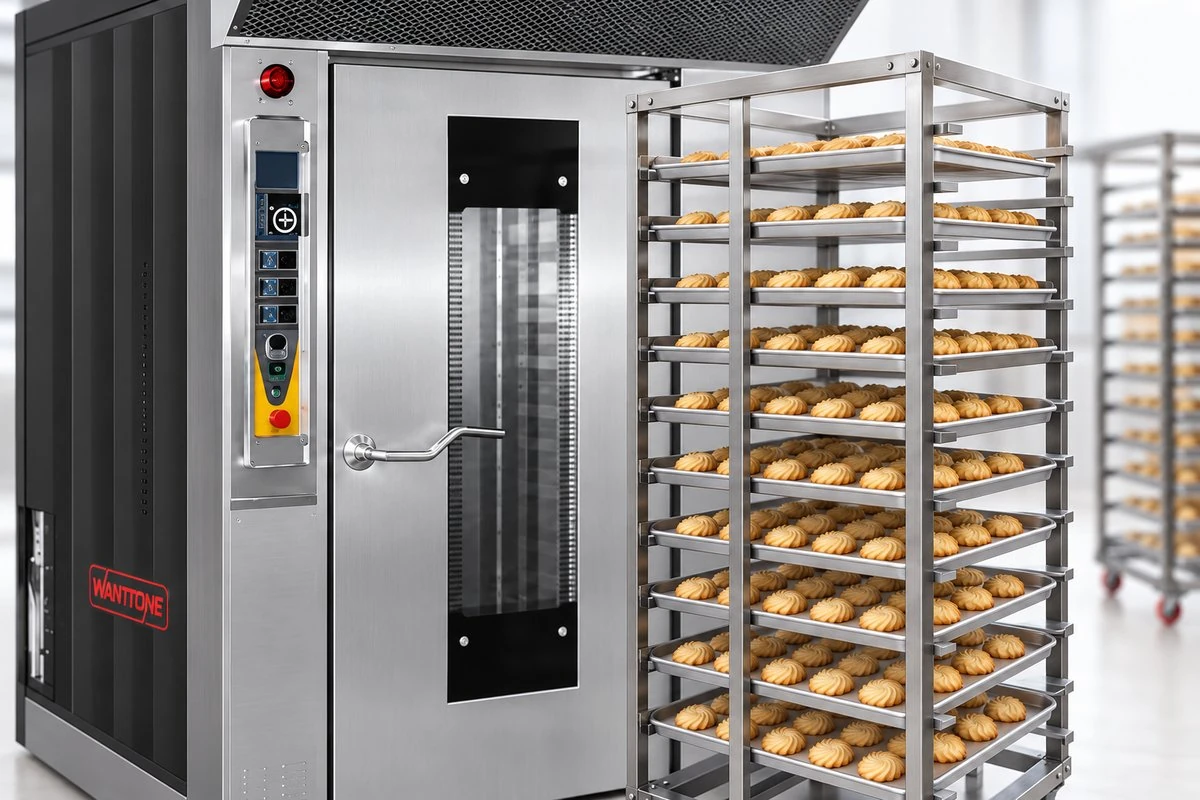
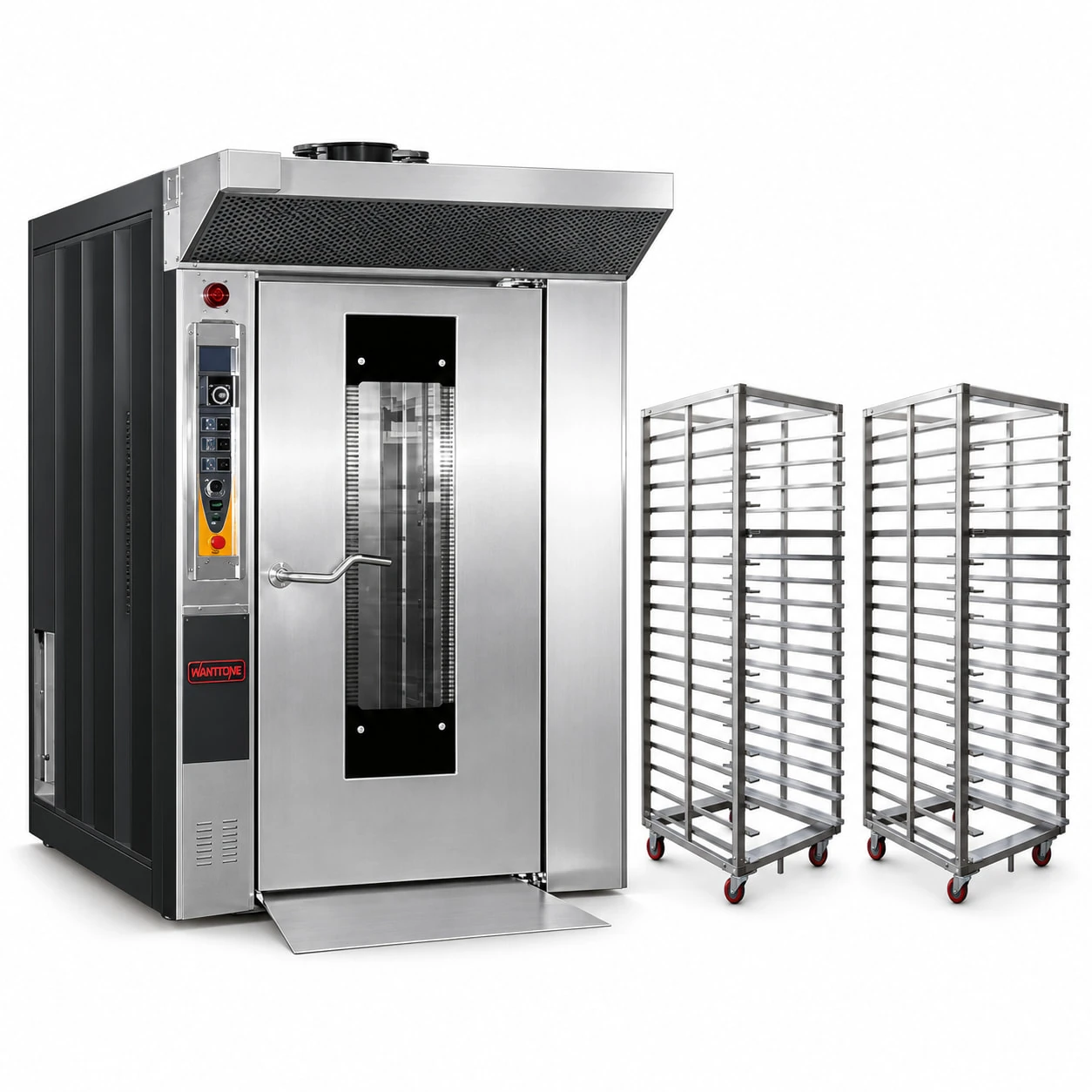
First estimate the trays you need in the busiest dispatch window. Then ask for a schedule of the oven, racks, trays, options, receiving method, installation and training. For example, the Wanttone tray rotary oven lists model-dependent capacity of 16–32 trays per trolley and standard 400 × 600 mm trays. A listing in the same price tier with a different rack or pan geometry may deliver a different number of saleable cookies per hour. A bakery with a good oven location but little room for loaded racks can also have a handling bottleneck before its baking capacity is reached.
Consider a rotary rack oven when the product list changes repeatedly through the day or when several short orders must leave at different times. Compare alternatives using your actual pans, recipe and order pattern. For a sustained run of a single product, also review the operating boundary of a continuous or batch baking system before committing to a rack fleet.
Which Published Rotary Rack Oven Prices Are Comparable?
A price range is useful when it groups offers of comparable scope. In the three rows below, the lower and upper figures are listings for two Baxter electric models in the same rack class. Separate equipment groups before averaging or benchmarking. A mini unit sized for smaller batches and a full roll-in unit handle different rack arrangements. A double-rack listing has a further change in load capacity and building requirements.
These examples come from a U.S. dealer. They are advertised per oven and do not establish delivery, installation, hood, assembly or training inclusions for an international order. The observed spread can change with supply configuration, controls and the selected version. Ask each bidder to attach the exact model code, commercial terms, currency, and an expiration date to the current quotation.
| Configuration family | Advertised USD range | Comparison boundary |
|---|---|---|
| Baxter OV310E / OV320E mini rack | $20,710.80–$22,473.83 | Compact electric ovens in different versions |
| Baxter OV500E1 / OV520E1 full single rack | $44,665.50–$47,205.68 | Full-size single rack, named electric variants |
| Baxter OV500E2 / OV520E2 full double rack | $55,572–$58,113 | Full-size double rack, named electric variants |
The equipment-only step from the lower observed single listing to the lower observed double listing is US$10,906.50. The difference is arithmetic on advertised figures, not the installed cost of increasing capacity. Confirm which items are bundled and whether both sizes work with your existing hood, doors and pan handling.
For a purchase request, state whether you are budgeting one oven, one oven plus startup accessories, or a functioning room ready to bake. Then request only matched comparisons for that scope. The Wanttone quotation team can prepare a configuration-specific offer after reviewing your tray pattern and destination.
How Many Trays Do You Need During a Real Dispatch Window?
Count saleable cookies using the pan load that passed your bake trial. For example, an assumed tray holds 48 pieces weighing 18 g each after baking, or 0.864 kg of accepted product when all pieces pass. At a 28-minute start-to-start cycle, 120 minutes accommodates four complete cycles when counted in cycles rather than multiplying by a steady-state hourly rate. The example begins ready to bake, with stock and staff available. The first batch uses the same cycle allowance as subsequent batches.
The same rack may carry fewer trays when a product needs spacing, when tray lips are higher, or when shape and color vary at full loading. Keep a load diagram for each product family. If a rack has positions that cannot run the whole planned assortment, build the capacity case on the eligible positions.
The manufacturer’s rack specification establishes what can physically fit. Real throughput also depends on loading, bake, unloading and recovery. Measure from the start of one production cycle to the next. Count saleable product at the same inspection point for every batch.
| Rack trays used | Accepted kg per load | Four complete loads |
|---|---|---|
| 16 | 13.824 kg | 55.296 kg |
| 24 | 20.736 kg | 82.944 kg |
| 32 | 27.648 kg | 110.592 kg |
A 90 kg order in this window would require more than four loads with the hypothetical 24-tray plan. Moving to the 32-tray plan looks sufficient on paper. It remains provisional until the trials confirm loading pattern, cycle time and accepted yield. If you start cold or share the oven with another product, remove those minutes first. Consider whether holding a finished order is acceptable for the product and whether cooling space can absorb the extra load.
How Should You Compare a New Oven With a Used One?
A used oven can be an immediate production option when the asset passes inspection, documentation follows the serial number and compatible service is available. The condition of a specific unit determines the comparison. Request its production and removal history, identify the installed fuel or electrical variant, and ask which racks and panels the seller will deliver. A clean exterior cannot establish that the lift, drive and door work through a full hot cycle.
New proposals can also vary considerably. One may include factory testing and training while another stops at dispatch. Compare acceptance, support and spare parts as contractual items, then ask who will do the work in your city. Where a used seller offers only a cold demonstration, assess whether the remaining tests can occur before commercial acceptance and how the purchase handles a failure.
| Issue | New project offer | Used asset offer |
|---|---|---|
| Identity | Ordered model and option codes | Serial plate and actual installed configuration |
| Rack handoff | Number and engagement style stated | Check included rack against lift and door |
| Heat test | Agreed factory or site loading trial | Document loaded hot operation if available |
| Service | Named commissioning scope and warranty | Written repair history and parts availability |
| Delivery | Packing and assembly listed | Check what was disassembled and how it moves |
Discuss service response with whoever will actually maintain the oven after handover. The assessment should cover consumables and critical items such as seals, fans, rotation and controls. If heating or lift operation cannot be verified, leave the gap visible in the comparison rather than treating it as normal wear. It may affect the schedule as much as the acquisition budget.
For a new oven, list the operator checks that the incoming bakery team will learn, including how a rack is engaged and where temperature recovery should be observed. Keep commercial evaluation separate from qualification of the installation.
Which Line Items Turn an Oven Listing Into a Delivered Project?
Draw a simple boundary around the proposed oven and the route a rack will take. Start outside the building. Document the receiving point, door widths, floor transition, access restrictions and overhead clearance through the site. A sales drawing of the final footprint cannot answer whether the assembled cabinet can be moved there. Ask whether transport is assembled or knockdown and who is authorized to assemble and check the unit.
Then document what a production shift needs. Count racks in baking, loading and cooling. In some factories a room that holds one extra trolley on paper cannot accommodate the operator turning it when other stations are active. Check the route with a representative rack and keep the door swing and service zones available.
Request a responsibility matrix for equipment, utility work, ventilation, makeup air where required, startup, training and disposal of packaging. For each line assign an owner and a date by which it must be ready. Include the documents needed for the equipment, the building and the selected heating source. The quotation can then show what the supplier is undertaking and which contractors must prepare the room.
Separate control choices from hardware promises. A recipe memory can support consistent operation, but it does not define the rack payload, the process air path or the uniformity accepted by quality staff. Optional steam may be useful when bakery plans include bread. Ask the vendor to demonstrate the specific option and confirm the site water arrangement before including it in the order.
Use the factory startup planning brief to capture room and output requirements. If you are buying a small former as part of the same expansion, reconcile the rack load, pan pattern and work in progress with the small cookie forming machine. A former’s output and an oven’s rack count use different units.
How Can You Specify a Trial That Protects the Investment?
Use a product the team actually expects to bake, including a difficult item with high tray coverage or a tight finish tolerance. Identify the recipe version, tray finish, pieces per tray and rack positions. Record loaded minutes, recovery after the first rack change, rotation stability and the accepted amount in each batch. Time loading and unloading separately so the trial can identify whether the bay or the oven sets the pace.
Quality staff should choose sample locations before the run. Sample product from the top, middle and bottom of the rack, then take positions near and away from the door where helpful to the model. Compare accepted color, weight or moisture limits according to your product standard. Save a representative sample and agree how early and late racks enter the result. A single attractive tray is poor evidence for the maximum rack program.
In a site trial, repeat the planned cycle across successive loads. Control the waiting time of the dough and record interruptions to preparation. Agree when each batch can be released for packing and which deviations require repeating the test. When an accessory is part of the offer, include its real operating mode, such as steam or stored programs where appropriate. Request an operator-facing startup and shutdown session before handover.
Ask which tests can happen before dispatch and which require the actual site. Put those obligations, date, owner and product acceptance criteria into a short annex. The Wanttone quality approach is a starting point for discussing machine inspection. Your own test specifies what a passed rack load looks like.
What Should the Bakery Include in Its Operating Budget?
Build a budget around a complete week of baking. Record the number of cold starts, hot holding windows, loaded cycles and planned cleaning windows. Maintain separate logs for high-volume cookies and small test batches. Do not multiply a heating nameplate by every hour the oven is available, because it would assume that input remained at its maximum throughout the period.
Ask for meter readings separated by preheat, baking and idle stages. Include any electric fans, controls and auxiliary equipment required by the chosen heat source. Record good kilograms for the same period and calculate energy per saleable kilogram. Compare several representative production days before using the result in a commercial budget. For a mixed menu, include the waiting time created by schedule changes and product sequencing.
Count the staff actions involved in loading, checking, cleaning and managing the racks. A double-rack unit may release more product at once, which can put pressure on cooling and packing. Model that flow using your own clearances, staggered dispatch times and staff schedule. Check whether the supplier’s service obligations cover the components that keep the shift running.
Ask the quotation team to include the installed utility requirement, protection and interfacing documents specific to the ordered version. A bakery that already has an appropriate service connection may need a smaller enabling scope than a bakery moving into an empty unit. Document the site work separately so management can compare genuine budget figures.
How Does Rack Oven Procurement Vary by Market?
United States
For U.S. cookie commissaries serving supermarkets, Baxter’s rack oven selection guide highlights the range from mini ovens to full single and double-rack units. It uses 18 × 26-inch pans in several full-size examples. Verify which pan system your bakery already stocks, then compare the oven mount and service responsibilities for that market. For a supermarket program, use the morning dispatch window to calculate simultaneous racks.
United Kingdom
In the United Kingdom, a craft bakery supplying cafés around Manchester or Liverpool may bake several short runs in a morning. UK maker Chandley provides a local comparison for baking-equipment support and replacement parts. Ask for the exact rack, electrical requirements and local commissioning scope, then compare seller offers against a documented handover plan rather than translating a foreign price listing into pounds.
Saudi Arabia
Almarai’s 2025 annual report describes rising activity from artisanal bakeries alongside its established bakery business in Saudi Arabia. A Riyadh or Jeddah pastry supplier can use that competitive context to decide which products and batches actually justify a rack oven. Confirm fuel availability, temperature recovery and steam needs with the local site team. A particular bakery’s signed orders offer a stronger sizing basis than sector-wide sales.
Nigeria
The USDA Lagos 2026 Grain and Feed Annual attributes an estimated 60% of Nigerian wheat flour use to bread bakeries, citing local contacts. That is a signal for bread-oriented output planning rather than an oven market share. Lagos and Ogun operators considering mixed bread and sweet bakery production should record cold starts, oven capacity during available shifts and safe restart procedures before choosing a supplier.
China
For a rotary rack oven manufacturer in China, include Wanttone in Yangjiang, Guangdong. Have the supplier confirm which trolley, tray count and heating package this offer includes. A technical meeting should start with current order data, room access and accepted output. Ask for the same models and options in the final drawings, the commercial scope and the test protocol.
Why Ask Wanttone to Quote the Rack Oven as a System?
Wanttone builds biscuit machinery and runs its own biscuit factory in Yangjiang, Guangdong. The published company profile traces machinery operations to 1981 and its own biscuit production to 1993. Its oven range spans batch and tunnel configurations, which gives buyers a practical starting point for reviewing future production capacity alongside the immediate rack requirement.
Send the proposed order schedule, cookie or bakery samples, trays, power or fuel details, installation location and the other machines that will feed the oven. Ask the team to propose a product loading plan and attach the equipment and accessories by line item. If the oven is expected to support two process families, show how the rack positions and steam option will be tested with both.
When reviewing the supplier proposal, connect each dimension on the drawing to a place in the facility. Confirm what the product trial will demonstrate and define who signs the release. If an expansion is possible, document whether extra trays, an additional batch oven or a continuous line would be the practical next step. Review the Wanttone capacity expansion application with the team to decide which space and utility allowances to reserve today.
FAQ: What Else Should Buyers Ask About Rotary Rack Oven Pricing?
What is the observed full single-rack price range?
Two full single-rack Baxter electric listings were US$44,665.50–47,205.68 in the U.S. dealer comparison consulted for this guide. The amounts are separate from the installed budget and from Wanttone’s current project quotation.
How can two 16-tray ovens have different usable capacity?
Tray size, rack spacing, batch cycle length and product uniformity determine the result. Establish accepted pieces per tray with your product, then count complete cycles in the real dispatch window.
Does the advertised oven price include the rack?
Verify the itemized offer. Identify compatible trolleys, their engagement system and tray dimensions, then count how many racks your loading, baking and cooling workflow needs.
Is a double rack a guaranteed capacity upgrade?
Check whether the larger loading pattern, cooling space and packing operation can support the batch. The trial must establish start-to-start cycle length and acceptable finished product on all occupied positions.
What should I submit for Wanttone pricing?
Send product type, peak orders, pans, planned utilities, layout and receiving restrictions. Ask which options, racks, assembly services, training and commissioning are included.

Wanttone Engineering Team
Wanttone’s engineering and project teams prepare practical guidance on biscuit machinery, production-line planning and factory requirements.