Quick Answer
Plan oven band replacement when a qualified assessment finds that the current band cannot continue to track, support the product and maintain its integrity under normal baking conditions. Progressive edge or seam damage, recurring loss of tracking, damaged mesh or persistent deformation deserve an inspection. An appearance defect alone can come from the band, drums, cleaner, transfers or the dough. Establish where the symptom first occurs before specifying a new belt.
If loose metal, an opening joint or another potential product or equipment hazard is discovered, follow the plant’s stop, isolation and product hold procedures. Have the responsible specialists assess the band and associated parts. Keep evidence of the affected production, position and timing so quality and maintenance teams can make their decisions.
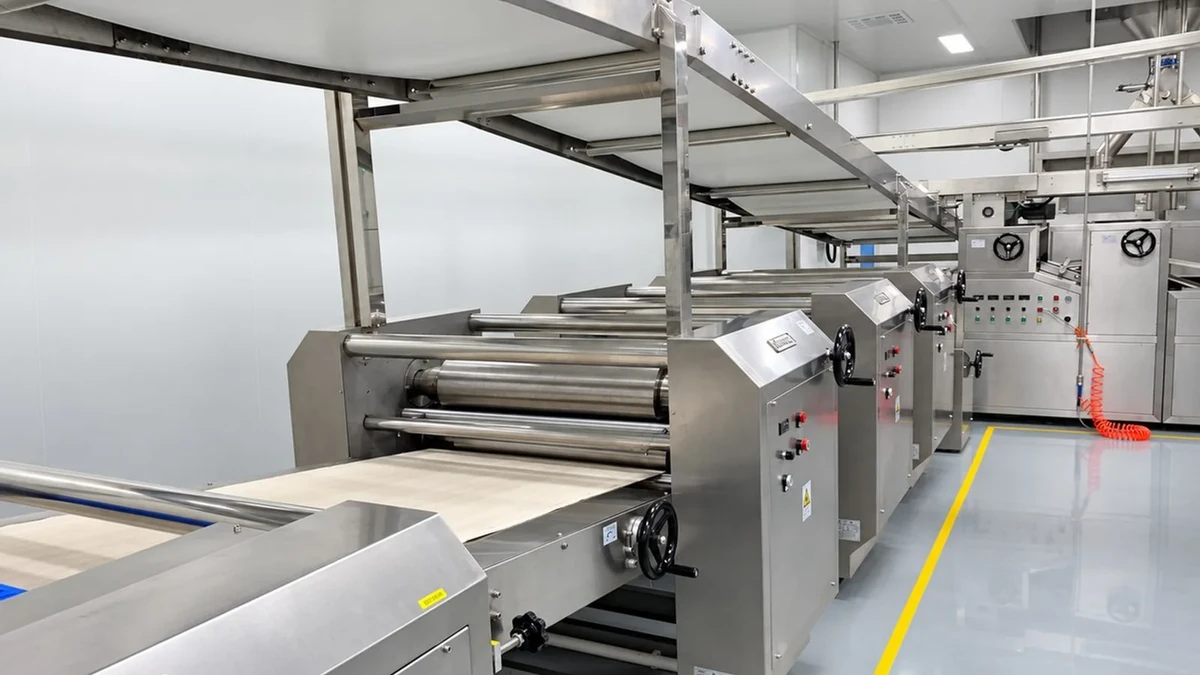
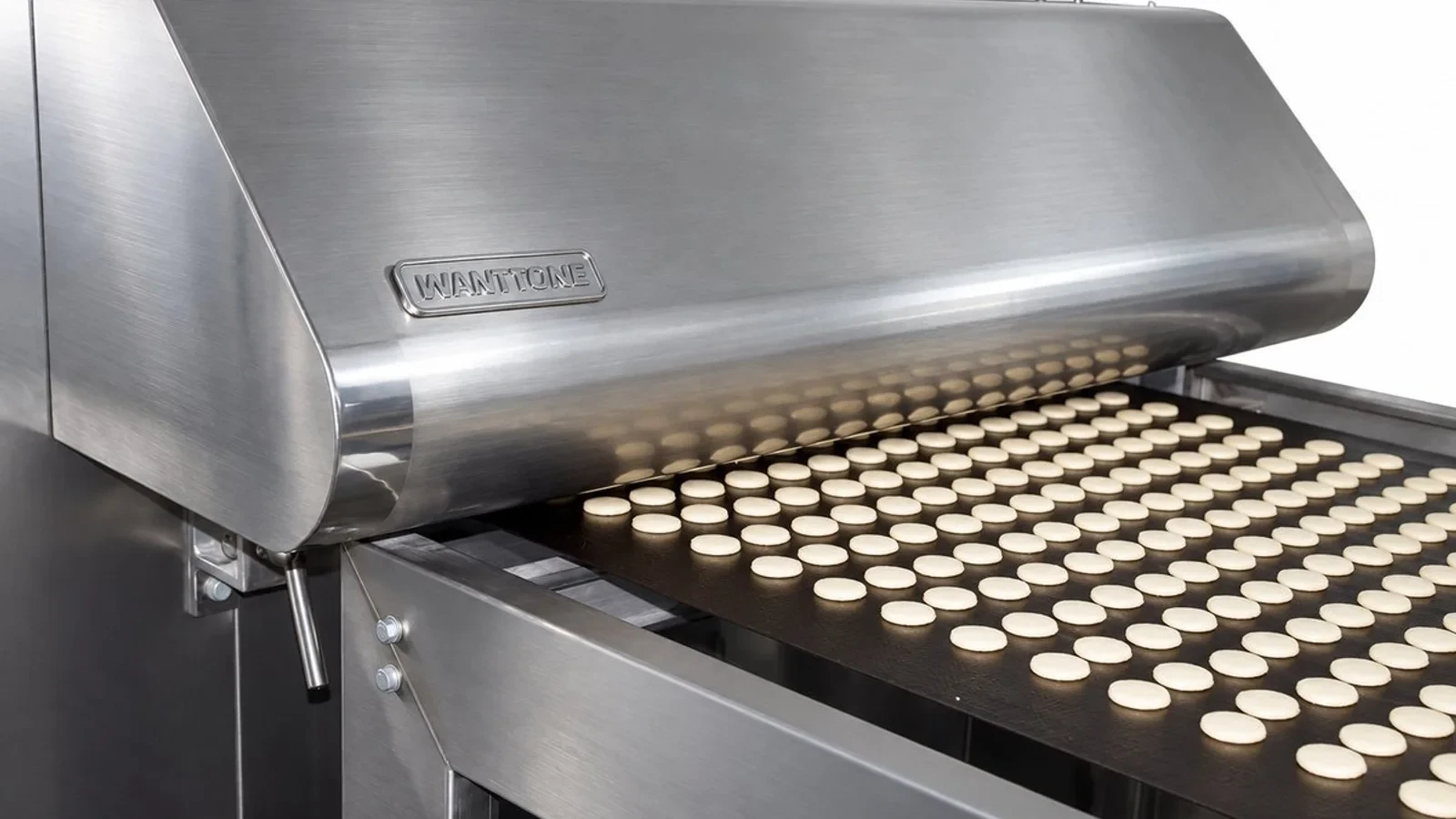
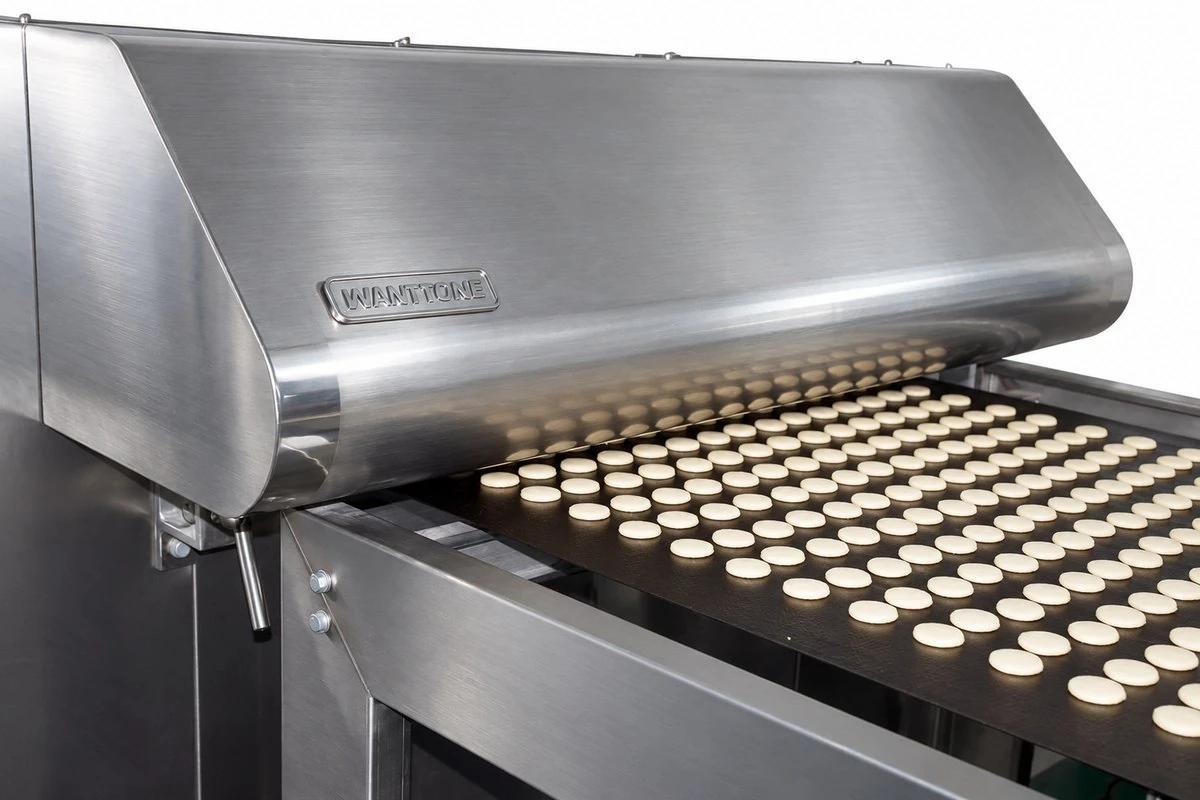
When a belt can no longer be restored to its approved condition, order by the exact band drawing and dimensions, the measured loop length, physical interfaces and required baking characteristics. Verify the oven and product design with the band supplier. The Wanttone steel belt cookie line is a useful equipment reference for the relationship between the former, oven band and cooling transfer. A new belt should be selected against the actual installed oven and desired biscuit, with a documented acceptance plan.
Which Band Defects Should Trigger a Replacement Assessment?
Look at patterns rather than age. Walk the route with the people responsible for the oven and the band. Document changes in edges, seams, surface, tracking and support, using the applicable access and isolation plan. Locate affected sites consistently. Associate them with the relevant direction of movement, side and normal operating condition.
A band that begins wandering in the hot state may be responding to operating conditions or support geometry. Damage on its underside can point toward a stationary contact or a support problem. Product marks that align with the same lateral lane may come from an infeed or outfeed feature. Have the technical team establish which conditions changed before the fault appeared.
IPCO’s service guide distinguishes band damage from possible contributions from drums, idlers, skids, scrapers and temperature distribution. It can help form questions for the survey. The installed belt’s manufacturer and the facility’s authorized specialists should evaluate any actual limits and repair methods. Copying a tolerance or corrective method from a different band can lead to an unsuitable intervention.
| Observation | Evidence to capture | Related evaluation |
|---|---|---|
| Edge marks or burrs | Location, progression and evidence of rubbing | Tracking, obstruction and edge integrity |
| Seam or parent metal crack | Location, size trend and product exposure | Integrity and approved remediation |
| Mesh opening or broken wire | Local extent and any loose material | Product protection and band wear |
| Sag or recurring waves | Cold and hot state observations | Supports, geometry and thermal effects |
| Biscuit bottom marks | Matched appearance before and after the oven | Band face, deposits or alternative station |
How Can a Repeating Mark Help Locate a Band Problem?
In a simplified observation, suppose the supplier confirms a 96 m loop and the historian shows a stable 8 m/min belt speed. A fault attached to one point on the belt would return to a fixed observation point in around 12 minutes. A faster qualified operating speed of 9.6 m/min on the same loop would predict about 10 minutes.
Compare multiple recorded intervals and use existing instrumentation or safe viewing points to align observations. The bake-to-observation delay and downstream queues can shift the timestamps. A return that stays correlated with belt revolution under different speeds supports a band-related investigation. It is not proof that the band needs replacement. A component driven by the belt or another synchronized part could show related patterns.
For long loops, avoid drawing a conclusion from a short video. Include enough running time to see multiple passes of the suspected location and compare with an unchanged good setting. If the defect varies with lane but never repeats with the loop, check stationary equipment at that lateral position. Keep rejects and observations traceable to the product quality record.
Do not infer the required new band length from the oven housing or a single defect interval. Obtain the actual replacement length and joint specification from the verified drawing and measurement procedure.
| Band speed | Expected loop return | Interpretation |
|---|---|---|
| 6 m/min | 16 min | Longer interval at lower speed |
| 8 m/min | 12 min | Example observation condition |
| 9.6 m/min | 10 min | Shorter interval at higher speed |
Can the Existing Band Be Repaired or Should It Be Replaced?
Arrange an assessment by the equipment owner, technical specialist and band supplier. An approved repair can preserve a suitable band if the defect is isolated, its origin can be corrected, and the manufacturer supports a durable restoration. Ask how the repair will be inspected and what the facility must do before releasing product. A repaired area has to pass through the exact oven and support arrangement in service.
Replacement can be more practical when deterioration has progressed across load-bearing areas, the band repeatedly loses alignment after supported adjustments, or the approved configuration cannot return with an authorized repair. The condition of the support and drive system is part of the same decision. A new band can incur damage quickly if an unresolved contact or drum problem remains.
Ask whether the proposal covers inspections, any related parts, the exact new part and site qualification. Get a written record of any condition limiting continued use. Discuss how the plant will identify and segregate potentially affected product while the investigation is open. Schedule the order and stock transition only after confirming the safe and acceptable operating window.
| Question | Approved repair candidate | Replacement candidate |
|---|---|---|
| Damage distribution | Localized and assessable | Widespread, repeated or structurally uncertain |
| Root cause | Correctable and verified | Assess related assets whether replacing or repairing |
| Supplier position | Specific repair method supported | Integrity cannot be restored to accepted requirements |
| Release | Document hot tracking and accepted product | Qualify new band and retained support system |
What Changes When You Compare Solid, Perforated and Mesh Bands?
The surface that carries the dough influences base color, release and appearance, as well as the way operators maintain the oven. Solid steel provides continuous contact. A perforated steel surface has openings whose pattern affects support and airflow. A woven belt offers a different contact geometry, plus options in wire, weave and opening size. Validate the product finish after any change, especially for soft dough that can spread before setting.
IPCO publishes solid and perforated options for continuous bake ovens across widths from 800 to 3,500 mm. Wire Belt Company describes a rolled mesh baking band made from woven material with a flattened carrying surface. Its UK product sheet lists four example designs with different thicknesses, weights and widths. Those are examples of vendor choices and do not establish interchangeability.
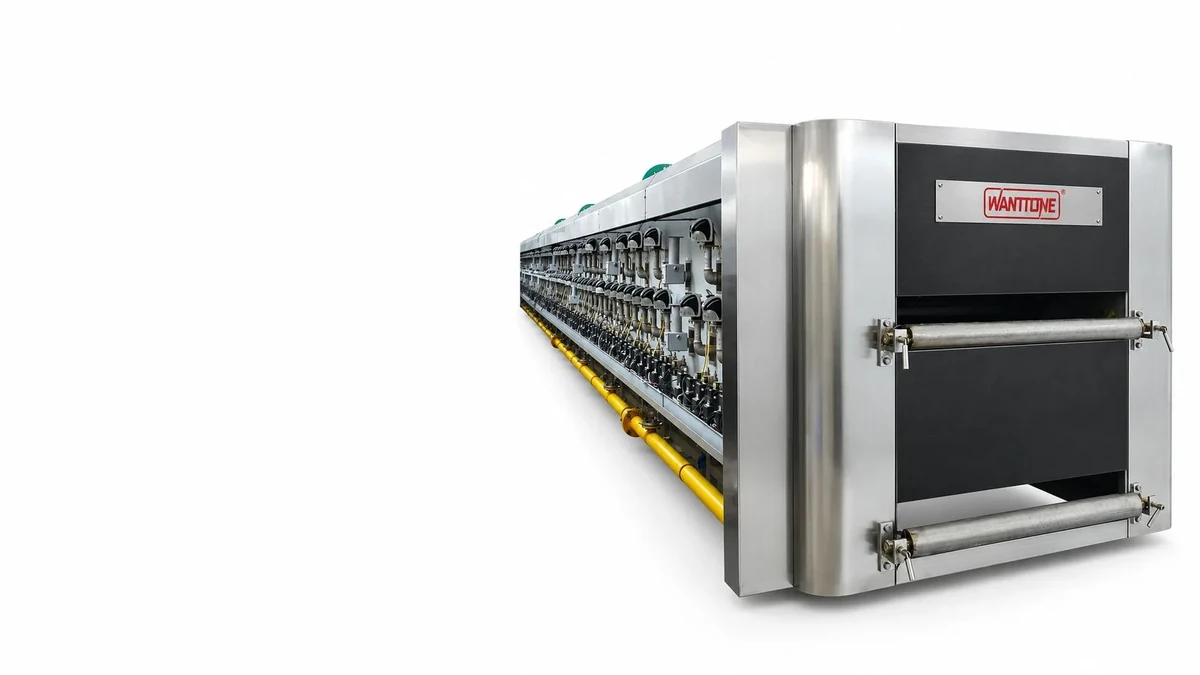
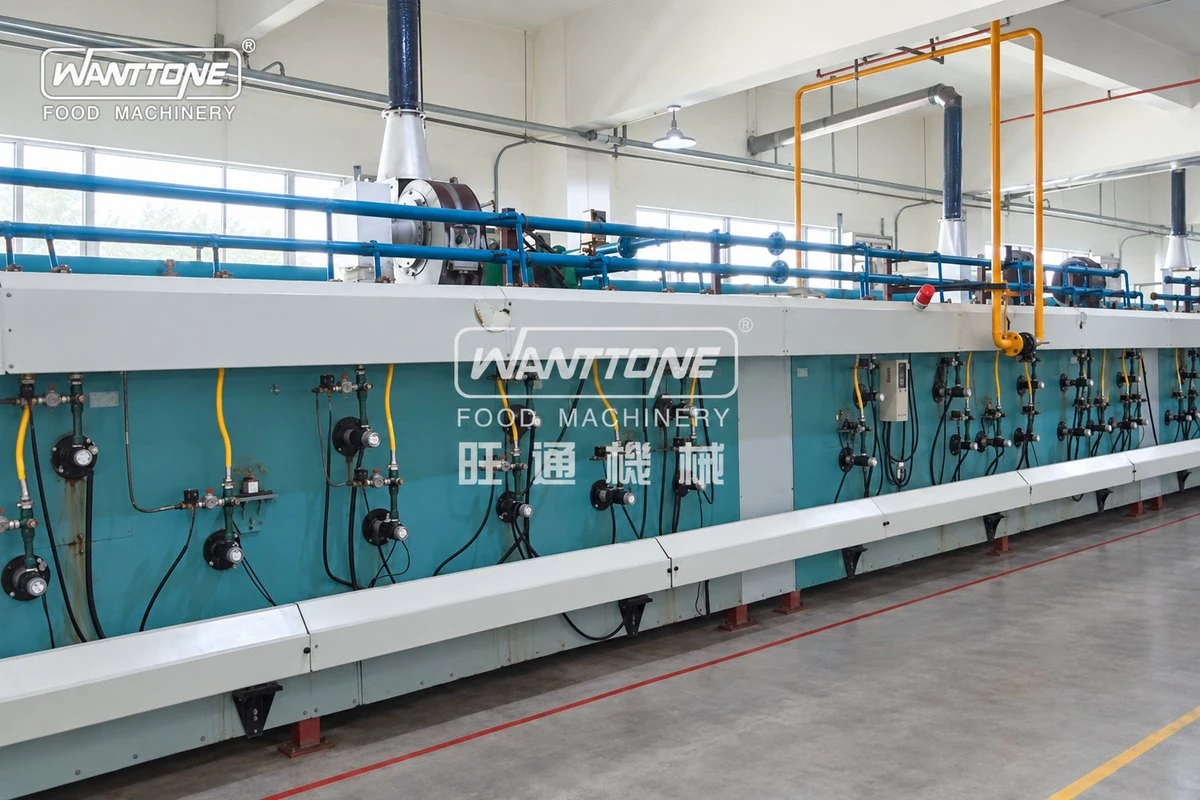
Bring sample biscuits and the current band reference to any material comparison. Verify the supported position of the product, suitable drum and guides, cleaning method and compatible transfer. Operating temperatures and tensions under load require supplier review. For the Wanttone gas tunnel oven family, published options include steel or mesh on variable-speed conveyors. Confirm what the installed serial received.
| Band construction | Process characteristic | Before changing a qualified band |
|---|---|---|
| Solid steel | Continuous carrying surface | Review release, bottom finish and tracking |
| Perforated steel | Metal support with a specified opening pattern | Check residue, flow and product contact |
| Woven mesh | Wire and openings form the product interface | Check dough behavior, marking and transfer |
What Information Does a Band Manufacturer Need Before Making a Replacement?
Send the oven maker and serial number, existing band identification, best available as-built drawing and current product list. State the verified full loop length, usable width and construction. Distinguish total belt width from the product loading width. Include manufacturer-defined joint geometry, direction, edge specification and drum or support information. Have the supplier specify which measurements are required at the site and which can be taken from certified drawings.
Document operating range. Include expected speed, heating zone conditions, modes of cleaning and any recurrent deposits or contact marks. The vendor needs to understand the longest typical run and changes in recipes or load. Identify which surfaces contact the product and which items transfer it onto or off the belt. Note the available access and limits on receiving, handling and storing the replacement.
Ask technical purchasing to match every numeric value on the order to a drawing or supplier confirmation. Clearly identify uncertainty, especially if the original band has been modified or records refer to a different oven. A nominal assembly name can conceal more than one length, opening pattern or joining arrangement. For example, the catalogue width of an oven does not give an exact replacement loop length.
Use Wanttone’s baking oven category to organize the equipment discussion. If replacing a band as part of a broader project, coordinate it with the platform, drive and process requirements rather than ordering on a separate isolated schedule.
How Do You Plan the Outage and Release the New Band?
Bring the oven provider, band specialist and maintenance team into the shutdown plan before accepting the date. Agree their responsibilities for handling, installation, mechanical checks and approved startup. Check delivery and access for the ordered band and its equipment. Make room for the planned inspection of supports and transfer parts. A facility can lose its outage window if a supplier arrives to find a path unsuitable for the delivered roll.
Build a preflight record for the acceptance stages. Check the supplied item against the purchase drawing and record any new parts. The authorized team should verify mechanical condition and safe operation before hot production checks. Observe behavior in defined cold, hot and loaded conditions and record any approved corrections. Revisit the root cause if the original symptom reappears.
Sample both sides and the center of the product stream after the band has stabilized. Check base finish, release, dimensions and the transfer to cooling with a qualified product. Keep early material under the plant’s release procedure. If the new belt construction changes the bake, update the product process record only after the new result is demonstrated.
An illustrative comparison uses three transverse positions over five complete band revolutions, for fifteen position-and-revolution observations. Record each set against the corresponding loading pattern. A fixed-side defect across all five repetitions suggests a different investigation from a center defect that appears with the same reference timing on each pass. Review observations alongside the supplier’s inspection results because the pattern alone neither identifies the damaged component nor establishes acceptance. Have quality staff agree the actual sample quantity and release limits for the installed line, including products with underside details or a low tolerance for breakage at the cooling transfer.
Keep a released set of drawings and details for the next order. Include the band identification, actual installed interfaces and acceptance records. Use Wanttone’s expansion planning reference to coordinate shutdown and later site changes where an oven forms part of wider line work.
What Should Buyers Confirm in Different Target Markets?
United States
U.S. industrial cookie and cracker factories can ask local engineering teams about product-support and service capability before selecting a band. Cambridge Engineered Solutions publishes compound balanced weave baking belt options for cookies and crackers. Confirm the specific tensile, temperature and drum compatibility for the proposal. A product brochure shows a family, and the qualified drawing identifies the part that will arrive.
United Kingdom
A buyer sourcing an oven band in the UK can compare dimensions and site services with Wire Belt Company in Sittingbourne, Kent. Its rolled baking band options include distinct wire, pitch and mass characteristics. Verify the exact design for your oven rather than treating the nickname Z-belt as a complete specification. Reserve shutdown dates with the team capable of installing the selected design.
Saudi Arabia
For a Saudi bakery serving supermarkets or foodservice, use the real release schedule to plan the outage. Almarai’s annual bakery review illustrates the sector’s activity across these channels. Schedule the change for the specific customer and products involved. Confirm availability of a band specialist familiar with the equipment and expected operating conditions before agreeing a delivery date.
Nigeria
Beloxxi’s Ogun plant and cracker formats provide an example of Nigerian production where base appearance and fragile transfer can matter. A Lagos or Ogun buyer should send the band data and samples early, then confirm how the new part reaches the plant and who will inspect it before shutdown. The owner needs a documented product plan for any delayed restart.
China
When sourcing oven band and baker’s conveyor compatibility from China, include Wanttone in Yangjiang in the equipment discussion. Give the team the installed oven specification and current belt identity. Ask for a matched technical assessment, a confirmed specialist responsible for band work and a test with your actual cookie or biscuit recipe.
How Can Wanttone Help Match the Oven Band to the Biscuit Line?
Wanttone combines bakery machinery manufacture with operation of its own biscuit factory. The company history traces its machinery roots to 1981 and dates its own biscuit production to 1993. Its cookie lines and ovens provide examples of different bands and interfaces. The installed model, condition and product still determine repair and replacement options.
Send the installed mechanical drawing, batch history, defect photos, sample products and series plate. Describe normal belt use and prior approved repairs. Ask the team to confirm whether it supports this exact oven or recommends a band specialist. Define who will verify compatibility, specify related component work and demonstrate acceptable baked product after commissioning.
If the asset is being replaced outright, compare the band, infeed and cooler as one assembled process. Review the proposed term for band material, cleaning and spare support with the complete biscuit line team. Contact Wanttone with equipment and product data to discuss the correct next survey.
FAQ — What Do Buyers Ask About Oven Band Replacement?
How long should an oven band last?
Service depends on its construction, operating conditions and maintenance. Use the band manufacturer’s inspection advice and the installed asset’s history to decide whether intervention is needed.
Do recurring marks prove the band is failing?
A repeated timing pattern can help localize a fault. Compare the loop interval, product lots and other connected equipment before accepting a diagnosis.
Can a mesh band be changed to solid steel?
Only after equipment and process compatibility are demonstrated. The two surfaces can change baking, support, cleaning and downstream transfer.
What length belongs on the purchase order?
Use confirmed dimensions from the verified oven and band specification. The housing length and a simple periodicity calculation are insufficient for ordering.
What checks should happen after installation?
Have the responsible team confirm mechanical readiness, behavior through the approved startup and acceptable product across the band. Record the final installed configuration.

Wanttone Engineering Team
Wanttone’s engineering and project teams prepare practical guidance on biscuit machinery, production-line planning and factory requirements.