Quick Answer
A tunnel oven retrofit is worth evaluating when testing points to a recoverable limit inside an oven that can still support the product, frame, band and plant utilities. A targeted intervention can address unsupported controls, uneven temperature response or energy losses. An extension can add dwell time or production opportunity when space, structural interfaces and downstream equipment allow it. Compare a replacement oven when the retained structure, hygienic boundary or basic process does not suit the future line.
Start with one measurable problem: unstable moisture, unacceptable color across the belt, burner interruptions, high fuel use per accepted tonne or a product that needs a longer bake at the target throughput. Measure the current result over full relevant runs, then have qualified plant and supplier teams document which components they can retain. The engineering review should include energy isolation, thermal condition, access and current protection arrangements.
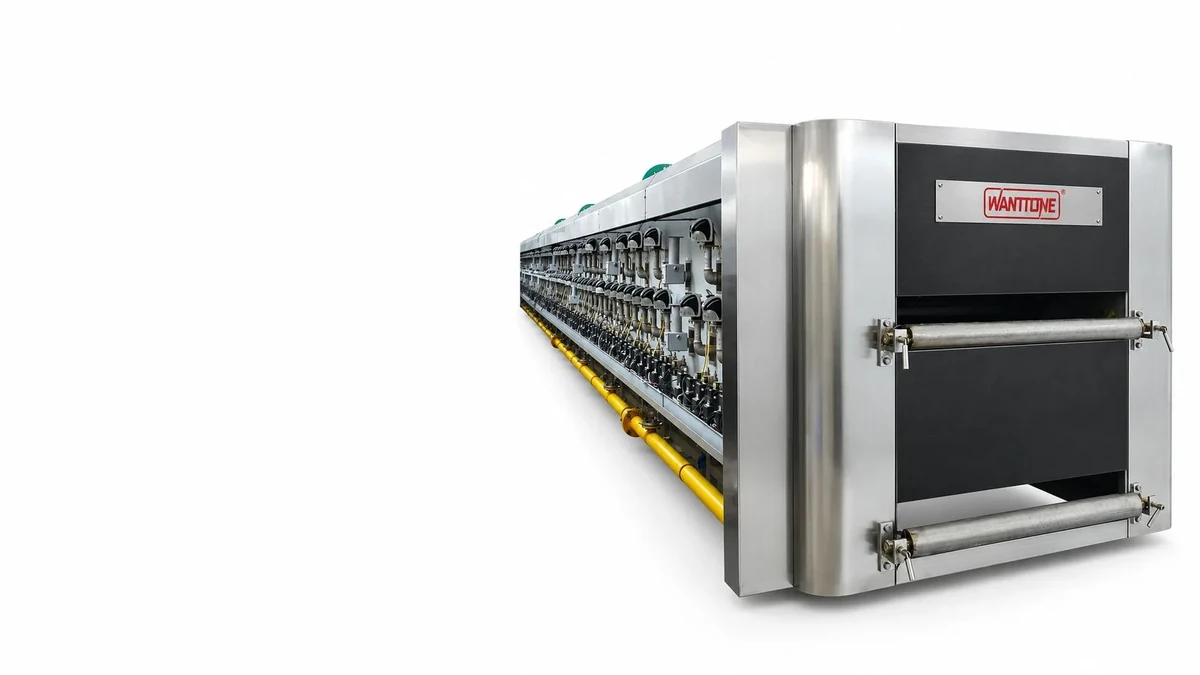
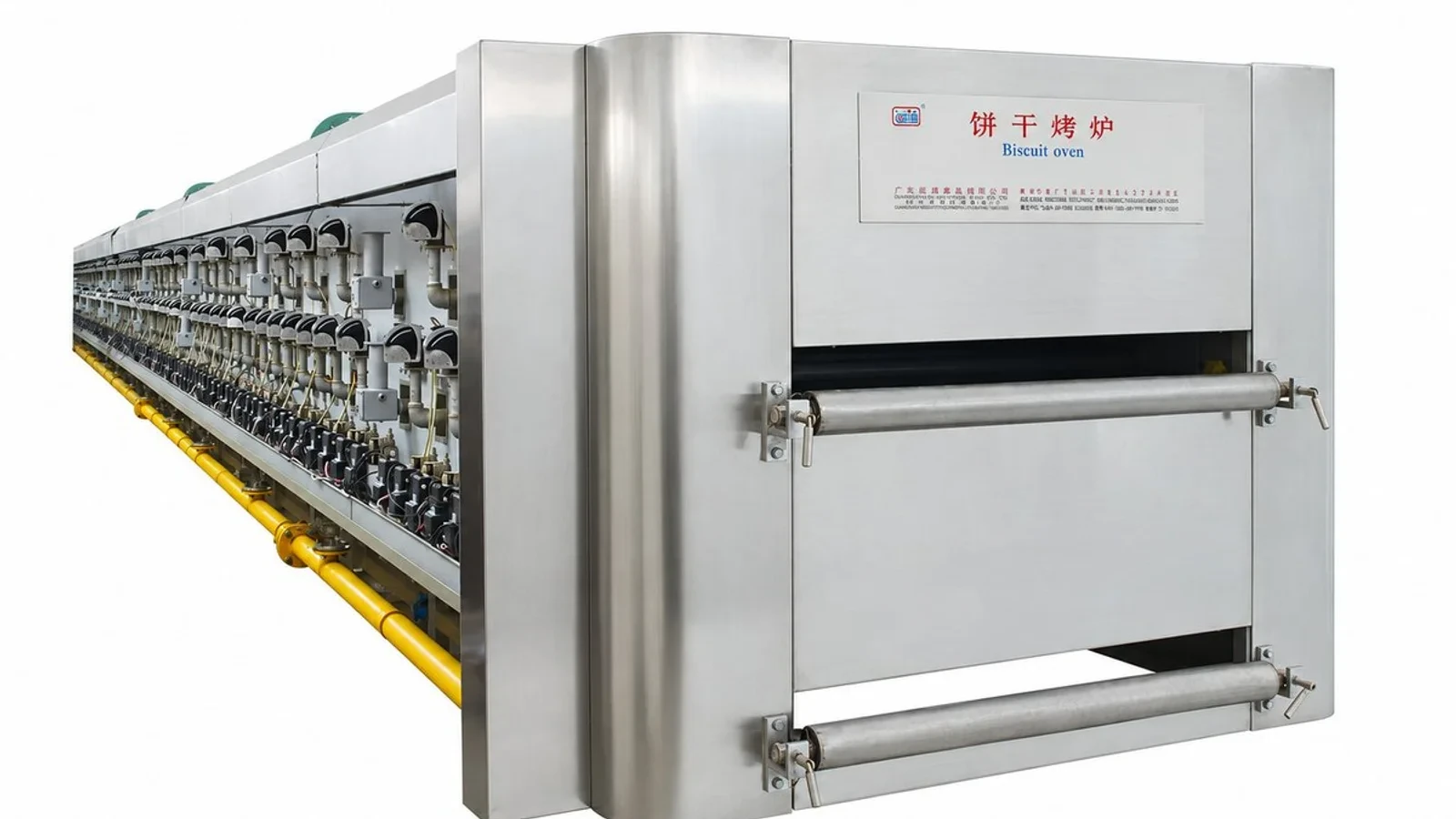
Wanttone’s biscuit tunnel and bakery oven range provides gas, electric and other project-specific options. An oven specification can help define the new scope, while a retrofit of an installed system requires a separate survey. Ask the team to show how the work will improve the agreed product or operating measure and which test will demonstrate it after restart.
How Do You Tell Whether the Oven Is Causing the Problem?
Before approving an oven change, trace what reaches the oven and what comes out. Sample dough mass and geometry across the infeed, then collect corresponding product after baking and cooling. If a light lane is already light before the bake, altered heating may only obscure an upstream forming issue. A texture issue that appears after packing can also reflect cooling or packing rather than baking.
Use dates and product identifiers to relate defects to stops, recipe changes, ventilation behavior or zone adjustments. Have the technical team collect zone trends, actual band speeds and loading conditions. Document whether the defect arises under one product, a specific production state or across all recipes. Discuss whether band release or downstream movement could explain the symptoms.
Measure suitable outputs under representative running conditions. Temperature is one input. The customer sees color and texture, and the packing team needs the right shape and cooled strength. Set the product test according to those functions. Link the symptom to a part of the process with a controlled test, then discuss the intervention.
| Observed symptom | Matched observations | Candidate technical review |
|---|---|---|
| Lane color difference | Infeed mass and matched exit samples by lane | Heating distribution and load pattern |
| High fuel per net tonne | Fuel and released output over same window | Idle, leakage, firing, exhaust and product yield |
| Persistent incomplete bake at qualified pace | Dwell, band speed and product result | Effective heated length or recipe capability |
| Loss of recipe recall | Exact controls, backups and event history | Supportable control replacement and validation |
| Marks or poor release | Band condition and point of defect onset | Surface, cleaning or transfer inspection |
What Is the Difference Between Control, Thermal and Length Retrofits?
A controls package can preserve the approved physical process and improve stable set-up, visualization or serviceability. Agree how recipe data and the machine’s operating states will be preserved or migrated. Obtain a plan for verifying alarm behavior and operator access before releasing the new controls. Include required components and a supported backup.
A thermal project can address inefficient heat delivery or trouble maintaining the bake profile. Have the supplier inspect the retained assembly and utilities. It should define which changes affect heat delivery, airflow and the protection functions. Product trials and technical acceptance are required after changes. Check whether the upgrade can maintain every important recipe instead of optimizing only one test product.
An extension changes the belt and process geometry and may require a revised drive, support, extraction and transfer design. Ask what the site must provide to connect new modules. Confirm the way oven residence time and approved product loading relate to the proposed higher rate. The packaging equipment must have separately proven room for any gain.
Baker Perkins publishes optimization, extension and upgrade services for parts of its oven portfolio. Treat that as a market example of distinct work categories and confirm eligibility for the actual installed oven with its supplier.
| Project | What normally stays in scope for retention | What needs proof |
|---|---|---|
| Controls | Serviceable chamber, band and compatible thermal hardware | Recipe accuracy, protected states and response |
| Thermal | Qualified structure and interfaces where suitable | Approved heating performance and utility loads |
| Extension | Retained compatible sections and interfaces | Continuity of band, structure and process design |
| Replacement | Site interfaces and downstream assets where qualified | New system fits and meets all product obligations |
When Does More Heated Length Deliver More Capacity?
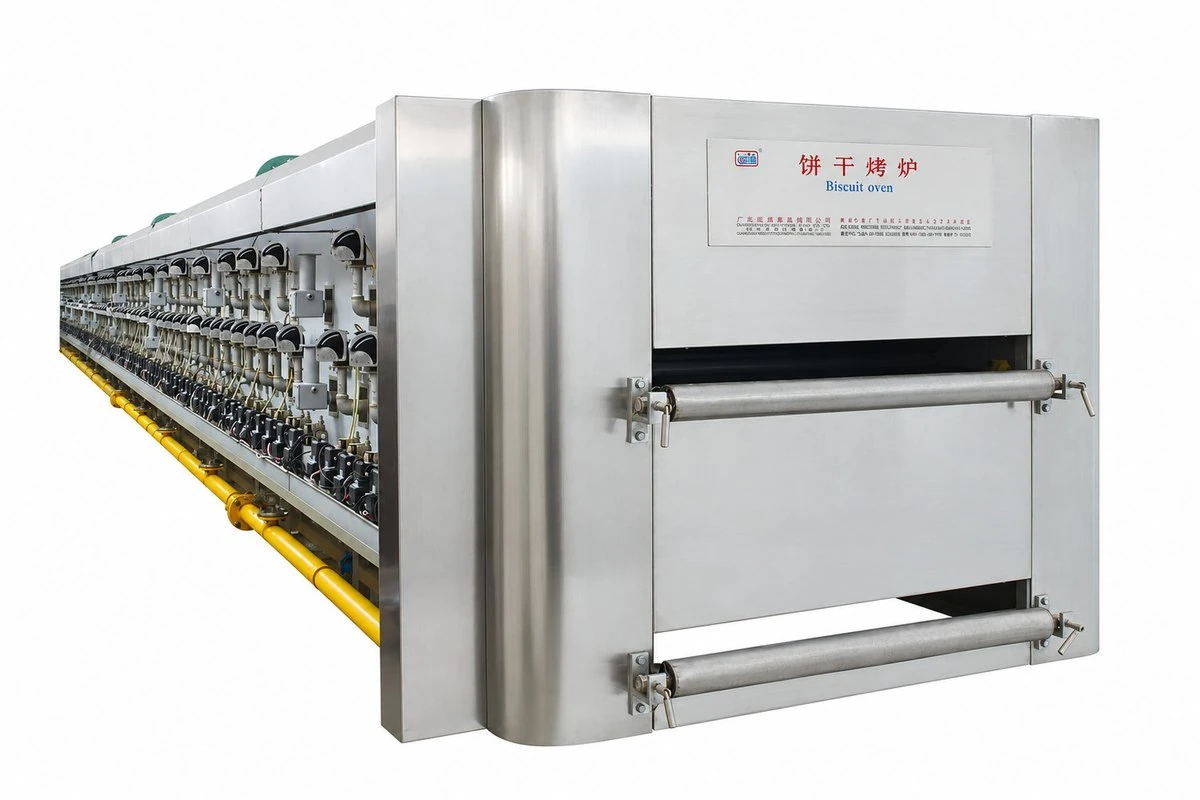
Effective heated length divided by belt speed gives the approximate time available in the heated path. Identify the actual points used by the oven maker. Outer casing length can include transitions and areas outside the controlled bake. Record the ratio under the conditions that produced accepted biscuits.
For a worked example, assume 28 m of effective heated length and a product validated at 7.0 minutes of residence. That corresponds to 4.0 m/min. With 35 m of effective heated length, 5.0 m/min also yields 7.0 minutes. At the same product density per metre, 5.0 compared with 4.0 m/min implies 25% more material through the heated path in theory.
At 5.0 m/min with only 28 m, the residence time is 5.6 minutes. That shorter exposure cannot be treated as equivalent baking without evidence. Even with added length, zone proportions and heating conditions must be validated. A nominal percentage increase assumes matching belt loading and continuing product acceptance. Actual good packs also depend on the forming, cooling and packing system.
| Effective length | Belt speed | Residence time | Decision note |
|---|---|---|---|
| 28 m | 4.0 m/min | 7.00 min | Example approved baseline |
| 28 m | 5.0 m/min | 5.60 min | Shorter exposure needs independent validation |
| 35 m | 5.0 m/min | 7.00 min | Equal total time only, verify profile and product |
How Do You Compare Fuel Use After a Retrofit?
Ask plant engineering to record preheat, stable production and idle periods on a common time basis. Choose at least one matched product and compare the recipe, accepted output, belt loading and released results. Keep cooling and packing consistent where possible. If the plant uses a common meter that includes other equipment, arrange a credible measurement boundary before claiming oven savings.
Wanttone publishes a typical natural-gas figure of 40–60 m³ per tonne for its gas tunnel oven, with final specifications configured by project. The page does not establish a comparable test for your product, production window or metering basis. Specify whether reported volume is normalized to a defined condition, which loads are counted and where the accepted mass is measured. An installation’s billed energy may use a different basis from nominal gas volume.
Consider a matched hypothetical result at 1.8 accepted tonnes. An 110 m³ baseline equals 61.1 m³ per accepted tonne, while 98 m³ equals 54.4. The reduction in measured volume at the same accepted mass is 12 m³, or 10.9%. If the project changes the accepted product or shift length, verify that the two cases remain a fair comparison. Keep electric auxiliary input separate. No saving is promised by this illustration.
| Measure | Baseline | After candidate retrofit |
|---|---|---|
| Gas volume in study window | 110 m³ | 98 m³ |
| Released mass | 1.8 t | 1.8 t |
| Gas per accepted tonne | 61.1 m³/t | 54.4 m³/t |
| Absolute difference | Reference | 12 m³ total lower, 10.9% |
Which Retained Parts Could Block the Retrofit?
Survey the oven structure, insulation, chamber, product band, drive and extraction systems with their responsible specialists. Photograph nameplates and identify which drawings still represent the equipment. Note the available space for maintenance, access routes and approved utility points. Restrict technical inspection to the appropriate personnel and procedures on the site.
Ask for a written list of items that remain fit to retain and a deferred-work log. A serviceable new control design cannot make an unsound shell suitable for continued operation. A band defect or unstable transfer may require its own project rather than a heating change. Have the oven builder and plant team agree what evidence closes each question.
If considering a change in heat source, inspect the supply for the exact proposal before reserving equipment. Wanttone’s published electric tunnel oven schedule separates rated heater power in kW and power supply capacity in kVA. As one reference, its Model 800 at 30–38 m lists 350–500 kW heating and 630 kVA supply capacity. Use those figures only to understand utility scale. Confirm project-specific requirements and separate them from measured energy use.
Ask the installation lead to mark any retained pipe, cable, duct or support whose condition or capacity is uncertain. Close those items before issuing the final upgrade specification. Include the as-built documentation and trial records in handover.
How Do You Schedule a Retrofit and Test the Result?
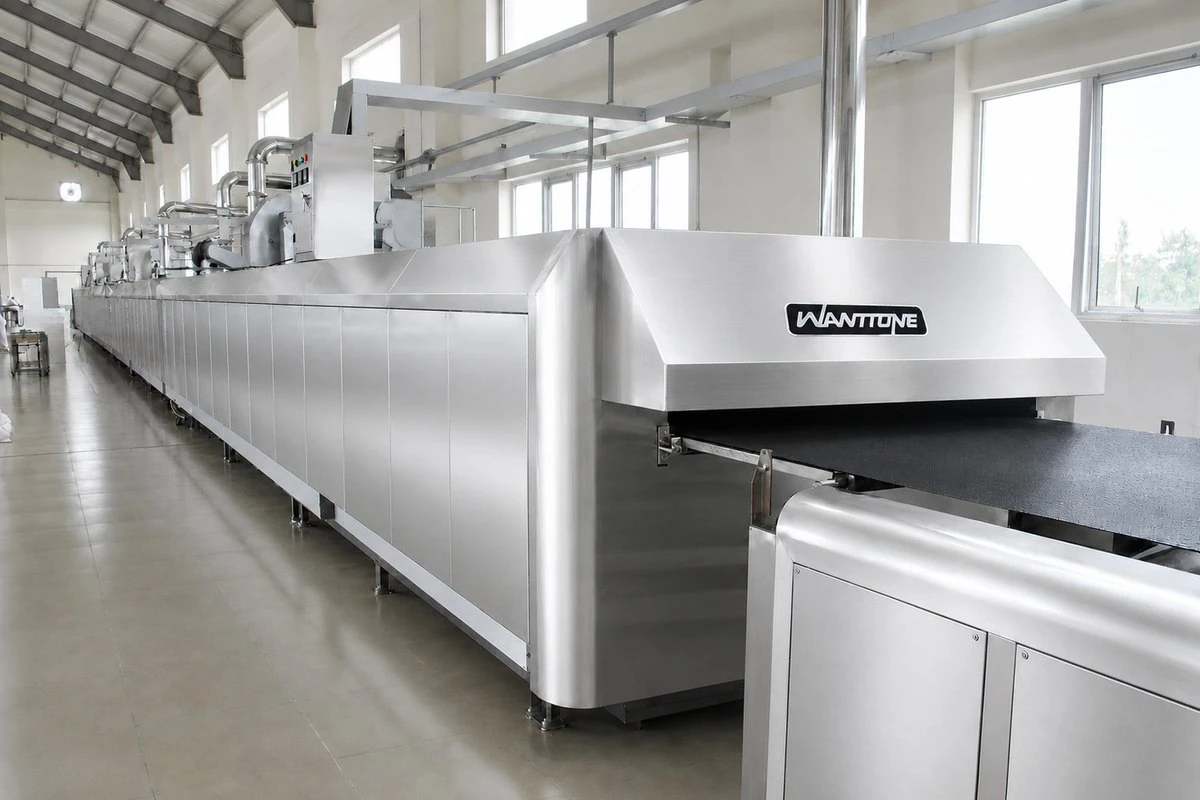
Construct the outage calendar from the last acceptable run to the first newly accepted shipment. Include production rundown, site preparation, cooldown and authorized access before intervention. Allocate time for physical checks, supplier start-up, temperature stabilization and product trials. Maintain a product availability plan and a decision point if a key retained interface fails inspection.
Agree the acceptance plan early. It should define products, release criteria, loaded test duration, measurement methods and how controls or heating changes will be inspected. Record belt speed and approved load before and after. Compare the distribution across the belt, because an acceptable line average can hide one lane consistently outside the limit. Consider short starts and stable runs if both matter in operation.
For an extension, include a zone-by-zone sketch before asking the vendor to meet a total dwell target. In the hypothetical 28 m oven, an active first zone spanning 8 m represents 2.0 minutes at 4 m/min. If that zone stays 8 m while the overall belt rises to 5 m/min, first-zone dwell becomes 1.6 minutes even though extending the whole path to 35 m keeps total dwell at 7.0. An effective first zone of 10 m would be needed to preserve its 2.0 minutes at that new speed. The relative durations change, which can change early spread or surface development. Have the process team evaluate each stage with product evidence. The sketch should identify which lengths are effective, where sensing occurs and what the technical team will verify after commissioning.
If a retrofit needs tuning across several recipes, release each agreed family according to the test plan rather than relying on one launch item. Document original recipes, approved revised settings, product samples and the reason for each relevant adjustment. Treat outstanding work that affects production or safe operation according to the plant’s release process.
Discuss work timing using the capacity expansion application when the project is part of a wider staged upgrade. Confirm availability of the owner’s maintenance staff and installers throughout the test and recovery windows.
How Might Local Market and Service Conditions Change the Decision?
United States
For a U.S. cracker or cookie plant considering a tunnel oven retrofit, schedule the outage around actual retailer order windows. Reading Bakery Systems offers service programs as an industry reference. Ask who can survey the installed asset, provide critical parts and validate controls support at your location before comparing an overseas equipment package.
United Kingdom
UK biscuit producers can compare targeted support with full renewal. Baker Perkins publishes performance optimization and extension services for existing biscuit, cookie and cracker ovens. Verify the maker and age of the installed assets and confirm whether those services apply. In a constrained Midlands bay, review retained footprint and dispatch impacts with the facility operator.
Saudi Arabia
An established Saudi bakery serving retail or foodservice can use order seasonality to identify a feasible break in production. Almarai reports activity across both channels. In Riyadh or Jeddah, verify the plant’s available fuel and technical service before relying on an extension or burner package, and use the site’s own energy and output readings for the proposal.
Nigeria
For a Nigerian biscuit producer, packaging requirements and local orders can make the full production path more important than oven capacity alone. Beloxxi’s Ogun factory and published small pack formats illustrate a relevant setting. Confirm spare support, site power and practical outage cover with the local team before committing to overseas modules.
China
For a tunnel oven retrofit supplier search in China, discuss your exact existing oven with Wanttone in Yangjiang. Provide the old drawings, photographs, usual products, available utilities and desired industrial throughput. Ask for a written survey scope, technical qualification steps and responsibilities for site work, test and release, before ordering modified sections.
How Can Wanttone Help Decide if a Tunnel Oven Retrofit Is Practical?
Wanttone supplies ovens and biscuit equipment and also produces biscuits in Yangjiang. The company profile traces the machinery operation to 1981 and the company’s own biscuit production to 1993. For an installed oven, confirm which specific services and parts are available. Surveys and test evidence should determine whether retained equipment can meet the wanted process.
Give the team the oven length and width, utility schedule, installed controls, approved recipes and evidence of the problem across shifts. Include the event history and how product is currently inspected. Identify which site works and mechanical components are expected to remain. Request a description of the retrofit boundary, the specifications for new items and test obligations.
If renewal appears more practical, review the oven and transfer interfaces in the context of the complete line scope. Keep product measurements and site planning ready for both options. Contact Wanttone about an oven assessment with the actual asset data so the team can distinguish a suitable comparison from a generic capacity discussion.
FAQ — What Should Buyers Ask About Tunnel Oven Retrofits?
Can a retrofit make a belt run faster?
Potentially, when an approved bake profile, dwell time, belt loading and retained equipment support it. Validate accepted product and downstream handling at the proposed operating rate.
Does a new control package save fuel automatically?
Check meter data against matched products, loads and output. A controls project can improve repeatability or support while leaving fuel use per tonne unchanged.
Is a longer oven the same as a hotter oven?
Length changes available residence time at a given band speed. Heating distribution changes the thermal conditions the product experiences. A product trial must establish any useful equivalence.
Which files do I need to send to an oven supplier?
Provide drawings, utility data, band type and speeds, model and serial details, operating histories, actual product records and the desired change. State which interfaces must remain.
When should I compare a new oven as well?
Compare renewal if retained parts are unsuitable, essential protections and support cannot be restored, or the proposed geometry cannot deliver the future product profile.

Wanttone Engineering Team
Wanttone’s engineering and project teams prepare practical guidance on biscuit machinery, production-line planning and factory requirements.