Quick Answer
To increase tunnel oven capacity, measure how much product can be loaded per square meter of usable band and how long the approved product needs in the heated section. Check whether the oven can supply heat and remove moisture uniformly at the increased load. Better lane use can raise output at the same speed when spread and airflow allow it. A longer heated section can support a faster belt at the same bake time when the factory and utilities can accommodate it.
Do not move the speed control first. Confirm whether the oven is the limiting operation from accepted baked output, then show what the former, cooler and packaging can handle. A tunnel oven and baking equipment review should end with a product-specific trial and a technical proposal that distinguishes the equipment envelope from guaranteed production conditions.
Which Length and Speed Belong in the Calculation?
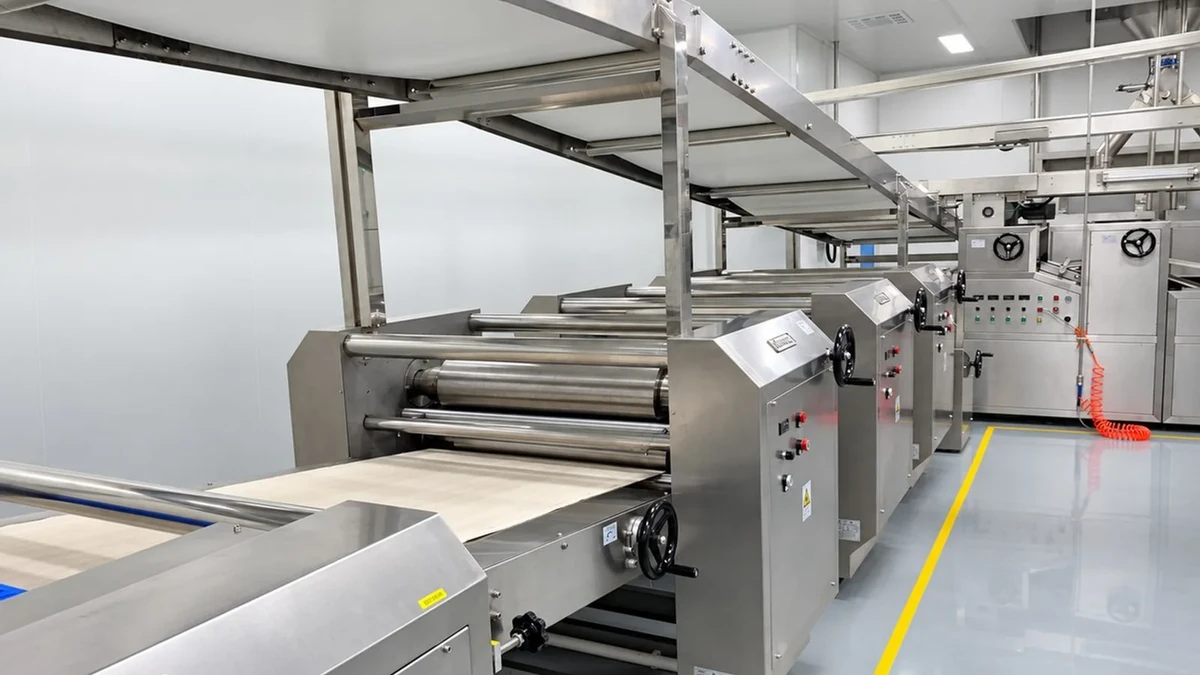
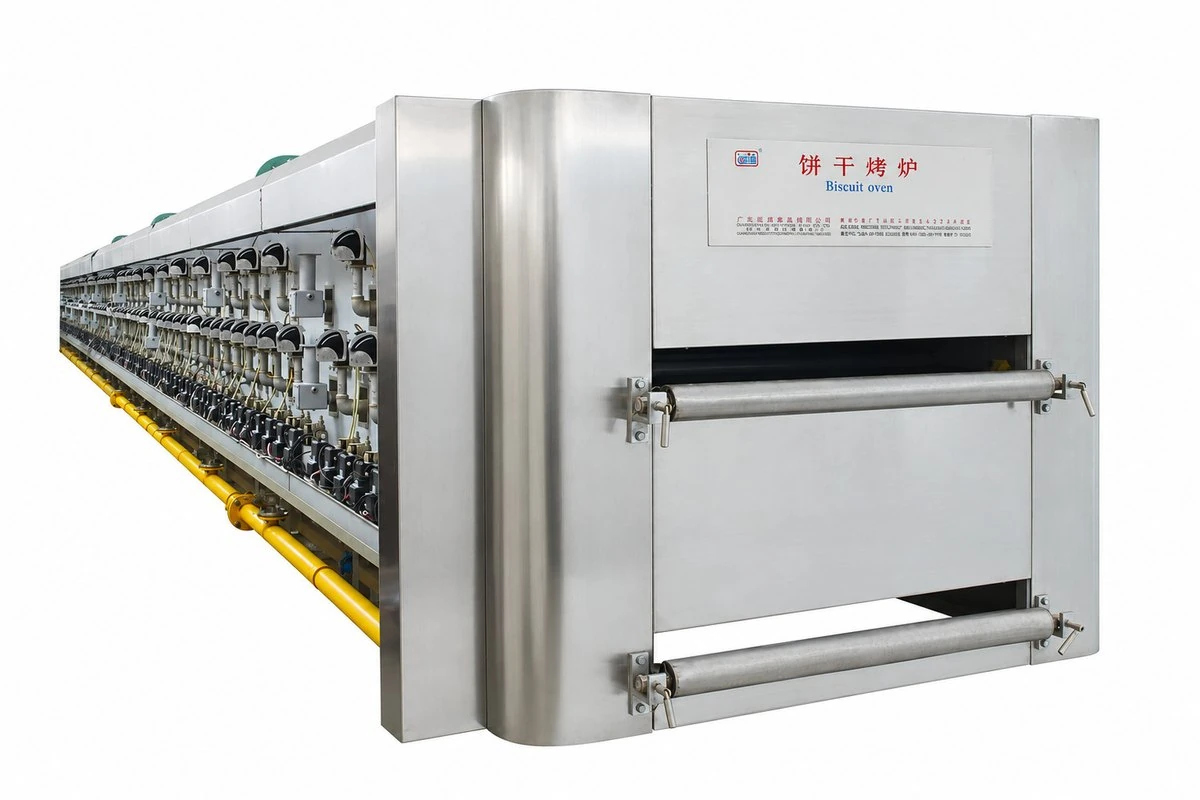
Measure the useful heated travel between the agreed points in the oven, using the manufacturer's drawings and approved access procedures. The total footprint can include an infeed, an outfeed and spaces outside controlled baking zones. Dividing the external machine length by belt speed can overstate residence time. Match the stated length to the oven's actual heating zones and record the time scale of the product temperature measurements separately.
For a steady belt, heated residence time in minutes equals heated length in meters divided by speed in meters per minute. If a biscuit needs six minutes across an effective 30 m at its approved profile, the corresponding speed is 5 m/min. Running at 6 m/min in that same length gives five minutes. The faster setting removes one sixth of the residence time. Any claim that it preserves quality needs an actual trial at the changed profile.
| Effective heated length | Belt speed matching six minutes | Assumption |
|---|---|---|
| 24 m | 4 m/min | Defined active length, uniform travel |
| 30 m | 5 m/min | Same product bake time |
| 36 m | 6 m/min | New zone arrangement still validated |
| 42 m | 7 m/min | Former, cooling and packing can absorb the additional rate |
The geometry is an initial check. A longer oven can run the same total time with different time in each zone. Establish the early heat effect on spread and structure, followed by the drying and color pattern the product requires. A faster entry can also stress the transfer where raw pieces land on the band.
Draw the baking zones with their individual active lengths and note how they would be affected by a speed increase. At 5 m/min, a 10 m front zone contributes two minutes. At 6 m/min, the same zone contributes around 100 seconds. Adding six meters at the discharge side can restore total oven dwell without restoring this early product exposure. If the front section governs spread or structure, the supplier may need to review the location of an added zone and the existing heating method. Document where the product begins to set and where the final color develops during a loaded trial.
How Can Band Loading Be Turned Into Baked Kilograms per Hour?
Usable width is the series of lanes that produce acceptable pieces across the belt. Leave margins based on actual edge quality and the supplier's band and guiding requirements. The nominal band width includes areas you may not be able to load. Weigh a known area of raw pieces at steady production and count missing placements. If you use a recipe placement drawing, check that the loaded line can sustain it without crowding or overlap after spread.
Multiply usable width by belt speed and raw load density to obtain kilograms per minute. Multiply by 60 for raw kilograms per hour. Apply baking yield and then the acceptance fraction. In the following example, 0.90 m width, 5 m/min and 1.5 kg/m² produce 405 kg/h raw load. With 90% mass retained after baking and 98% of baked mass accepted, output is about 357.2 kg/h. The example uses a fixed raw-to-baked yield for arithmetic. In a test, the yield can change with loading and temperature.
| Scenario | Usable width × speed × loading | Raw kg/h | Accepted baked kg/h |
|---|---|---|---|
| Baseline | 0.90 m × 5 m/min × 1.5 kg/m² | 405 | 357.2 |
| Better lane use | 1.00 m × 5 m/min × 1.5 kg/m² | 450 | 396.9 |
| Higher density | 0.90 m × 5 m/min × 1.65 kg/m² | 445.5 | 392.9 |
| Longer effective 36 m section | 0.90 m × 6 m/min × 1.5 kg/m² | 486 | 428.7 |
If a vendor represents finished output in packs, convert it using the stated pack weight and actual packaging availability. A 10% increase in accepted oven kilograms cannot overcome wrapper starvation at startup or frequent checks that interrupt pack release. Use the same time boundary for every process someone claims can keep up.
When Is Better Loading Preferable to More Oven Length?
Look for lanes lost to the product presentation before specifying new equipment. A properly functioning depositor may place a narrower pattern than the useful oven width. A broadening plan should check nozzle or die spacing and deposition consistency rather than just adding rows. A different dough may spread across the gap and touch when baked. Sample each lane for weight, height, color and moisture before accepting the added positions.
| Decision point | Improve usable loading | Extend heated length |
|---|---|---|
| Main lever | More approved pieces per meter of travel | More travel per minute for the same assumed residence |
| First constraint | Forming position, spread and edge quality | Floor space, zone duty and band support |
| Heat check | Recovery across wider or denser product | Heat balance and zone profile at increased speed |
| Factory disruption | Trial recipe and tooling changes | Layout, utility and commissioning sequence |
| Proof | Accepted pieces per lane under sustained load | Measured profile and accepted output at each transfer |
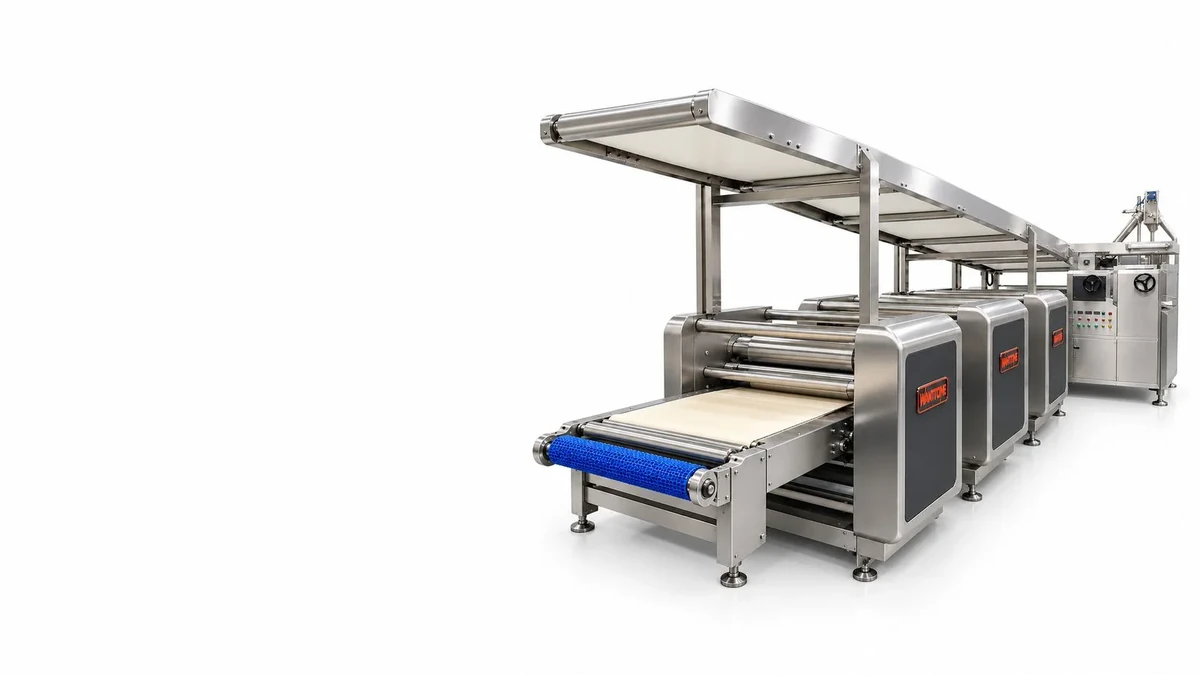
For industrial cookies, the steel belt cookie production line gives context for oven and forming width integration. For crackers, review the cracker production line when changes in product arrangement also affect lamination, cutting and transfer. Ask the supplier which parts of the upstream process would need modification to use the added baking width.
What Can Heating and Exhaust Limits Do to a Capacity Increase?
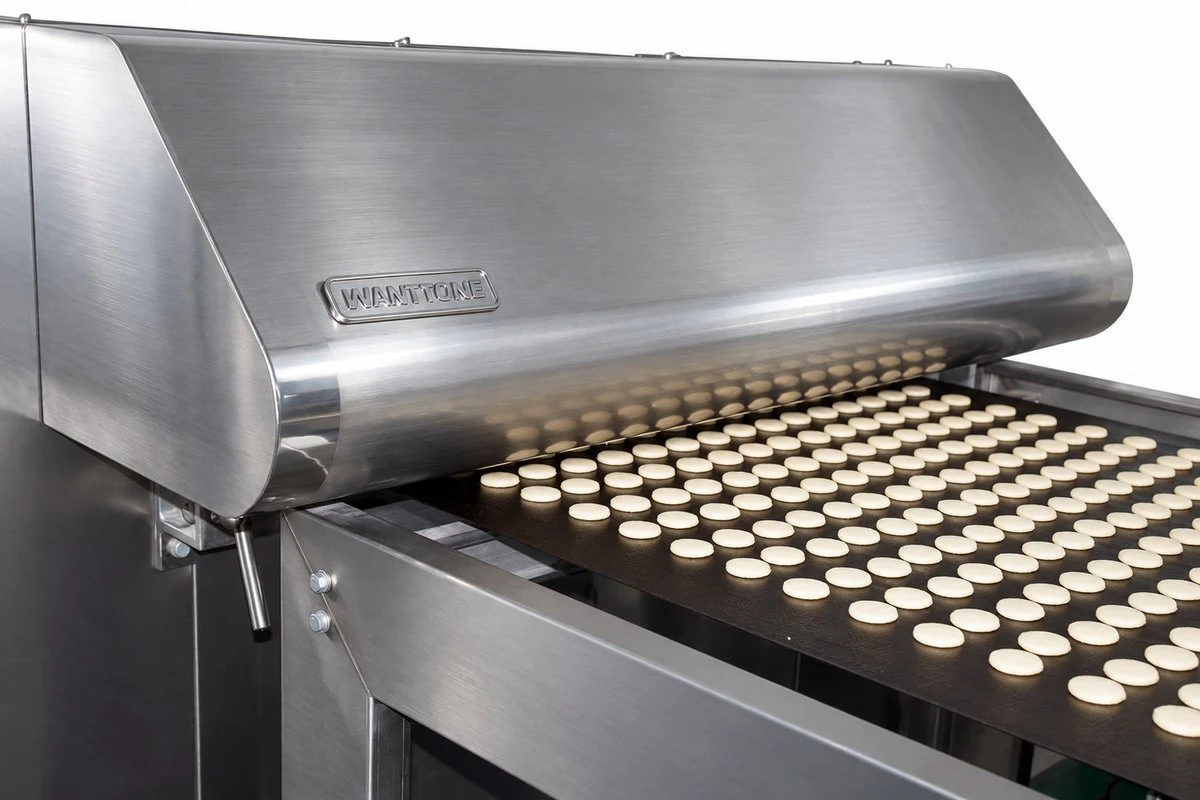
Repeat the bake at intended full loading. A response to an empty oven setpoint says little about heat recovery with continuous cool dough and water being removed. Record only safe, approved measurements gathered by qualified staff. Compare each zone's operating state, fuel or power demand and product observations from center and edge. The product's actual moisture profile matters, including variation within a sample of multiple pieces.
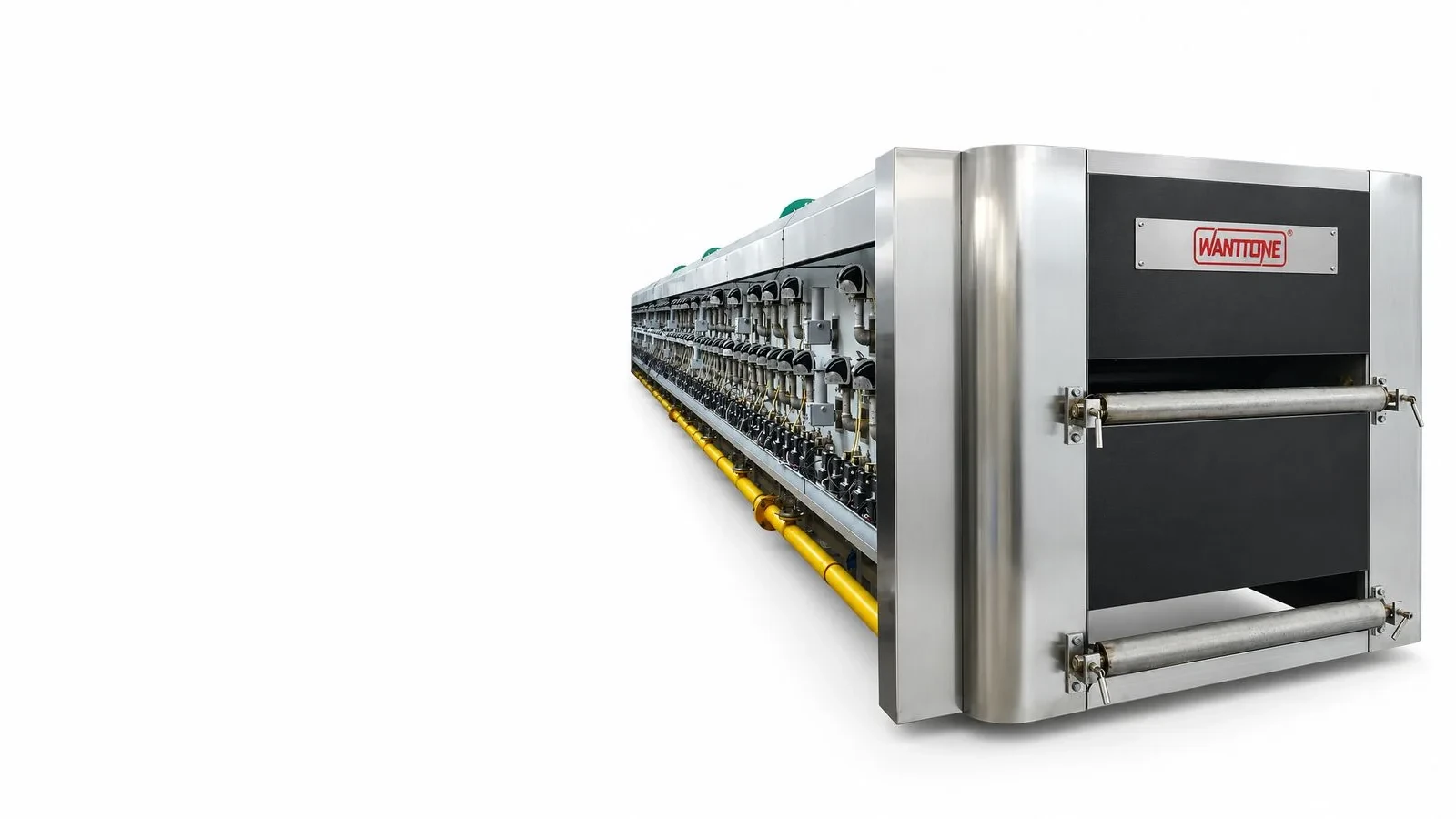
Wanttone's gas tunnel oven lists 12–60 m modular configurations, 2–4 zones and a 70–200 kW burner output per burner in its reference table. It publishes these as options for configuring the project. Those settings cannot establish the electricity or fuel actually consumed by a particular loaded oven. The electric model lists design heating power and supply kVA by model and length. Ask the manufacturer which configuration and incoming service is proposed, and confirm suitable capacity with the site's engineers.
Review how product changes affect the amount of water to remove and the performance of the existing exhaust and make-up air system. A denser pattern may also change the airflow near pieces. A proposal should include a loaded trial rather than using a hotter setpoint as the sole response. Formal changes to the heating system and ventilation need an engineered review before operation.
How Do You Validate Baked Yield at a Higher Line Rate?
Build an acceptance sheet by SKU. Specify an approved product range, the baseline profile, planned oven loading, samples at the edges and center and the units of measurement. Compare mass before and after heating consistently, using a documented method so tare and temperature effects do not make the trials appear different. Perform the same measurements after cooling for both conditions.
| Measure | Baseline | Proposed wider loading | Result to investigate |
|---|---|---|---|
| Raw load | 405 kg | 450 kg | 45 kg more material entering oven |
| Baked material before rejects | 364.5 kg | 405 kg | Assumes both retain 90% mass |
| Accepted share of baked mass | 98% | 95% | More rejects at proposed loading |
| Accepted baked output | 357.2 kg | 384.8 kg | Approximately 27.5 kg improvement before packing |
| Pack response | Check seals and breakage | Repeat with sustained flow | Determine sellable output after handover |
The gain is 27.5 kg using the unrounded calculations. Increase in raw flow is 11.1%, while accepted baked output improves about 7.7%. Whether that makes sense depends on the product specification, wasted ingredients, and commercial requirements. Test cooling and wrapping under the same loading. A poorly cooled product can pass an oven inspection while later failing packing acceptance. Include observations during one normal stop or restart if the agreed acceptance procedure calls for it.
The trial plan should name a product that proves the intended use. A light cookie with a short bake can reach the throughput target while a thicker product pushes the oven harder for the same accepted kilograms. Run the demanding product if it represents a large share of future orders. Label samples across the usable width and avoid mixing startup and steady portions in a single bag. This preserves evidence of where the additional rejects came from. Retain the previous approved operating settings alongside the new results, so quality and production staff can recognize the process window when crew or ingredients change.
How Should a Buyer Plan the Oven Installation?
Make an as-built layout with infeed height, discharge level, line direction and equipment access. Work with the installer on safe handling, available service space and the planned factory outage. A modular extension can require a longer band, different support and take-up capacity, longer duct routing and new guarding. Obtain a revised drawing with the line dimensions before committing to a final configuration.
Write separate requirements for utilities, temperature control and product transfer. The site team should agree who verifies electrical capacity, fuel service and ventilation. Include the post-oven cooling length and discharge conditions in the handover. Plan to use the existing line at the current validated rate while work progresses where the building design and approved work plan permit it.
The capacity expansion application can be used to start a change discussion with Wanttone. Provide baseline zone drawings and inspection history, the proposed target on a baked or packed basis, and the actual package mix. Ask the supplier to describe how the line can reach stable production after installation and which trial results count as acceptance.
How Do Buyers in Different Markets Specify More Oven Capacity?
WITS 2024 HS 190530 imports cover sweet biscuits, waffles and wafers. The figures describe recorded trade in a broad category. Use local sales and specifications to decide whether a particular oven needs additional capacity.
US tunnel oven capacity for cookie plants
The United States recorded about 843,029 tonnes of these imports in 2024. A Midwest cookie producer with scheduled retail releases can test a higher oven loading on the contract product with the largest recurring volume. Compare equipment around residence and actual pack transfer where existing upstream equipment must stay. Reading Bakery Systems offers oven and baked snack systems. Ask it and other suppliers to scope independently the heat profile, accepted loading and qualification of retained conveyor interfaces.
UK biscuit oven capacity for private label
UK recorded imports totaled about 255,677 tonnes in the broad category. For a Midlands private label producer, separate a campaign of standard digestives from short batches with different dimensions and moisture profiles. A lane pattern approved for one board should not be copied to the other without a trial. Request trials with restrained ramp-up and identified zone time. Review access to local service and have the installer check the room for an extension before signing.
Saudi tunnel baking capacity for biscuit factories
Saudi Arabia recorded about 112,963 tonnes in combined category imports. A plant near Riyadh sizing for a distribution contract can ask the supplier to evaluate oven, cooling and packing at the ambient conditions expected during the run. Verify actual utilities, duct routes and transformer or fuel-service limits separately from the oven manufacturer's model table. Include the effect of temperature on the packed product and assess quality at the end of the planned production window.
Nigerian biscuit baking throughput planning
Nigeria reported about 6,715 tonnes of recorded imports in the same category. A project near Lagos can use planned order volume by SKU to determine how much additional accepted packed output is required. Work from an as-built production line drawing and site utility record before considering a longer oven. Include cooling and manual pack interventions in the trial so a gain in baking is visible in deliveries. Confirm commissioning responsibilities and spare-part availability before the existing oven goes offline.
China biscuit tunnel oven manufacturer
Wanttone in Yangjiang, Guangdong, offers gas and electric tunnel ovens and complete lines. Ask for a drawing distinguishing heated length from total length and a loading assumption that matches your shape and product. Supply the approved bake and finished samples for a loaded trial. Request the manufacturer to identify the modules it supplies, the expected interactions with existing controls, and the site services to verify before purchase.
Why Discuss a Capacity Trial With Wanttone?
Wanttone's company history describes the machinery business and its later investment in biscuit manufacturing. Its engineering range includes forming, tunnel baking and cooling, so a capacity review can cover more than the oven drawing. Share the band plan, oven length and zone schedule, hourly accepted output and dated product measurements. Explain whether your project retains the current oven and adds modules or uses a new line.
Buyers should ask the Wanttone team to show how expected performance follows from product and geometry assumptions, then discuss acceptance using a practical factory schedule. Include differences between visiting the supplier's demonstration plant and achieving the same result in the existing building. Align the startup plan with production and maintenance. A factory with no usable room for an extension can still consider validated loading changes before drawing up a different line arrangement.
FAQ: What Else Should You Know About Increasing Tunnel Oven Capacity?
Does a wider oven always produce more biscuits?
A wider band can support more lanes. The working width is the part that produces conforming pieces at steady load. Confirm placement and quality near each edge.
Can I increase belt speed without changing the oven?
Only after an approved trial shows the changed dwell still delivers the product specification. At constant heated length, faster travel directly reduces time in the oven.
Is installed heating power the same as actual energy use?
No. Rated power describes the equipment and supply design. Measure consumption under documented conditions for the actual product and load.
How should I account for baking losses?
Weigh equivalent raw and baked material and record moisture loss separately from rejected or broken pieces. Reconcile accepted baked mass with output from the wrapper.
Which figures should go into a quote request?
Provide effective heated length, speed, usable width, actual loading, recipe bake profile, accepted output, utilities, factory layout and planned production mix.

Wanttone Engineering Team
Wanttone’s engineering and project teams prepare practical guidance on biscuit machinery, production-line planning and factory requirements.