Quick Answer
Add a second biscuit production line when credible orders or unavoidable product conflicts exceed what a validated first line can supply, and the factory can operate both lines without shifting the shortage to mixing, packaging, utilities or people. A second line can be appropriate even before the first is fully occupied if products need separate process routes, physical segregation, or fixed delivery windows that cannot be covered from the existing schedule.
Start with weekly order quantities by product and format. Convert that demand to line hours using measured acceptable output per running hour, then reserve realistic time for cleaning, maintenance and changeovers. Test an extra shift or targeted modification against the same demand. Use a second-line proposal only when it fits the resulting product allocation and a simultaneous loaded run can verify shared capacity. The capacity expansion application can help define the factory brief.
How Can You Prove the Order Gap Is Large Enough?
Prepare a demand ledger with signed or recurring orders, forecast orders without a commitment, and one-off promotions. Keep production weeks separate because a customer may be willing to draw from inventory in one program and require fresh lots in another. Record minimum runs, dispatch windows and accepted units. When orders are in cases, convert pack count and net weight consistently before evaluating equipment. Align the line's measured output with the finished kilogram in the demand ledger.
Suppose the factory has 48 weekly hours scheduled on one line and reserves eight for starts, product changes and sanitation. The resulting 40 running hours are available to allocate across orders. The following hypothetical example assumes the two products use the same line. It uses accepted output per running hour and therefore does not apply a second yield deduction.
| Product | Accepted weekly order | Assumed accepted output per running hour | Required running time |
|---|---|---|---|
| Plain biscuit in a standard pack | 9,600 kg | 400 kg/h | 24 h |
| Cracker in a lower-rate format | 3,600 kg | 240 kg/h | 15 h |
| Total baseline | 13,200 kg | Different rate by product | 39 h |
| Additional cracker commitment | 2,400 kg | 240 kg/h | 10 h |
| New total | 15,600 kg | Confirmed orders assumed | 49 h |
The example has a nine-hour gap out of 40 available running hours after the additional commitment. Compare several weeks of real dispatch observations. Moving an order before a holiday can create a large shortage in one week without justifying an asset every other week. Confirm which demand customers can spread and which requires a firm increase in weekly production.
When Does Another Shift Beat a Second Line?
Compare options with an identical acceptable output target and the same set of customer commitments. An additional shift uses the existing forming and baking assets but can remove access for service. Confirm whether skilled people, utility availability and permissible operating periods support it. A targeted change can be appropriate when the current line consistently runs short because of one unresolved station.
| Question | Extra shift | Targeted upgrade | Second line |
|---|---|---|---|
| How does it add supply? | More operating hours | More accepted kg within each hour or fewer lost hours | Parallel production and product allocation |
| Main constraint | Crew and maintenance window | Performance of adjacent retained equipment | Shared services and independent operating support |
| What happens to the product mix? | Existing process conflicts persist | Some conflicts may be reduced by faster change | Incompatible products can have separate paths where validated |
| What is the simplest proof? | A staffed trial shift covering a real schedule | Sustained before/after acceptance test | Simultaneous operation of new and existing lines |
| What should the project count? | Usable crew hours and service access | Retained interfaces and downtime | Commissioning, duplication and utilities |
Translate the nine-hour gap into the time actually available. An extra supervised shift scheduled for twelve hours could deliver nine running hours after three hours of approved preparation, cleaning and holds. It would fill the illustrated gap exactly and leave little headroom for disruption. A process change that raises the cracker rate from 240 to 300 kg/h would turn 6,000 kg of cracker requirement into 20 running hours. Together with the plain biscuit's 24 hours, the upgraded line still needs 44 hours. The comparison reveals the consequences of choosing one option without claiming any universal capacity threshold.
Can Shared Resources Supply Both Lines at Once?
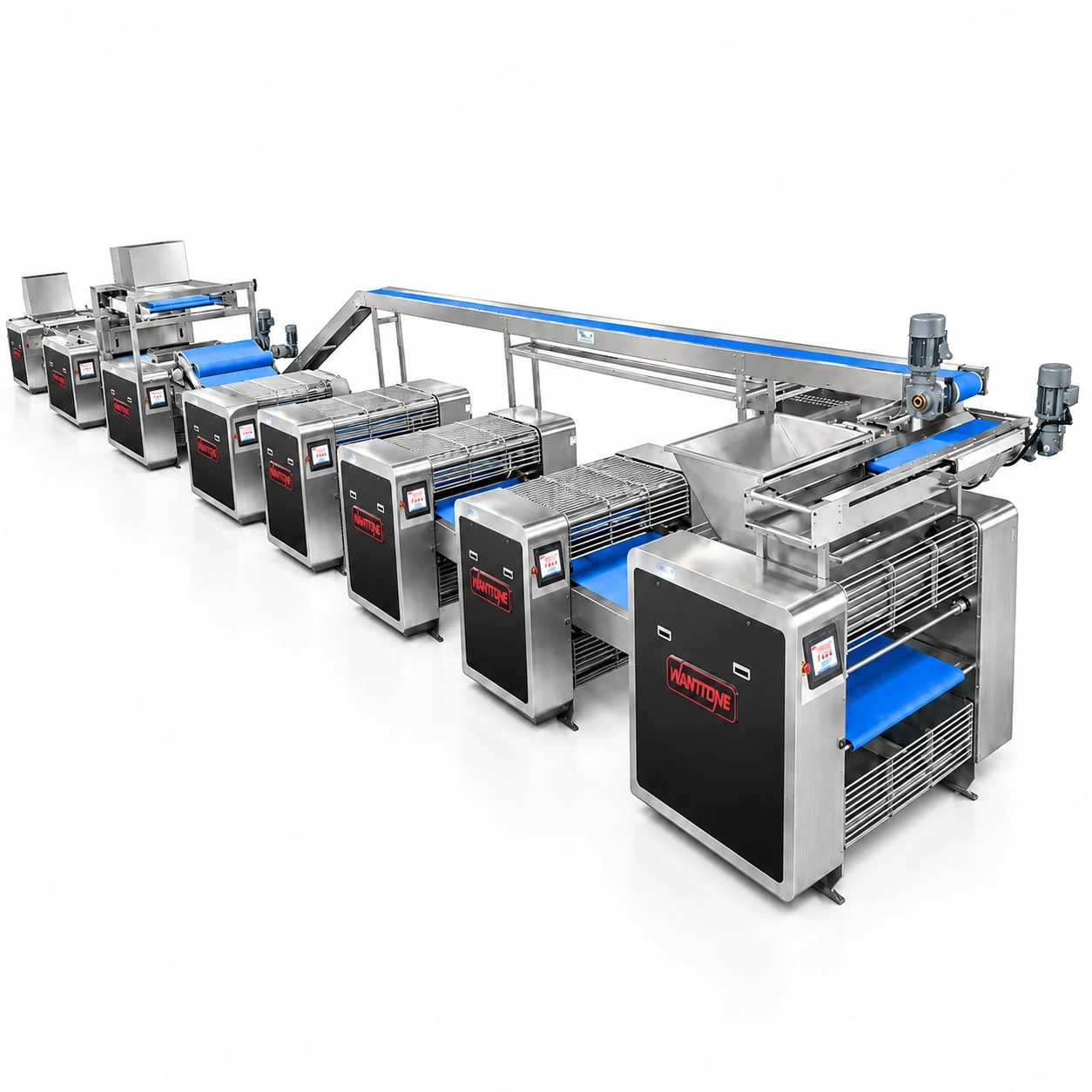
Check the resources the existing layout already shares. Mixing, bulk ingredients, operators, inspection, compressed air, fuel, cooling space, wrapping and warehouse staging can all sit outside the obvious line envelope. Draw how the proposed equipment connects. If both lines can draw from one path at the same moment, ask whether that path can serve the worst credible load. Keep a separate view of the schedule if simultaneous running is not expected.
| Operating arrangement | Line A requirement | Line B requirement | Total demand | Headroom vs assumed feed capability |
|---|---|---|---|---|
| A runs alone | 380 kg/h | 0 | 380 kg/h | 320 kg/h spare |
| Both at full planned demand | 380 kg/h | 410 kg/h | 790 kg/h | 90 kg/h deficit |
| B qualified lower-rate run | 380 kg/h | 300 kg/h | 680 kg/h | 20 kg/h margin |
| Both with verified 850 kg/h feed | 380 kg/h | 410 kg/h | 790 kg/h | 60 kg/h margin on upgraded feed |
The example uses raw dough on every row. If finished output is quoted for one line, apply the actual yield relationship before comparing it to mixing or feed capacity. Size shared resources from measured cycles including discharge, refill and normal interruptions. For example, a mixer rated for a 400 kg batch taking 36 minutes from charge to availability produces an arithmetic 666.7 kg/h. The figure assumes every cycle can use 400 kg and repeat. Buffer rules and formulation differences can further reduce useful supply. See the dough mixing and feeding equipment category for equipment interfaces to specify.
Shared packaging needs a timing check as well as a mass balance. Two lines can both finish a product change before the wrapper is ready for the second format. Map which stream can hold approved product, how much it can hold and the permitted period. Give scheduling a real time slot at the common wrapper for each campaign. If the product cannot wait, validate either separate wrapping paths or a staggered plan at the mixer and oven. Apply the same concurrency test to crews, inspection and material handling. One trained setup leader can serve two lines as long as the shift plan accounts for work that cannot be done simultaneously.
Which Products Should Each Biscuit Line Run?
One operating plan keeps high-volume plain biscuits on the original line and gives the new line a specialist family. Another duplicates the main line so each can run the same order if the other is down. Those choices handle a different type of risk. Identify whether the market values variety and reliable cleaning windows or expects continuity on one high-volume product. Ask the product team which recipes can be validated on each line and who approves the transfer.
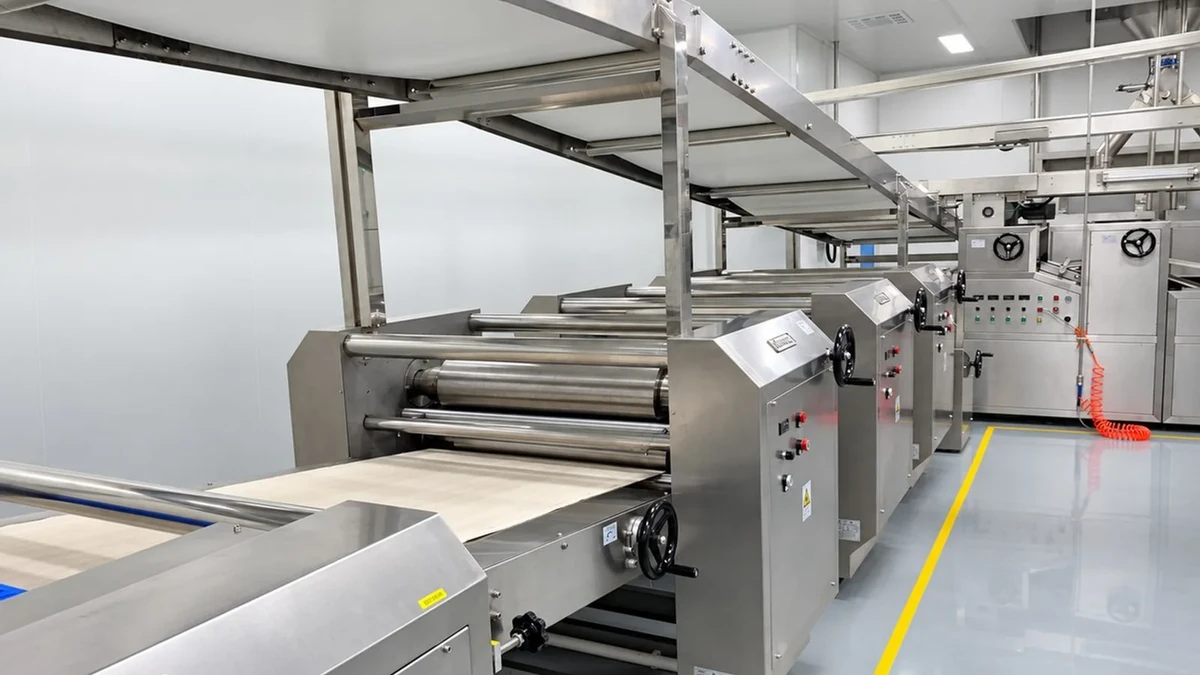
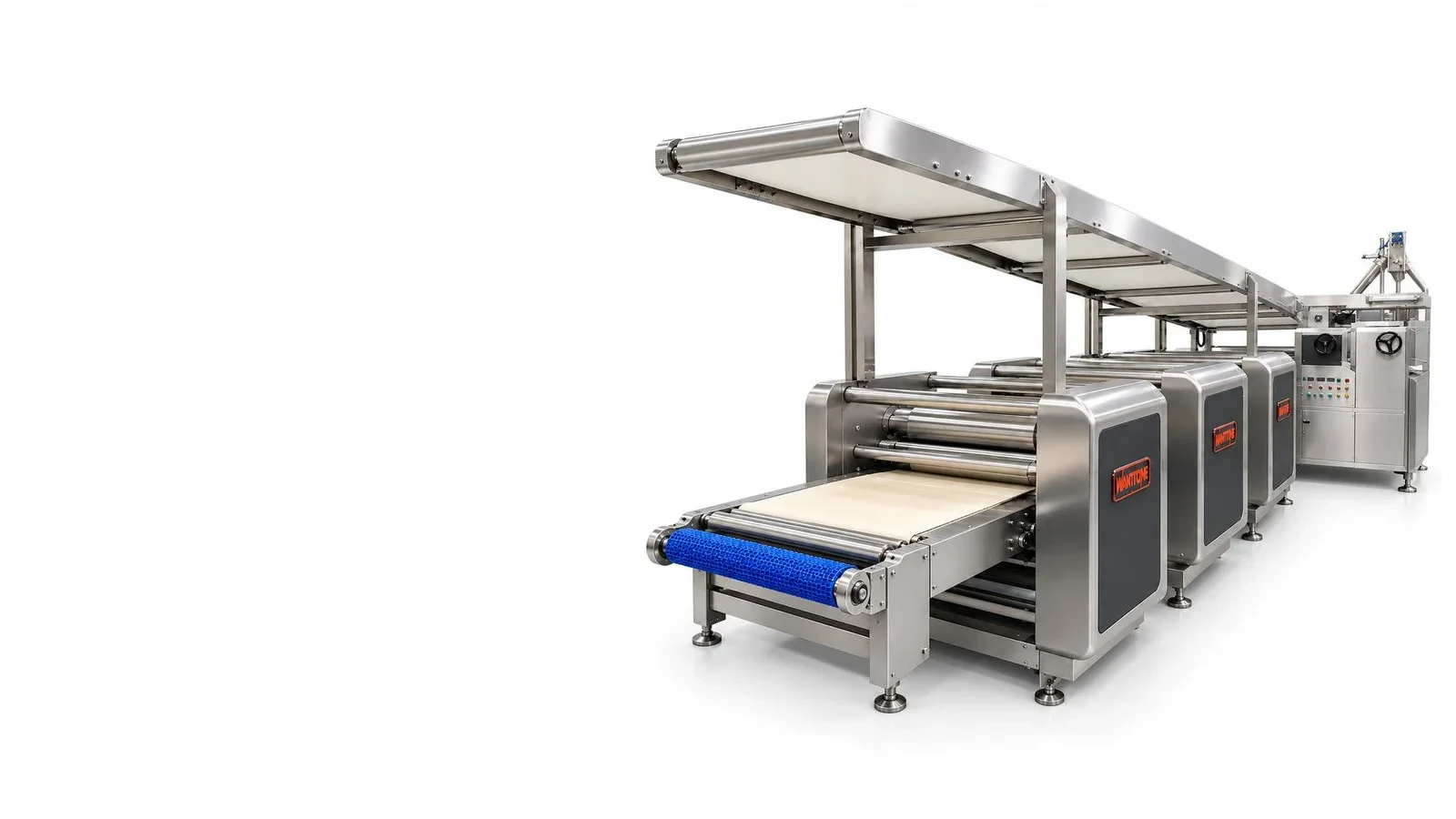
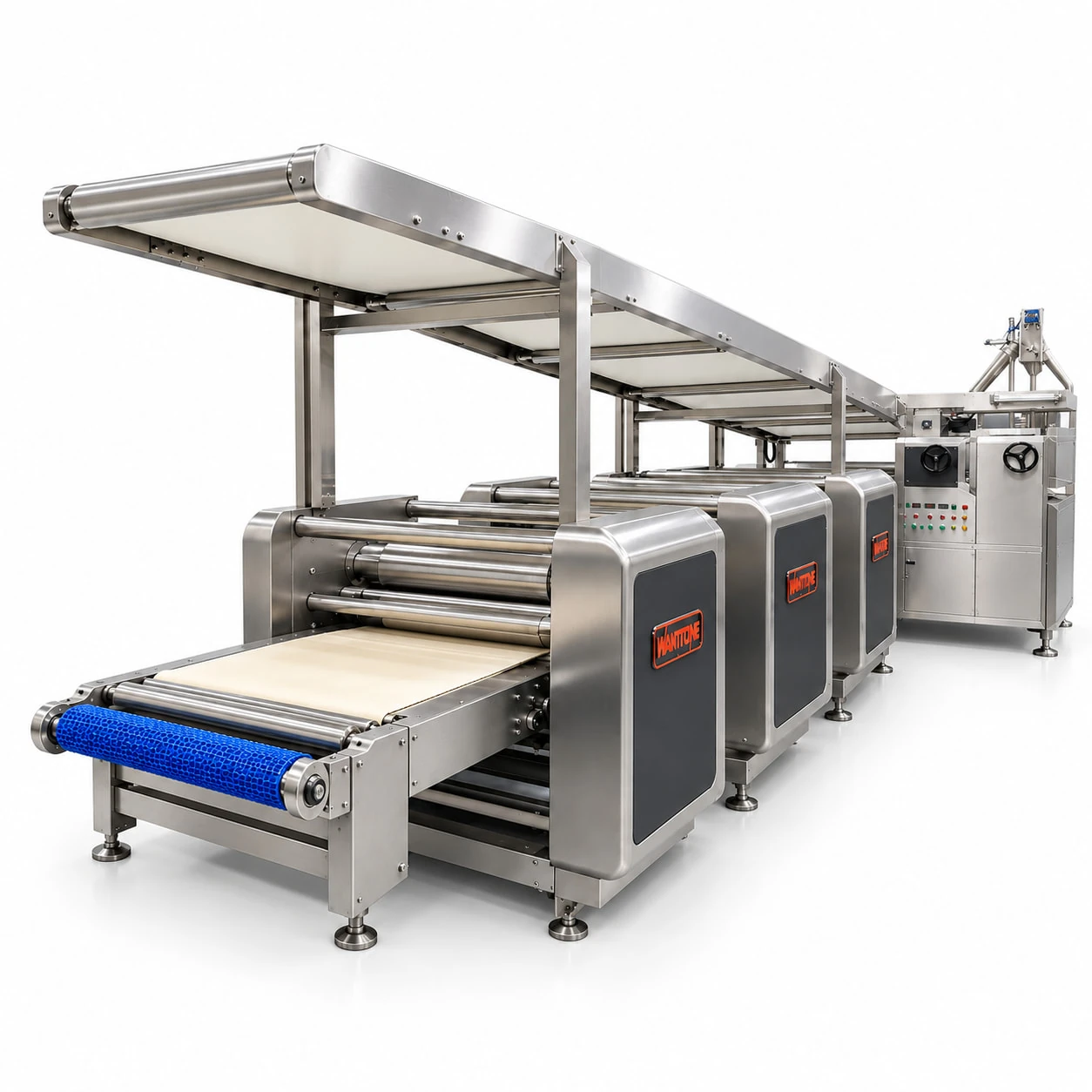
Wanttone's cracker line describes a laminator and gauging/cutting route, with model widths from 600 to 1,800 mm and 250–800 kg mixer batch options. The equipment selection depends on the product and oven. The soft and hard biscuit line lists a rotary moulder for soft dough and a sheeting and rotary cutting route for hard dough. A second line can specialize if these methods impose sustained product conflicts. Do not assume one path can make every item at identical settings or capacity.
Review the packaging assignment at the same time. If different lines will send similar biscuits to a single wrapper, name the rule for separation and changeover. Agree how production and quality teams identify lots at each transfer. The asset can reach contracted output while the factory misses customer timing because finished goods are held for traceability or inspection.
How Do You Ramp Up Without Losing Current Shipments?
Set the commissioning sequence against customer release dates. Reserve practical stock if the product and order agreement allow it. Determine which old-line services will be interrupted by a planned connection. Have the production team set a restart criterion before accepting the outage schedule. Estimate work and recovery time with the site contractor and equipment supplier, including access needed to remove temporary controls or protection safely.
First prove the new line with one bankable product. Then add a second and demonstrate the changeover if that behavior is part of the purchase case. Validate simultaneous running at planned demand while no line borrows material the other needs. Identify who measures released cases and who checks normal quality controls. If acceptance depends on upstream preparation, hand wrapping or temporary staff that will leave after commissioning, record those conditions when judging production evidence.
| Phase | Required evidence | Decision |
|---|---|---|
| Individual equipment trials | Record critical product and interface results | Prepare the line for connected testing |
| First approved SKU on new line | Correct quality and integrated good output | Release against authorized production plan |
| Both lines in production | Both sustained rates measured with shared services under load | Confirm staffing, utilities and shared transfers |
| Routine multi-SKU operation | Changeovers, rejects and traceability checked over representative shifts | Validate the additional product allocation |
Which Decision Gates Should Direct Investment?
Write the decision in layers. First establish the order commitment and which shortage the asset addresses. Next obtain a site feasibility plan and confirm the product families. Then compare the investment with alternate ways to cover the same quantity and dates. Ask for a quote with clearly scoped installation and utility work once the configuration is defined. Make finance consider the downside where new orders arrive more slowly or a retailer changes the requested format.
In the hypothetical order case, the additional 2,400 kg of cracker volume contributes ten hours at 240 kg/h. If half the commitment disappears, the remaining gap becomes four hours because 39 baseline hours plus five additional hours equal 44. That sensitivity can justify delaying the second line, while maintaining a plan for shared connections and the potential space. Recheck when there is real progress on the order book. Avoid framing the decision as an uptime percentage without showing which products and demand windows generate it.
Add a checkpoint after the factory has assigned the first operating crew but before committing to delivery. The open question may have changed from whether the factory needs weekly hours to whether it can cover a more difficult pack format. Record the contract mix assumed by the supplier and the point at which that assumption would require a new approval.
What Do Buyers in Different Countries Need to Confirm?
The market examples describe different product programs and factory decisions. Use actual buyer orders and plant data to establish whether parallel production makes sense at your facility.
United States second cookie line planning
A public Reading Bakery Systems case study of Pedigree Ovens describes adding a rotary moulded biscuit line alongside existing band ovens for baked pet snacks. The product differs from human biscuits, but the case illustrates qualifying a specialist route at an existing bakery. An Ohio grocery supplier should compare each proposed line on separate pack programs and test the schedule before assuming both lines can share the same packaging crew.
United Kingdom second biscuit line for private label
The United Kingdom recorded 255,677 tonnes of 2024 category imports. A Midlands producer supplying private label can separate changing retailer artwork from the base baking schedule. When the problem is many short commitments, a second line might be useful to protect long campaigns only if production planning can allocate short jobs economically. Baker Perkins offers biscuit process support and trials. Ask which existing customer recipes each manufacturer can help verify during a parallel production test.
Saudi Arabia additional biscuit production line
In its 2025 report, Almarai describes adding croissant capacity in Jeddah alongside plans for a distinct frozen bakery facility in Al-Kharj. These are bakery examples with different products and project boundaries. A biscuit factory can use the distinction when choosing between parallel capacity for its existing product and specialist equipment for a different campaign. Ask the supplier to demonstrate coincident peak load if the selected project shares plant services.
Nigeria second biscuit line feasibility
Beloxxi lists a cracker and cookie factory in Agbara, Ogun State, and publishes a Lagos distribution roster. For a factory planning a second line in the region, ask contracted distributors which formats need regular dispatch across the year. Model cases per hour through the common staging and loading operation. Verify the plant can maintain each line and where critical spares will be available after commissioning.
China second biscuit line manufacturer
Wanttone in Yangjiang, Guangdong, is a relevant China manufacturer for a new line alongside retained equipment. Send both the existing machine list and a sketch of the intended second line. Ask for separate scopes for duplicate and specialist routes, then compare product coverage, utility coincidence and acceptance. Request ownership of interfaces in the commercial offer and list what the factory will provide.
Why Evaluate a Second-Line Project With Wanttone?
Wanttone's company profile identifies manufacturing roots in 1981 and the start of its own biscuit factory in 1993. Its equipment portfolio covers individual modules and complete lines, so a buyer can request options with different boundaries rather than assuming all resources must be duplicated. Provide planning and engineering teams with the current rate by product, weekly demand, reject patterns, intended factory layout and maximum hours that existing production can pause.
Ask the Wanttone project team which product can be tested with the selected equipment and which services remain under the site contractor. Set a review with the people who schedule retail orders, maintain equipment, and release product. Give them the same assumptions so they can compare the proposal against the expected running week. A second-line plan should show which orders it supplies and the evidence that both lines can continue producing acceptable output under normal operation.
FAQ: What Else Should Buyers Ask Before Adding a Second Line?
Must the first biscuit line be fully utilized?
No. A separate process route, campaign or qualified segregation requirement can support adding another line even when the current equipment has nominal free hours.
Can the factory use one mixer for two lines?
Potentially. Confirm simultaneous demand on a raw-dough basis, usable mixer cycle, permitted recipe sequence, feeding layout and storage limits before finalizing the design.
How can another shift be compared with a second line?
Use the same order quantities, required ship dates and saleable output measure. Remove hours for normal changeovers, cleaning and maintenance and verify staffing.
Can the new line be tested without the existing line?
An independent test is useful for commissioning. If the operating plan includes shared resources, include a loaded simultaneous site acceptance test.
What information does Wanttone need for a proposal?
Provide product samples, weekly quantities, current good output, retained equipment, layout, utility records, packaging scope and the outage window available for installation.

Wanttone Engineering Team
Wanttone’s engineering and project teams prepare practical guidance on biscuit machinery, production-line planning and factory requirements.