Quick Answer
A biscuit factory expansion starts with a product and volume brief, a measured facility survey, a utility assessment and a construction sequence. Map the movement of ingredients, dough, baked biscuits, packs, people and waste before locating a larger line. Verify that the building can support the new load and future maintenance access. Protect current dispatches by setting dates for connections, process qualification and fallback with the teams that own each handover.
Compare a brownfield layout and a separate bay or site using the same measured order targets. A line supplier can define the machinery and its connections. Named site specialists should validate building, utilities and safe equipment installation. Ask for drawings and acceptance steps from the earliest project stage. Start with a Wanttone capacity expansion brief and add the factory's existing asset and building documents.
How Do You Set the Expansion Scope Before Drawing the Plant?
Give the project a signed product matrix. For each product, record target dimensions, mass, forming method, cooking and cooling conditions, preparation method and planned package. List weekly volumes by order size and dispatch date. The factory may handle steady public retail orders alongside smaller private label campaigns that require frequent checking and artwork changes. Distinguish peak demand from the recurring orders that support the project.
Define the point where the expansion starts and finishes. A project may end at accepted wrapped packs, with case packing and storage outside the vendor boundary. Show process scope and commercial scope separately. A supplier can be responsible for coordinating a transfer while the factory provides an existing conveyor. Give one party ownership of verifying each contact point, including the physical connection, controls interlock and handover of product.
| Area | Existing operation | Expansion requirement | Owner to identify |
|---|---|---|---|
| Raw materials | Small batch staging | Distinct ingredient routes for two scheduled lines | Site production and store leads |
| Mixing | Standalone batch mixer | Verified preparation, discharge and cleaning windows | Process supplier and factory |
| Baking | Retained oven serving one route | New oven area and utility tie-ins agreed in drawings | Oven supplier and site utilities |
| Packaging | One primary pack format | Product, film and case staging for the new formats | Packaging lead and integrator |
| Storage | Immediate dispatch after release | Capacity for hold, finished goods and stock reserve | Warehouse and quality teams |
Production planning should calculate capacity by product and campaign. The supplier can then translate the resulting requirement into candidate lines. Keep the first engineering decision connected to the product brief. A nominal equipment width, chosen before the dimensions and mix are known, can send the building design in the wrong direction.
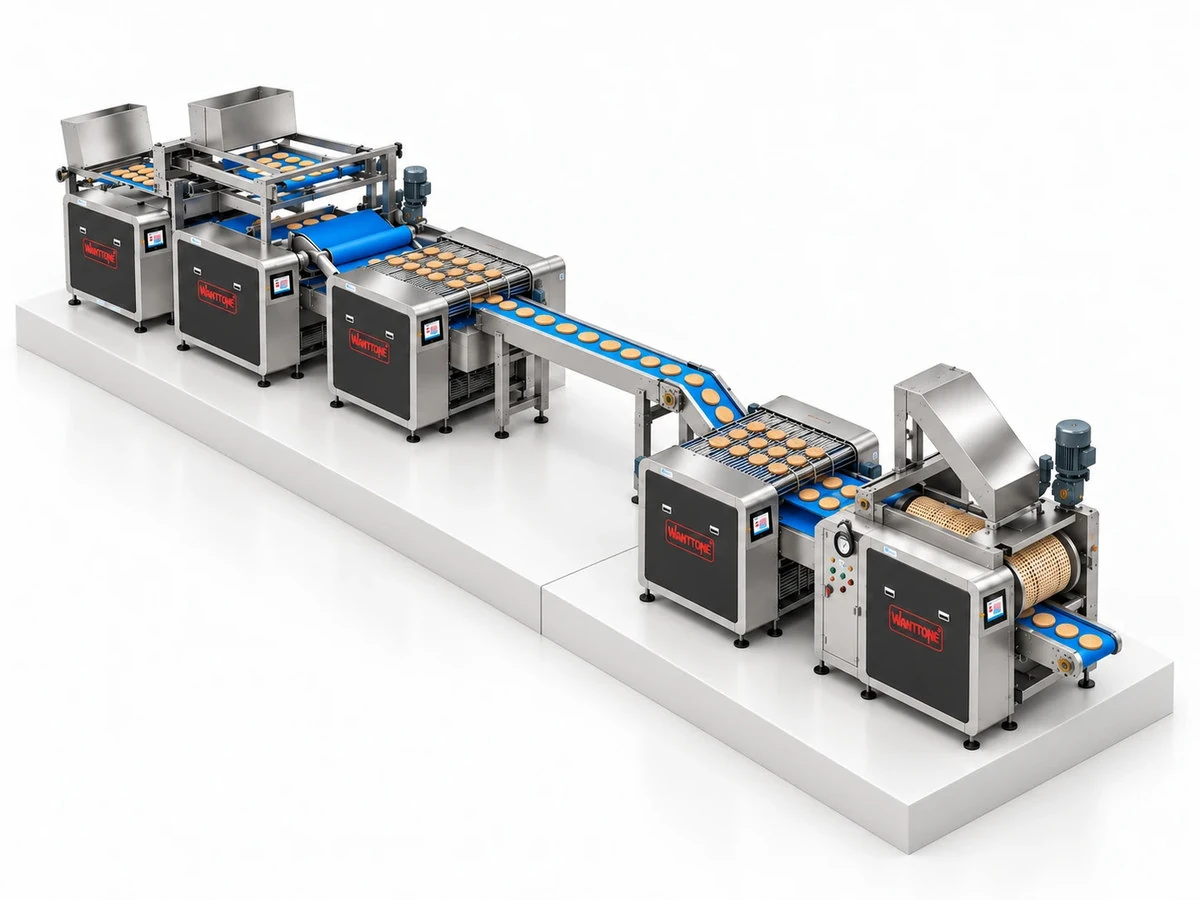
How Much Space Does the Expanded Biscuit Factory Need?
Use a verified building survey and equipment envelope. Mark building columns, doors, ceiling height, floor features and overhead obstructions. Add machine service areas, outbound paths for removal of heavy modules and access for normal cleaning and maintenance. A line that fits when the machine bodies are drawn tightly over a plan may block the door needed to move a band coil, remove a drive or withdraw an engraved roller.
Create the first layout with separate layers for process flow, personnel access, rated service loads and construction boundaries. Review ingredients and packaging delivery from receiving to use. Product routes through cooling and packing should match the necessary physical controls and operator access. The correct paths depend on documented product and site requirements. Have the local team review applicable building, safety and hygiene requirements for the proposed configuration.
| Component of the envelope | Assumed length | Design question |
|---|---|---|
| Mixing and forming allocation | 10 m | Include access and tooling movement elsewhere on drawing |
| Tunnel oven total machine length | 32 m | Length here is footprint, distinct from heated travel |
| Cooling and transfer allocation | 18 m | Check support level and approved hold condition |
| Packaging allocation | 12 m | Check accumulation and case access |
| Clearances and planned end access | 6 m | Verify measured access with installer |
| Total preliminary length | 78 m | A 75 m bay has a 3 m shortfall on these assumptions |
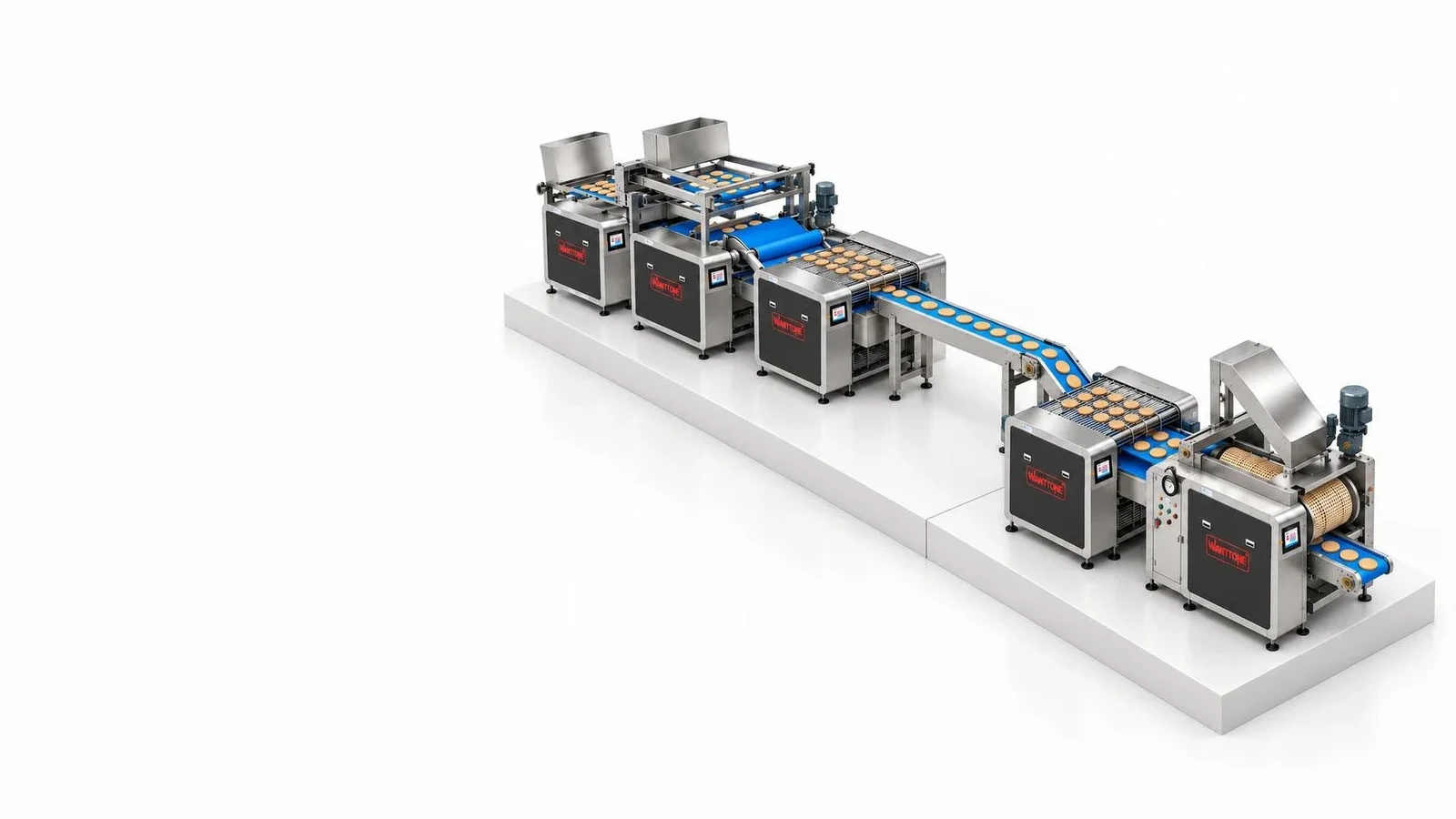
Wanttone's soft and hard biscuit line describes straight, 90° and 180° turning layout options and a typical tunnel oven range of 30–80 m for that product family. This is a design reference and does not fix the final footprint. A turned layout needs approval of handover angle, height, product orientation and maintenance access. Tell the supplier whether the oven length shown is a heated segment or an installed machine dimension when marking the factory plan.
How Should You Estimate Utilities Across the Expanded Plant?
Inventory existing nameplates and measure demand during representative runs. Distinguish operating power from the apparent power and service rating used for electrical design. A new oven, mixer or packer can add a load pattern that was absent during the baseline. Record what else starts or runs at the same time and whether the planned ramp creates a higher peak. Site engineers must assess the supply, loads, protective equipment and applicable design conditions before installation.
| Concurrent measured-style or assumed load | Existing scenario | Expanded scenario |
|---|---|---|
| Existing production including associated auxiliaries | 190 kW | 190 kW |
| Added forming and packaging | 0 | 46 kW |
| Added electrically heated oven in a modeled loaded period | 0 | 270 kW |
| Additional common cooling and air systems | 0 | 34 kW |
| Total coincident real power | 190 kW | 540 kW |
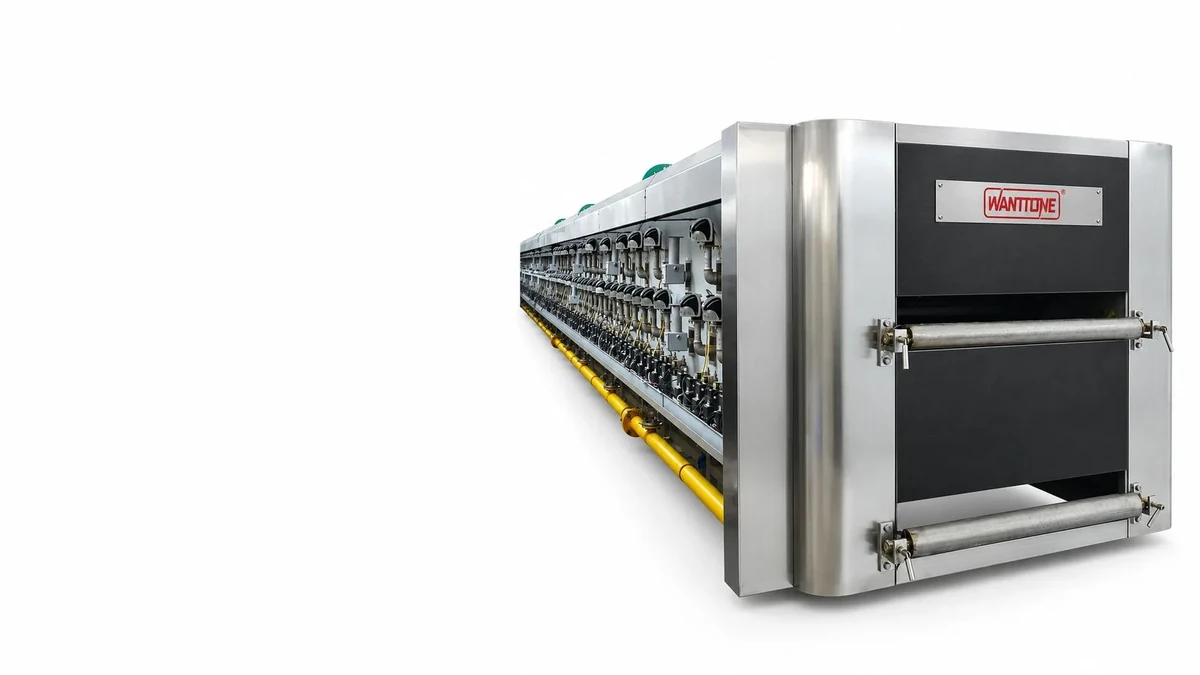
At a hypothetical aggregate power factor of 0.90, the modeled 540 kW is 600 kVA. That is arithmetic for one operating condition. It is not a transformer selection and leaves out starting behavior, unequal phases, harmonics and reserve. Keep the supplier's equipment ratings separate. For example, the electric tunnel oven technical table lists model 800 at 20–28 m with 300–400 kW heating power and 400 kVA supply capacity. The values apply to that published configuration and still need a site-specific design.
For gas-fired configurations, have qualified specialists confirm the available service and ventilation scope, including any site modifications. Review drainage, cleaning, compressed air, heat rejection and safe exhaust routing as separate interfaces. Prepare a utility ownership list showing who supplies each connection, what evidence is required and when it must be ready. A machinery delivery date does not guarantee the utilities can support a production trial that week.
Is It Better to Extend the Existing Factory or Add a Separate Bay?
An extension can use staff and services already at the site, but may require temporary connections and carefully controlled construction close to production. A separate bay can permit equipment installation while the current line runs. Include the work needed to connect supplies, route raw materials, move finished product and staff both areas. Evaluate whether the delivery road or warehouse can handle the increased traffic during peak operations.
| Decision | Extend the current process area | Add a separate bay or site |
|---|---|---|
| Existing inventory and teams | Closer to retained resources | Additional transfer or duplicated roles may be needed |
| Construction | More coordination near ongoing operations | May decouple some installation work from the current line |
| Service interfaces | Existing infrastructure useful if capacity is verified | New routes and supply handover require their own plan |
| Product separation | Constrained by building layout and validated controls | More opportunity to design dedicated paths |
| Main test | Safe phased tie-ins and manageable outage | Facility readiness and measured flows between areas |
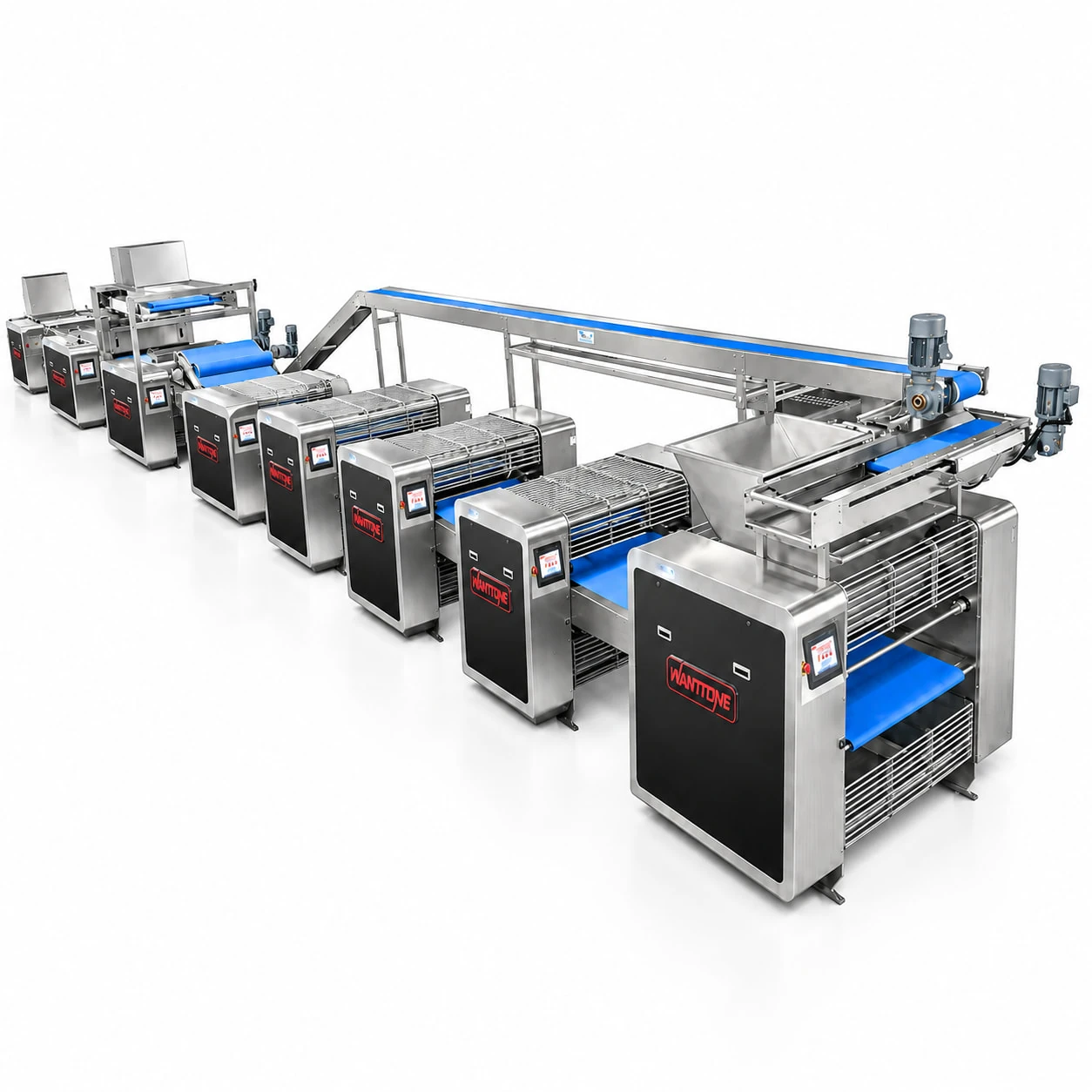
Do a walkthrough with people who clean, operate and service each station. Have them show how ingredients, trays, reels or cases move at the busy time of the shift. The architects and supplier can then update the plan with circulation requirements that were missing from the first concept. Do not accept a layout using only a scaled machinery sales image.
How Do You Protect Dispatches During Construction?
Schedule production stops from the food release and shipping calendar. Make contingency arrangements for product that can be built ahead of the shutdown. Confirm the accepted stock life and customer permission. Where there is an external supply backup, specify which products and quality approvals it can cover. Build the approved risk response into the schedule with a named decision owner and time limits.
For example, a supply plan with daily dispatch of 2.4 tonnes over a three-day approved shutdown needs 7.2 tonnes of releasable stock if demand stays flat and no alternative deliveries arrive. Add lead time for the factory to make the reserve. If available release storage holds only five tonnes, the shortfall is 2.2 tonnes and cannot be closed by adding an inventory line to a spreadsheet. Change the shutdown sequence or arrange authorized alternative supply. Recheck for restart holds and trucks that cannot move on the planned days.
Schedule fallbacks for utilities and control connections. Some tie-ins need a trial shutdown before the full work. The equipment team and site installer should agree on the latest safe decision point to restore the existing system if the connection is not ready. Include communication to planning and maintenance. A stable restart should follow an approved procedure verified by the factory team.
Track dates based on finished prerequisites. For electrical connection, verify that inspections, drawings, access controls and any trial instruments are ready before the site team releases the outage. For product commissioning, check the availability of the approved ingredients, current film and staff who will work the line. Production can mistake a completed construction activity for a date when the new machine can take orders. Publish the first date needed for each handover and the staff responsible for confirming readiness. A construction delay at an unconnected stage may still be recoverable if the supplier can test another module first.
Which Milestones Should Release the Expanded Plant?
Document factory acceptance testing of the supplied equipment before dispatch when appropriate for the scope. Record remaining site conditions such as real ingredient feed, utilities and accepted packaging. Confirm unloaded rotation and control behavior before the first product goes through the connected plant. Define which qualified staff sign each milestone and who resolves a failed test.
The factory production trial should reconcile product entering and leaving the applicable boundaries. Compare acceptance over a representative sustained operation and include a planned product change when the project is intended to add assortment. Check the quality and testing information and specify which product trials can be conducted before shipment. Demand a site test that covers retained plant equipment. Give operating and maintenance staff practice using the commissioned layouts and controls before ownership transfers.
Have the commissioning lead maintain one evidence set linking drawings, trial results, staff instruction and remaining items. A newly connected oven may meet the agreed product target and still leave the line waiting on packaging or dispatch. Agree what constitutes an acceptable open item and what prevents release. The project plan should retain time for fixing and repeating a failed test.
What Should Expansion Teams Check in Key Markets?
Published company projects illustrate the difference between upgrading a working site and preparing a new production area. A project brief still needs the buyer's own sales and facility records.
United States cookie and cracker facility expansion
US category imports were approximately 843,029 tonnes. An Ohio producer working with a regional retail distribution program should coordinate loading, release and pallet staging with new line capacity. Have local professionals assess the occupied building and proposed oven services. Reading Bakery Systems publishes processing and oven systems for cookies and biscuits. Ask each equipment manufacturer which integration tests it can support when the supplier's machinery shares a bay with retained equipment.
United Kingdom biscuit factory extension
Pladis announced an investment program across UK production sites including a new chocolate moulding line at its Stockport Jaffa Cake facility. That scope illustrates a distinct process addition inside a working bakery network. A Midlands private label expansion needs space for incoming film and approved lots along with forming and oven space. Baker Perkins provides biscuit process support and testing. Agree which trial is covered and who verifies utilities and building work locally.
Saudi Arabia biscuit production plant layout
Almarai's 2025 report identifies a planned specialized frozen bakery facility at Al-Kharj, separate from its work at the Jeddah croissant line. A biscuit buyer near Jeddah can compare the value of a separate installation bay with the interruption from building alongside production. Assess local arrival, offloading, site service and test schedules. Verify the amount of packaged inventory that can be held for priority customers during the transition.
Nigeria biscuit factory expansion near Lagos
Nigeria reported approximately 6,715 tonnes of category imports. A Lagos or Ogun State facility can assess urban site access, dispatch areas and the practical operating pattern of the site's electrical supply. Compare a phased expansion and a separate bay based on real movement and staffing. Detail spares and operator instruction in the readiness plan. Ask who will support installation and product acceptance when the team moves from construction to production.
China equipment suppliers for factory expansion
Consider Wanttone in Yangjiang, Guangdong, for equipment planning and trials. Provide as-built building measurements and a definite product chart. Ask which forming, oven, cooling and packaging packages it can supply and whether a turned layout is appropriate. Request supply responsibility for each interface and approval of drawings before foundation or utility work proceeds. Check plant acceptance in the destination at real loaded conditions.
How Can Wanttone Support a Biscuit Factory Expansion?
Wanttone describes its machinery history and own factory in its company information. The complete production line collection covers several biscuit routes, including combined soft and hard biscuits and soda crackers. Use it to discuss where one process can share infrastructure and where equipment must be configured separately.
Give the project team the planned volumes, actual site services, retained equipment and drawings. Discuss machine interfaces and installed dates before ordering. Coordinate with the site's chosen professionals for building and utility work, and assign one person to control the model and drawing versions. Request a review where purchasing, production and the installer can trace each change to a documented effect on product and space.
FAQ: What Else Should You Ask About a Biscuit Factory Expansion?
Is a supplier layout enough to start construction?
Have local qualified specialists verify and coordinate the building, utilities and installation. Use approved equipment drawings and a measured survey to set connection and structural requirements.
Can a turned layout fit a shorter bay?
Possibly. Verify product transitions, cooling, conveyor access, maintenance clearance and actual overall machine dimensions before relying on a turn.
What triggers a utility review?
Any change in load, concurrent operation, start behavior or fuel demand can alter what the site must support. Use an operating inventory and the selected equipment ratings.
How much reserve stock is needed for a planned outage?
Use daily committed dispatch rates and the full approved pause and restart window. Confirm storage, product life and any agreed alternative supply.
What should Wanttone receive at the beginning?
Send product samples and volumes, measured building plans, utilities, current assets, available outage windows and the intended packaging output boundary.

Wanttone Engineering Team
Wanttone’s engineering and project teams prepare practical guidance on biscuit machinery, production-line planning and factory requirements.