Quick Answer
The first tunnel oven energy saving step is to meter the oven and divide the energy used by comparable accepted output. Separate warm-up, loaded baking, idle holds and shutdown. Verify that the product, sample temperature history and quality release conditions match before crediting savings. Reduce avoidable heated idle time, diagnose losses from leaks or poor maintenance, and ask qualified specialists to evaluate controls, insulation or heat recovery if measurements justify it.
For a buyer, the key comparison is energy at the site over the complete production cycle. A gas tunnel oven catalog may give typical fuel use per tonne. That helps frame a supplier discussion, while actual fuel basis, recipe mix, moisture loss, throughput and included electrical loads determine your measured result. Keep the acceptable baking profile and protective equipment within their approved boundaries throughout any trial.
What Should You Include in a Tunnel Oven Energy Baseline?
Make a boundary sketch around the equipment included in the calculation. If you meter only gas at the burner supply, you can describe fuel input. If the efficiency project also changes fans, extraction or the oven conveyor, record their electricity and compare a combined delivered-energy figure for the same equipment. Where the ovens share a meter, avoid attributing another process's load to the oven without justified metering or a verified allocation. If electricity and gas are reported together, state how volume is converted and which heating-value convention is used.
The US Department of Energy's process heating resources treat industrial baking as part of a larger heat system to assess. For a biscuit line, the boundary should follow the meter, heat source and useful work, plus the operating phases actually measured. Assign operating state from production records as well as the controller. During an oven hold, product might still be in the heated section. Identify whether the product remains accepted and how its energy will be counted. Oven energy after closing the final lot also belongs to the agreed batch or campaign if it is inside the accounting period.
| Measurement | Recommended record | Why it affects comparison |
|---|---|---|
| Fuel | Metered quantity, basis and available utility heating value | Conversion to thermal input can differ across fuels and sites |
| Electricity | Metered oven auxiliaries or a documented allocation | Fans, belt and other loads may change after a retrofit |
| Output | Net accepted biscuit mass, same sample and accounting boundary | Rejects and mixing unlike SKUs can distort the index |
| State | Warm-up, loaded, idle hold and end of run | Separates schedule effects from loaded performance |
| Bake specification | Product, residence time, geometry and release checks | Protects the accepted quality and product comparison |
Which Energy Metric Can Buyers Compare Across Runs?
Use delivered energy per accepted tonne for comparisons of a matched product and agreed test conditions. In a single-fuel comparison you can also track normal volume or mass of fuel per accepted tonne if the fuel basis is consistent. Report the meter reading and output mass alongside the calculated ratio. A lower number can reflect higher utilization rather than a hardware efficiency change. Report reject quantity and moisture changes so the denominator represents an equivalent product.
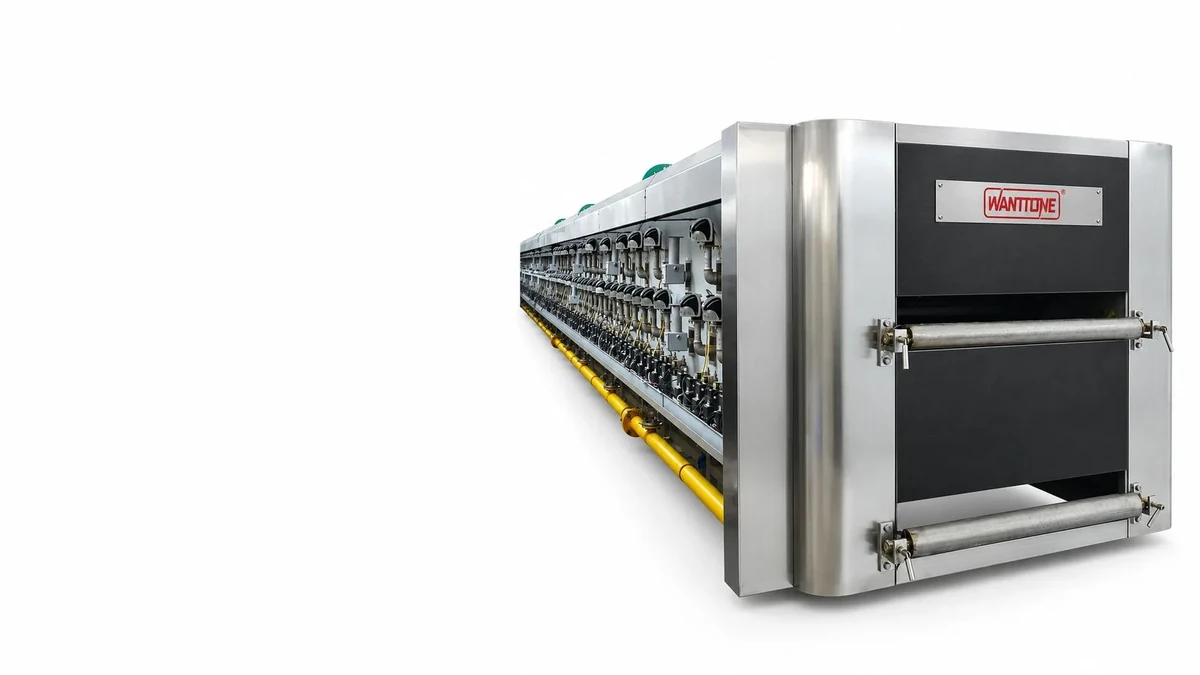
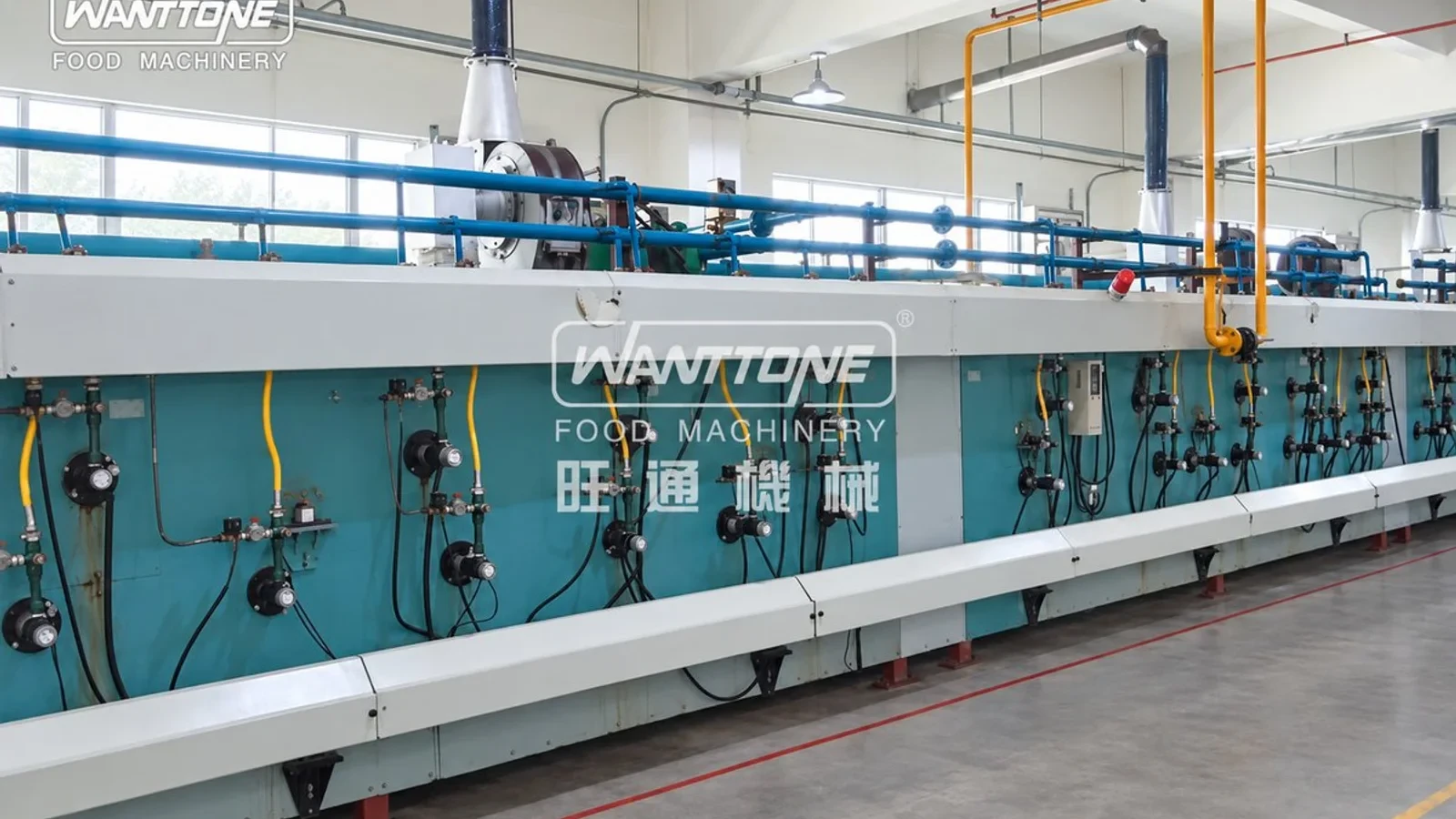
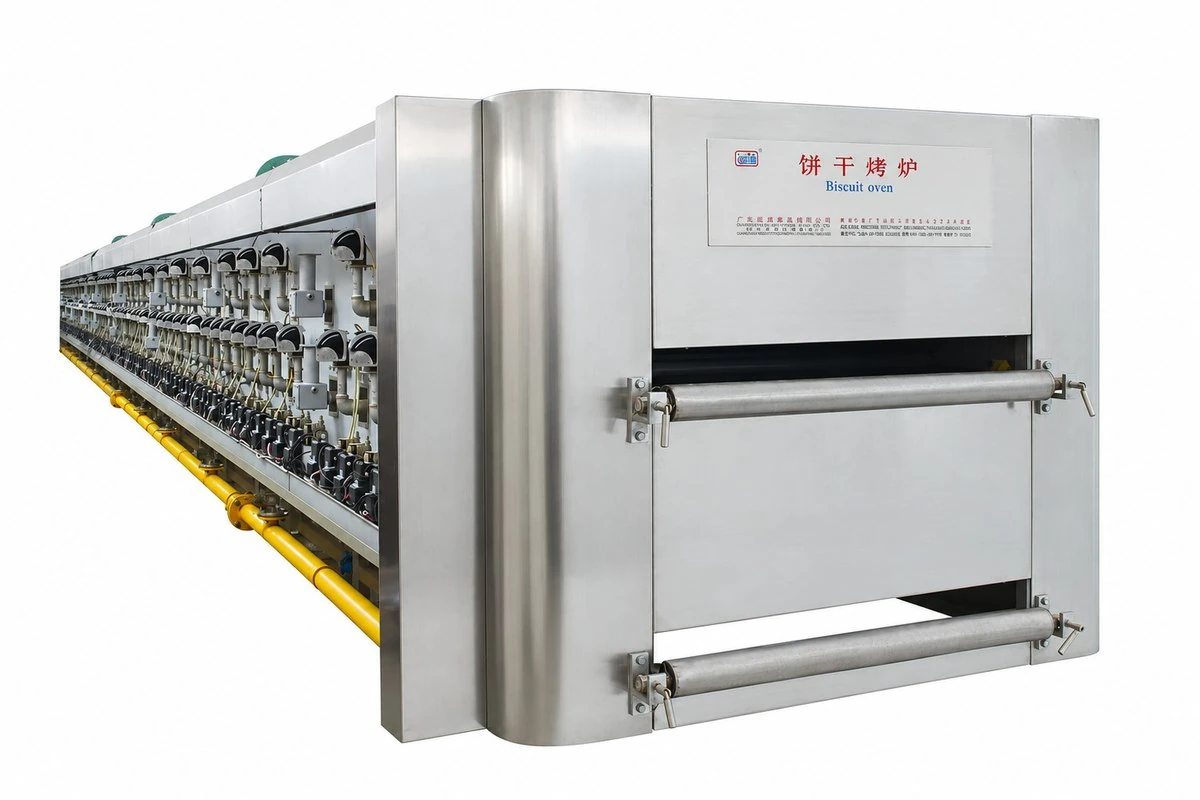
Wanttone's published gas oven specification lists a 12–60 m modular length, 2–4 controlled zones and typical natural gas consumption of 40–60 m³ per tonne. It also gives other fuels with different units. These are published figures across project configurations. They do not specify every site's natural gas quality or the buyer's exact bake and acceptance basis. Ask the supplier to define the reference product, gas volume basis and whether startup and hot standby are included before using the figure in a procurement comparison.
For an illustration only, if a site independently confirms 10 kWh of fuel energy per metered cubic metre on the same reporting basis, 40–60 m³/t corresponds to 400–600 kWh of delivered fuel input per tonne. Add electricity only within the stated equipment boundary. Thermal input is different from the part that reaches the biscuits and different again from rated burner output. Check local supplier data and instrument records before making that conversion in a real project.
How Much Can Warm-Up and Idle Time Affect the Result?
A production schedule can change furnace utilization even while the same amount of energy is used per hour under steady load. Consider illustrative runs with identical products. Assume warm-up and end-of-run energy of 600 kWh per campaign, a mean delivered oven input of 300 kWh per loaded hour, 110 kWh per hot idle hour and 0.4 accepted tonnes per loaded hour. Warm-up and end-of-run periods sit outside the loaded and idle hours shown. Each case assumes the changes can occur within approved quality and process conditions.
| Illustrative scenario | Loaded time | Hot idle time | Total energy | Accepted output | Energy intensity |
|---|---|---|---|---|---|
| A: interrupted schedule | 5.0 h | 3.0 h | 2,430 kWh | 2.0 t | 1,215 kWh/t |
| B: more stable feeding | 7.0 h | 1.0 h | 2,810 kWh | 2.8 t | 1,003.57 kWh/t |
| C: same five loaded hours with one idle hour | 5.0 h | 1.0 h | 2,210 kWh | 2.0 t | 1,105 kWh/t |
Scenario B requires 380 kWh more in total and delivers 0.8 tonnes more accepted output. Its ratio falls by about 17.4%. For scenario C, the loaded plus hot-idle duration is two hours shorter and the fixed campaign energy is assumed unchanged. It saves 220 kWh against A at the same output, a reduction of about 9.1%. None of the numbers are measured oven data. To use the method, replace the inputs with meter readings by state and verify that sequence changes can deliver the planned output. An approved idle mode can have different startup needs, so it must be measured as operated.
Check whether extra consecutive orders can actually be combined. Grouping the same oven recipe might extend a run, but mixing, packer film and order deadlines may constrain the proposed batch sequence. Capture the real production plan and identify where the proposed longer run would move labor or losses. Record rejected warm-up output separately if it occurs. The stated target should survive day-to-day product variation and retain the same accepted quality goals.
Which Oven Energy Saving Measures Should You Test First?
Use the highest measured loss point to shortlist actions. If the oven spends a large share of time hot and waiting, investigate product supply, changeover coordination and approved standby behavior before requesting hardware. If loaded-state evidence points to damaged seals, uneven air distribution, exhaust losses or insulation deterioration, ask qualified specialists to inspect the equipment. A control change may help repeatability. Any change that affects combustion, ventilation, guarding or the validated baking cycle must be assessed and approved by the responsible qualified teams.
| Option | Evidence that motivates it | What must be checked after trial |
|---|---|---|
| Schedule product campaigns | Multiple heat-ups or extended verified hot idle | Equivalent product mix, demand and accepted output |
| Maintain seals and insulation | Condition assessment or measured unexpected heat loss | Product zone stability and correct installation |
| Improve approved controls | Recorded drift or unnecessary hold energy | Bake record, approved sensor placement and recovery |
| Recover waste heat | Stable usable heat source and demand for recovered heat | Measured useful recovery, fouling and approved access |
| Change heating system | Site utilities, product profile and capital plan justify it | Delivered energy basis, profile and verified mechanical fit |
Do not assume the lost heat can always be returned to the oven or another process. A steady heat use, suitable temperatures, ventilation approval and a maintenance plan determine whether recovery is useful. Fouling from the process can change long-term performance. Ask the provider to state whether it is estimating available heat, energy transferred at the exchanger or usable energy delivered to the receiving process. Specify where the meter goes so the project acceptance can reflect the promised result.
How Should You Compare Gas, Electric and Hybrid Oven Proposals?
Gas, electric and hybrid ovens have different boundary questions. The electrical utility connection and heater ratings describe available supply and installed power. A gas burner rating describes a thermal input rate at a defined operating point. Neither figure shows actual consumption through startup, loaded work and idle time. Match product types and load, then compare metered inputs and the availability of the needed fuels, electrical capacity and service support. For a hybrid system, ask which zones use each heat source, how each input is metered and whether the proposed heating schedule applies to each recipe.
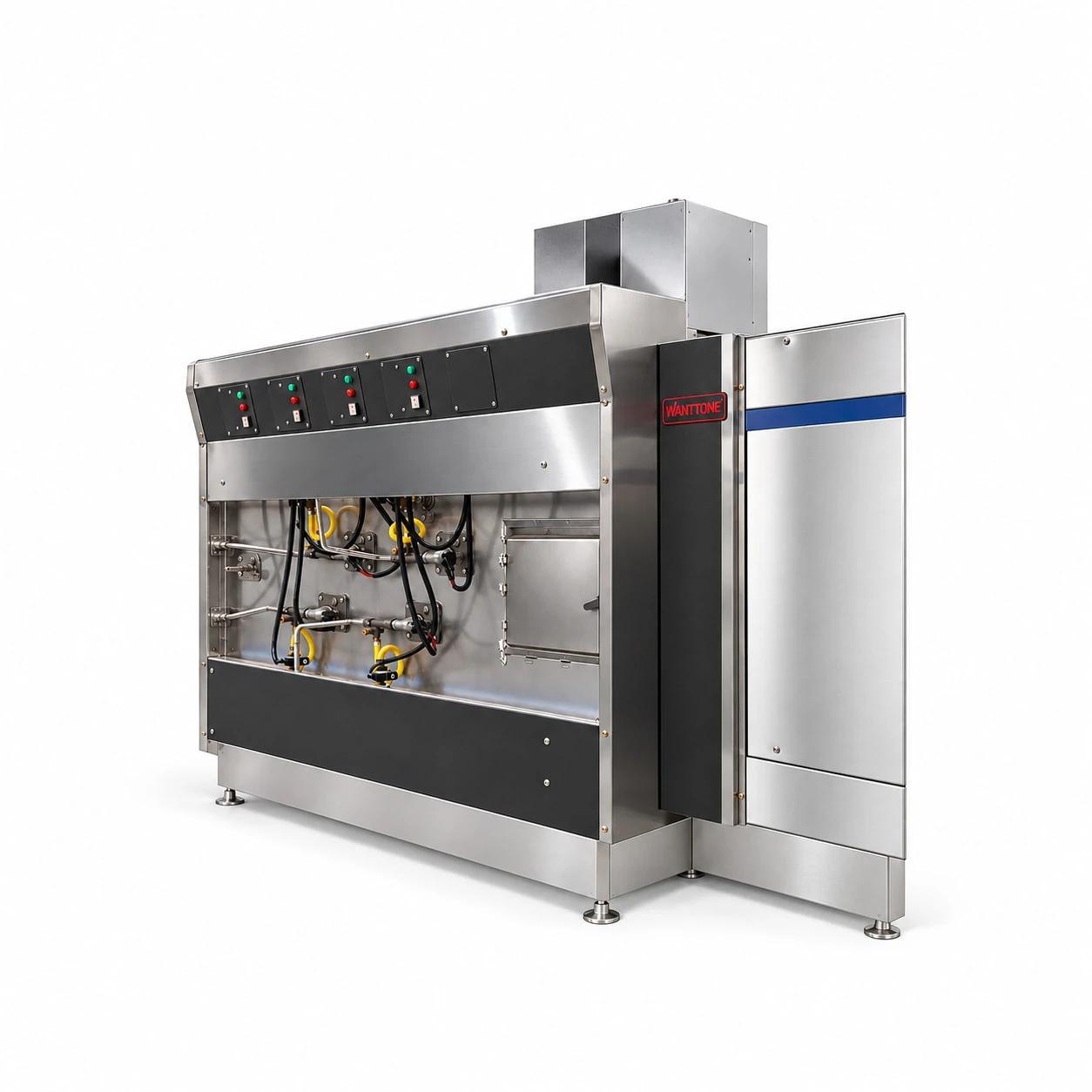
The electric tunnel oven page lists model and length-specific published heating power and power supply capacity. For example, the 620 model at a published 20–28 m length lists 200–300 kW heating power and 315 kVA supply capacity. The two units have different meanings and should be checked with the site engineer rather than directly converted to annual consumption. The hybrid tunnel oven lists project combinations of gas, electric or infrared by zone and optional waste heat recovery. Request the exact configuration including what is monitored and what must be supplied by the destination plant.
What Should You Measure Before Signing Off the Energy Project?
Set representative run lengths, product mixes, starting conditions and seasonal effects if relevant. Record oven energy, finished accepted mass, product geometry, moisture or other agreed quality measures, and any change in auxiliary load. An energy retrofit might shift power to off-oven fans or alter the cooling load. Establish what is included and measure meaningful changes separately where the meter cannot capture them. Collect enough cycles to distinguish a favorable run from repeatable operation. Record when the factory had unused output because demand or another station limited production.
Ask for an acceptance report that describes the actual instruments, intervals and unit conversions, as well as totals. Capture the operator routine required to hold the result. If the before-and-after periods have different product and shift schedules, use matched product runs first or a documented method that accounts for the difference. Keep the trial spreadsheet and observations ready when discussing the next update. Energy intensity is useful for tracking, while approved quality, accepted throughput and reliable operation are conditions for release.
Agree how the team handles mixed-state intervals before the measurements begin. If a meter is sampled every fifteen minutes and the oven transitions partway through a sample, mark the interval and disclose any allocation between states. The total still comes from the meter. When a proposed change affects only brief intervals, ask for recording granular enough to observe it. Check that time stamps across the oven controller, production log and utility records reconcile.
How Do Tunnel Oven Energy Priorities Change by Market?
United States | Audit the measured heating system
A US bakery in Pennsylvania, Ohio or the Midwest can use Department of Energy process heating resources as a framework for oven measurement. Reading Bakery Systems describes oven designs including electric heat and bakery controls with optional energy metering. Compare scope and monitoring on a specific SKU, particularly when one oven is assigned to several customer formats. Ask the plant and utility team to confirm the heating value and energy measurement basis before comparing reported savings to a supplier's test.
United Kingdom | Separate verified efficiency from funding expectations
A UK biscuit factory looking at replacement or insulation should baseline the same product and recipe before planning capital work. The UK government's Industrial Energy Transformation Fund site lists industrial efficiency and decarbonisation projects, with the programme closed to new funding according to its published update. It can provide project context. Quantify savings with the factory's own run records. A Midlands or Yorkshire bakery should establish the expected retrofit window, supply headroom and impact on planned supermarket orders before choosing equipment.
Saudi Arabia | Compare fuels at the specific industrial site
For an oven project in Riyadh, Jeddah or Dammam, confirm the incoming fuel, electrical capacity and available service and commissioning support for the selected arrangement. 2024 WITS data show roughly 112,963 tonnes of Saudi imports for the broad HS 190530 sweet-biscuit, waffle and wafer category. That gives category context, not the line's forecast or the local fuel choice. Use the factory's expected product and planned utilization to compare loaded and idle energy by project.
Nigeria | Evaluate power and fuel readiness before extending the line
In Lagos or Ogun State, ask the energy provider and engineering team which fuel and electric arrangements the factory can reliably operate on the intended production schedule. The Nigeria rotary-moulded project reference identifies forming, baking, cooling and pack handover in its planning scope. Turn that layout discussion into metering and commissioning questions tied to the installed plant. Consider auxiliary electrical loads and the accepted restart routine when comparing two heat sources.
China | Request a metered demonstration from Wanttone
For a tunnel oven manufacturer in China, include Wanttone in the Yangjiang supplier review. Provide actual width, product range, bake conditions, accepted output need and site fuel details. Ask for a metering boundary and the likely operating phases in each option. Compare manufacturers using the same conditions even if their headline consumption bases differ. If considering an optional heat recovery package, ask Wanttone to identify the point at which useful recovered energy should be verified.
How Can Wanttone Help Plan a Measurable Oven Upgrade?
Wanttone has a machinery business and operates biscuit production in Yangjiang. Its tunnel and baking oven range includes fuel, electric and hybrid configurations. For a retrofit, identify the equipment that stays, the potential meter locations and who has responsibility for controls, fuel, extraction and product release. When comparing new equipment, bring an agreed biscuit sample, acceptable bake record, intended demand and operating schedule.
Request a technical discussion with Wanttone using state-by-state energy readings and the existing line drawing. Ask whether a change can be tested within the current oven design or requires a different module. Establish what the equipment manufacturer will demonstrate, what the factory will measure and which tests must be witnessed after installation. A matched recipe run across each alternative gives the procurement team a clearer comparison than unbounded percent-savings claims.
FAQ: What Else Should Buyers Ask About Tunnel Oven Energy?
What is a useful first energy KPI?
Use metered oven input per accepted tonne within a consistent boundary and product scope. Retain fuel, electricity, total output and operating phases behind the ratio.
Does a lower kWh per tonne always mean the oven uses less total energy?
No. Higher production can lower intensity while total energy rises. Compare both figures and show the accepted output.
How can I compare gas and electric trials?
Use site-relevant fuel conversion and the same metering scope and accepted product. Record the measured load rather than relying on the burner or heater rating.
Can I save energy by reducing exhaust during baking?
Only qualified personnel should evaluate changes against approved ventilation, combustion and process requirements. Measure the actual losses and preserve the authorized operating conditions.
Does heat recovery guarantee useful savings?
Useful recovery depends on a compatible receiving process, a matching schedule, maintenance access and the system design. Measure delivered useful heat at the agreed point.

Wanttone Engineering Team
Wanttone’s engineering and project teams prepare practical guidance on biscuit machinery, production-line planning and factory requirements.