Quick Answer
Choose a flexible biscuit production line from a matrix of products the factory can make, change between and pack at an agreed quality. Group recipes by forming method and bake requirements. Check which modules the products can share, how tooling comes out and what cleaning or handling each transition requires. Build a weekly schedule using real batch volumes, accepted output rates and measured time to the first stable pack after each change.
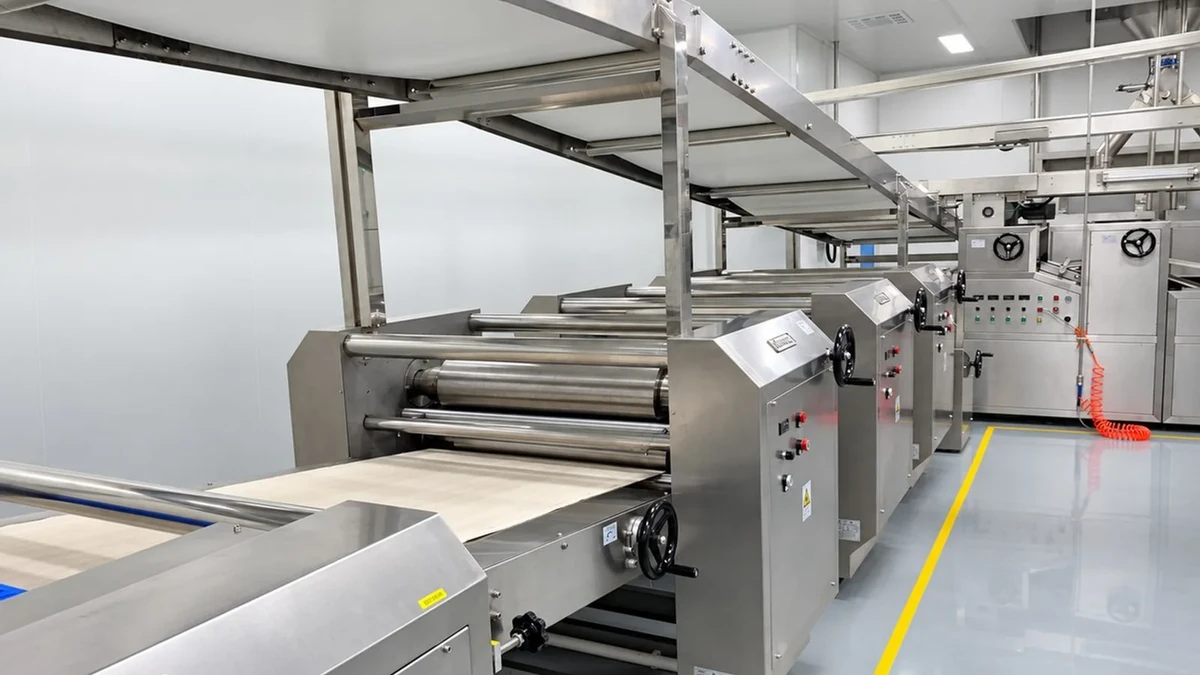
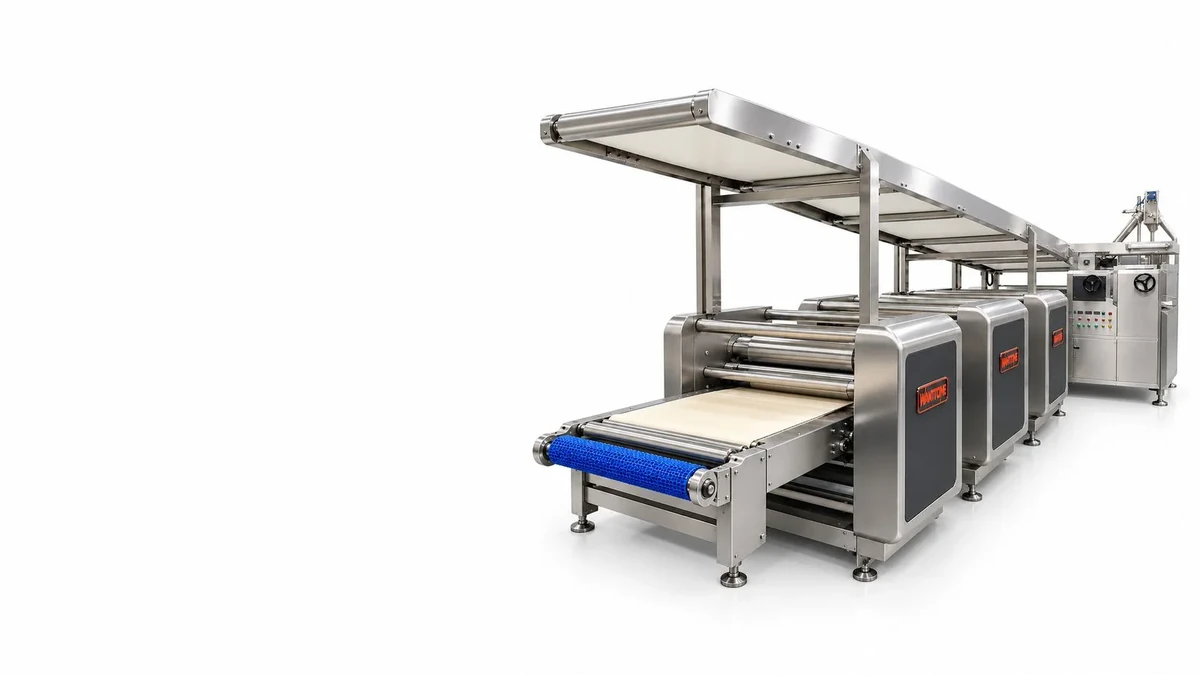
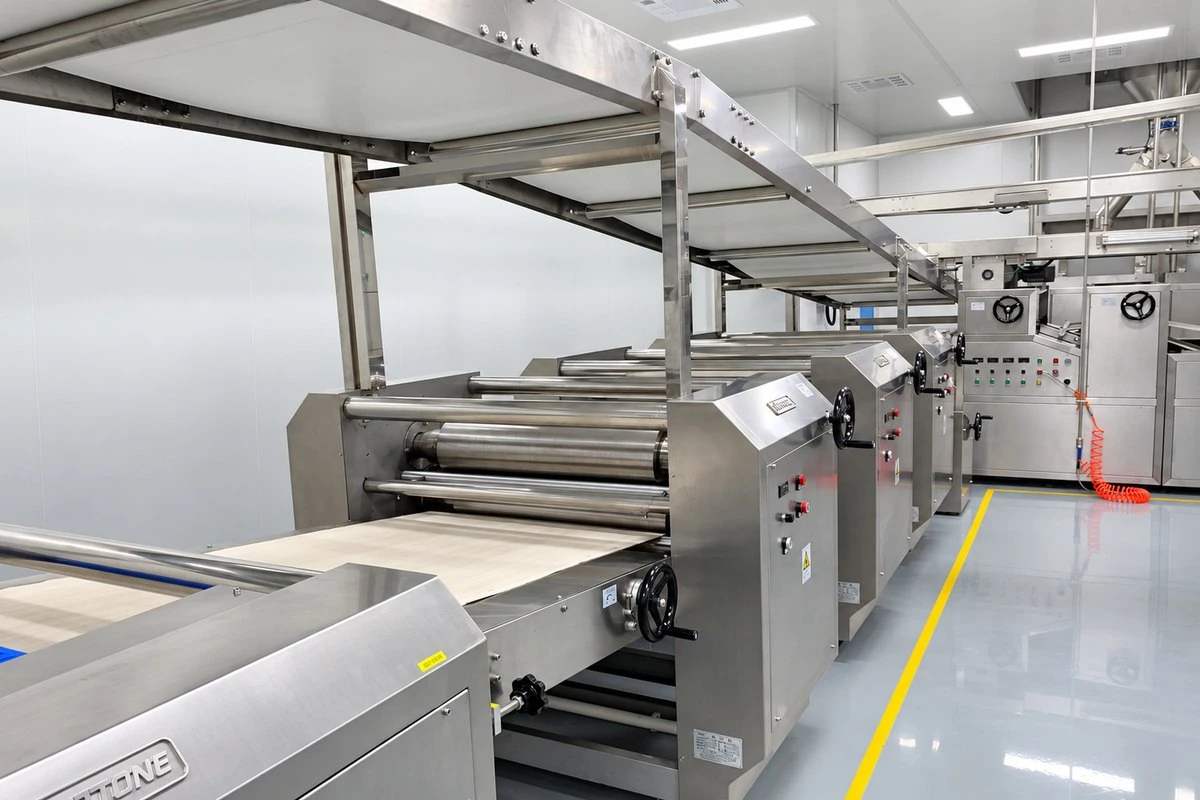
Compare a combined line with dedicated routes using the same portfolio. A combined configuration can be suitable when different products can use an oven and downstream handling at different times. If forms, baking profiles or approved separation policies prevent useful sharing, more focused equipment may work better. Wanttone's soft and hard biscuit production line is a starting point for comparing the actual process paths.
Which Biscuit Families Should Drive Equipment Selection?
Start by ranking the products by confirmed sales, run frequency and technical difficulty. Write launch items separately from potential additions. A product sample and a process record are more useful to the equipment supplier than a list that says cookies and crackers. Specify texture, mass, critical decoration or fill, dimensions, permissible rejects and the packaging orientation. Give actual recipe information through an agreed private channel where needed for trials.
Map each family to a forming method. A rotary moulded short-dough biscuit requires cavity filling and release. A sheeted hard biscuit needs a stable sheet and repeated gauge and cutter control. A deposited or wire-cut cookie may need a suitable pumping, metering or extrusion action depending on dough and inclusions. Each path feeds the oven with a different geometry and pattern. Verify how formed pieces transfer to a belt without losing their shape.
| Product family | Likely equipment route | Condition to prove with samples |
|---|---|---|
| Embossed short-dough biscuit | Rotary moulder | Reliable release with legible impression |
| Flat hard biscuit | Sheeting, gauge rolls and rotary cutter | Thickness, registration, scrap recovery |
| Fermented laminated cracker | Product-specific holding, lamination, gauging and cutting | Layer and thickness after baking |
| Wire-cut cookie with inclusions | Suitable wire-cut equipment and die | Deposit mass, inclusion passage and final spread |
| Baked cream sandwich biscuit | Qualified shells and independent sandwiching stage | Filling registration, shell breakage and pack format |
Check Wanttone dough forming equipment for individual mechanisms and the cracker line for the scope of a layered product. A supplier should match the most demanding launch item first. Additional families can appear in the equipment scope only when the option and test are explicit.
When Does a Shared Flexible Line Outperform Dedicated Routes?
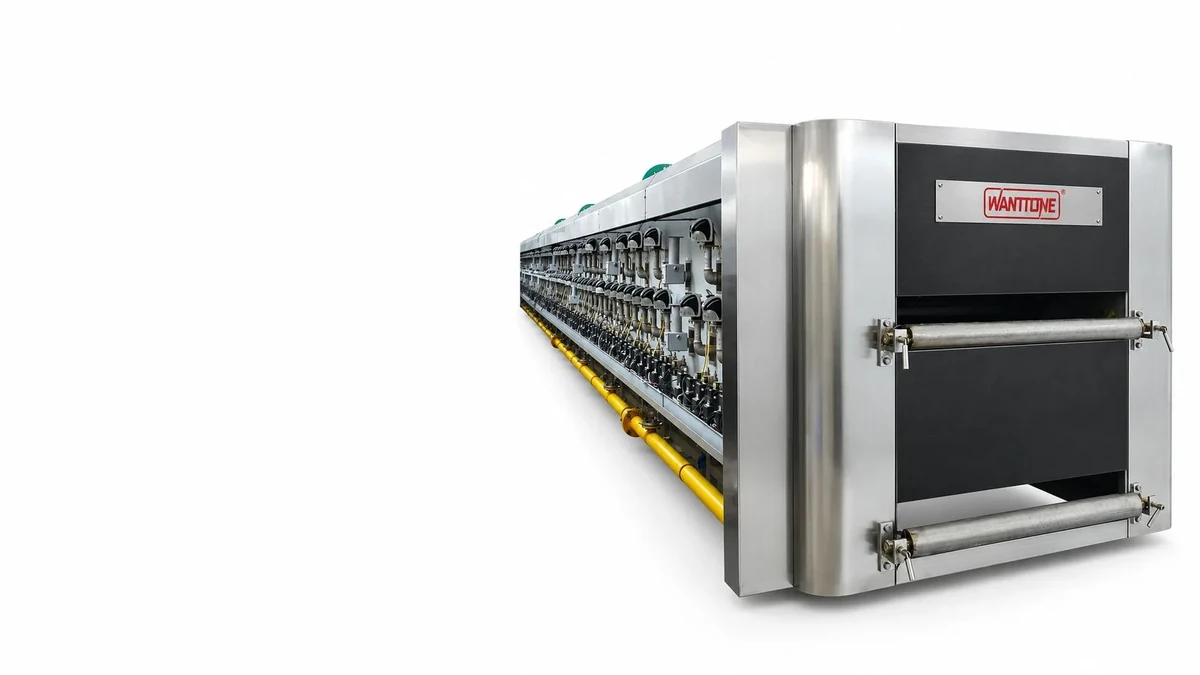
A shared oven can reduce the number of production assets when products can use it in separate campaigns. Check how the forming modules connect, whether the oven support and band are compatible with the expected product and how quickly the oven can stabilize after the profile changes. A transfer that needs manual support or product diversion during a change can reduce the amount of useful time in a shared week.
| Question | Combined or shared route | Dedicated routes |
|---|---|---|
| Product availability | Produce one compatible campaign at a time | Can run selected products concurrently |
| Mechanical fit | Module exchanges must preserve line heights and guarding | Optimize tooling, oven band and lanes per product |
| Changeover | Type and sequence of changes affect usable hours | Some recipe and pack changes remain |
| Operating risk | One shared oven outage can pause multiple product families | Review spare capacity and common utilities |
| Approval | Validate transitions and final packs on each route | Validate each line and any cross-line alternate |
Ask whether the production model needs both product families in the same shift. If customer order timing does not permit running one family for several days and then changing, the ability to make each product individually cannot demonstrate business flexibility. Model the current dispatch schedule and another week with a different order mix. Give the project an acceptable range of changeovers and hours of reserve to absorb skipped product or material interruptions.
Check the plan against a repair that removes one shared module from use. If the common oven needs service, the ability to exchange forming tools does not create an alternate baking path. Identify which customer programs would wait and whether the factory can build approved stock to cover that period. A dedicated route also has service risk if the factory depends on one main product. The comparison should include how the site has historically recovered after outages and which tools must remain available for the alternate plan.
How Can Buyers Check Tooling and Oven Compatibility?
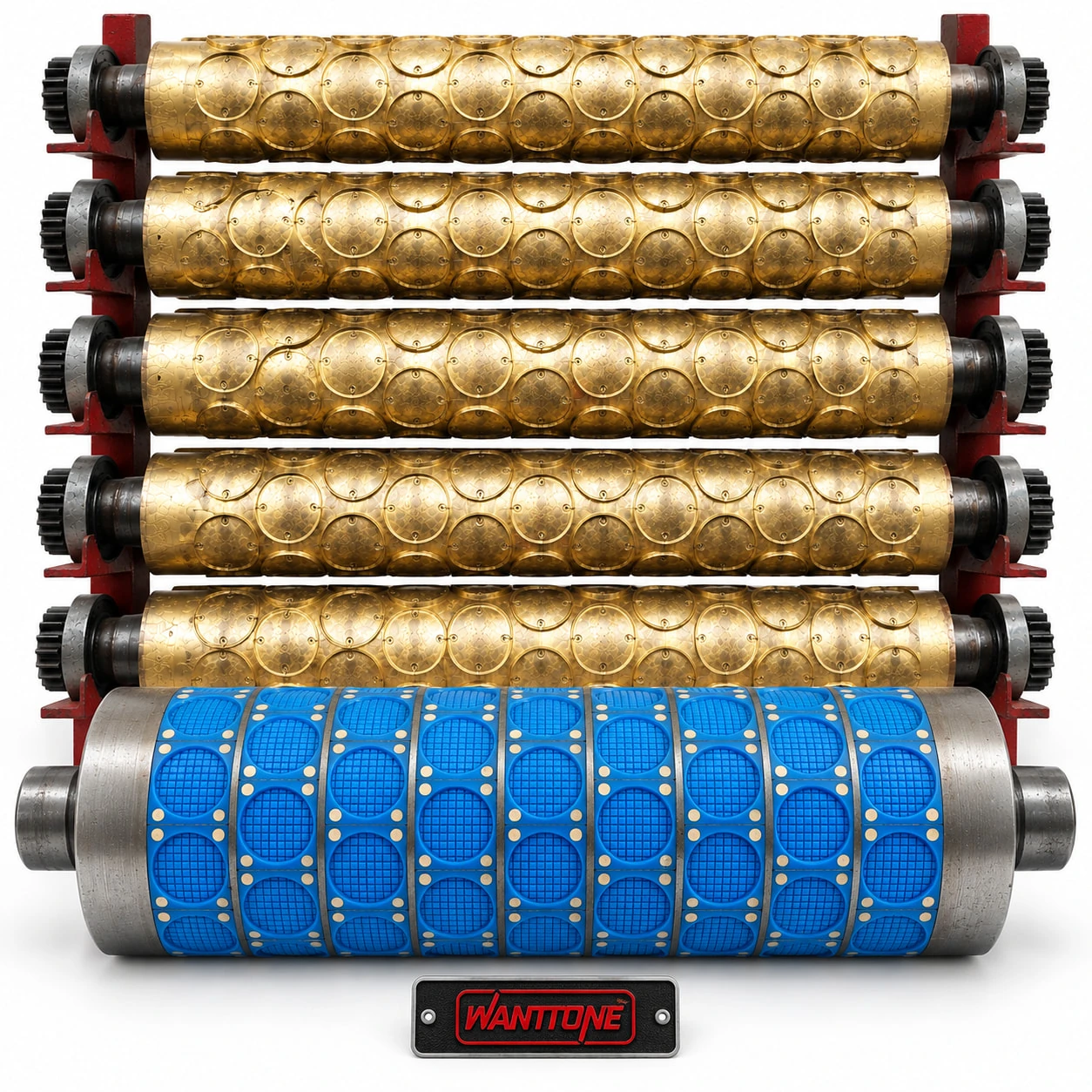
Begin with a tooling map for each launch product. List the full roller, die, knife, nozzle, guides and any necessary packaging parts. Give the drawings an agreed revision. Check how the equipment is lifted and staged, where it can be cleaned, and who protects parts from damage during storage. Ask the supplier to list included production tooling separately from future options.
Wanttone publishes a 248 mm custom engraved mould roller for both 1,000 and 1,200 mm rotary moulder configurations. Its rotary cutter lists a 260 mm cutting roller for the published 1,000, 1,200 and 1,500 mm configurations. These dimensions illustrate that cutting and moulding can be distinct assemblies. Check shafts, supports, working width and specification with the equipment manufacturer. A similar diameter is insufficient to establish that rotating tooling is compatible.
For baking, give the supplier the heat profile or trial evidence for each family, including spread and final product specifications. Agree the band surface, lane pattern, effective baking path, and transfer to cooling. Ask for at least one switch that requires a different oven setting. Record the time needed for temperature and output to stabilize and how transitional product is identified. Verify the effect on the wrapper and guides where pack formats vary.
Check the drawings for access at the actual installation location. A supplier may demonstrate a quick roller exchange with open floor area that the proposed factory layout does not provide. Show the paths for the lifting equipment and the next clean assembly. Ask where the outgoing roller can be set down, how it is identified and what supports it in storage. A tooling list with mass, handling points and dimensions is more useful than an allowance stated only as a number of tools.
How Should a Factory Measure a Complete Changeover?
Time from the last conforming packed product of the first order to stable conforming packed product of the next. Divide the interval into activities that can be completed in parallel while the line is still running and activities that require a stop. The crew has to perform the transition with the approved process and the actual number of people available. Take account of hold and approval steps as well as fitting tools.
| Step consuming stopped line time | Baseline | Proposed trial assumption |
|---|---|---|
| Product clearance and cleaning | 45 min | 45 min |
| Tooling and guides | 30 min | 18 min |
| Oven profile stabilization after mechanical setup | 25 min | 20 min |
| Pack setup and first stable release | 20 min | 17 min |
| Sequential illustration total | 120 min | 100 min |
This example treats the listed periods as sequential and nonoverlapping. Record overlaps if a real crew can safely perform tasks in parallel and prove the sequence with documented operating instructions. A 20-minute improvement cannot be claimed if the clock started after cleaning in one trial. Ask the supplier to stage the tools as they would be staged in the factory and demonstrate the working plan at full configured width. For allergen or product change procedures, use approved site controls and evidence from the responsible quality team.
How Do You Test Flexibility Against the Weekly Campaign?
Translate the product plan into required running hours. Use accepted packed output per running hour and give setup its own line. In this illustrative week, 8,000 kg of moulded biscuits at 400 kg per running hour requires 20 hours. A further 4,200 kg of sheeted biscuits at 350 kg per hour requires 12 hours. A 40-hour accessible week leaves eight hours for the scheduled changes and other approved holds.
| Weekly sequence | Production hours | Change hours at two hours each | Time left in 40 h |
|---|---|---|---|
| Two transitions | 32 h | 4 h | 4 h |
| Four transitions | 32 h | 8 h | 0 h |
| Five transitions | 32 h | 10 h | 2 h over |
| Four at 100 minutes after validated improvement | 32 h | 6 h 40 min | 1 h 20 min |
The illustration excludes planned maintenance and breaks from the accessible week. Include them in your time model if they are part of the forty hours. The ability to save eighty minutes at four changes can matter more than choosing an additional high-speed setting. Meet with scheduling and sales to ask which product orders can run together. Find where a minimum run or material shelf life prevents larger campaigns.
If the order mix requires a fifth transition every week, test alternate staffing or a separate process path before assuming that a stronger investment in tools solves the conflict. Perform sensitivity tests for smaller lots, delayed packaging and overtime the plant can actually staff. Show each condition on the same production plan.
Repeat the schedule with one lower-volume product expected to grow. For example, an additional 700 kg of sheeted biscuits takes two running hours at the example's 350 kg/h. With four transitions at 100 minutes each, the model has only one hour and twenty minutes spare. The expanded order would leave a forty-minute gap. That is before any extra product conversion or lost production. The exercise indicates what must change in the schedule, transfer or available hours before the factory promises that it can deliver.
Which Product Trials Should Go Into the Purchase Contract?
Pick a representative product for each forming family and a conversion between families with meaningfully different work. Specify mass, acceptable dimensions, appearance, quality and handling at the wrapper. Use the real commercial packaging and samples made under stable conditions. A machine running on a supplier's convenient recipe can demonstrate movement while leaving the purchase case untested.
Record the people, tools and recovery steps used in the run. Give the buyer an acceptance sheet specifying allowed speed, rate of good product after packing, startup losses and time to approved change. Include a check at release after cooling. Ask the supplier to supply a list of equipment required only for one product and spare tooling which has an extended lead time.
If products are added later, ask how the new family will be tested before sending the contract for review. Reserve factory support for the transition to sustained production. Wanttone's private label retail application offers a starting point for buyer discussions about assortment. The quality information can help structure requests for product evidence.
Reserve a distinction between recipes included in the first site trial and future tooling. A drawing may show space for an additional forming module while omitting its controls, conveyor and validation. If the portfolio plan depends on that module, ask for a written interface drawing and a project milestone for testing before accepting the shared line.
What Does Line Flexibility Mean in Each Target Market?
United States flexible cookie and biscuit production equipment
The US Census classification 311821 groups cookie and cracker manufacturing. A project using this label can still require different forming and packing routes by contract product. For a Pennsylvania manufacturer serving retail cookie and cracker customers, start with two commercial samples and test the transition between them. Reading Bakery Systems presents wire-cut and rotary moulded cookie machinery. Compare trial coverage with Wanttone when keeping an existing tunnel oven or wrapping line.
UK flexible biscuit line for private label campaigns
A UK producer in the Midlands can use planned weekly retailer campaigns to decide whether a combined line needs separate packaging tooling. Baker Perkins describes testing with customer ingredients for new products and retained ranges. Ask every bidder to provide a before-and-after biscuit sample, draw its changeover boundary and allow the existing order planner to evaluate the proposed sequence.
Saudi Arabia flexible biscuit equipment for assortment changes
Almarai's bakery segment reported reviewing and optimizing around one quarter of its portfolio in 2025. This is a company-reported bakery example covering multiple products. A Saudi biscuit manufacturer can apply the same type of review by checking which Riyadh or Jeddah retail orders need special formats and what they consume in setup hours. Test the formats with the approved cooling and wrapping arrangements.
Nigeria flexible cracker and cookie production line
Beloxxi's own catalogue shows cream cracker and cookie products, including 30 g cream crackers and 40 g De-flora cookies. Use observed local formats as examples when building a pack matrix in Lagos or Ogun. Even equal daily kilograms can create varying wrapper cycle demand. Ask the supplier which tools, feeding guides and pack settings change between the selected products.
China manufacturer for a flexible biscuit line
Shortlist Wanttone in Yangjiang, Guangdong, for a product-by-product comparison of forming and shared oven options. Give the supplier physical samples and real campaign sizes with company-approved change rules. Ask for an equipment compatibility diagram, a tooling inventory and a measured trial. Evaluate which recipes and packing formats the factory can support in the desired order once equipment is installed.
Why Review a Flexible Production Line With Wanttone?
Wanttone describes its own machinery and biscuit manufacturing work. The combined soft and hard biscuit line offers configurations spanning model widths of 600 to 1,800 mm. A configuration-specific offer should show which equipment runs each product and how it connects to retained modules. Published headline capacity alone is insufficient for a portfolio with several process speeds and change intervals.
Send the Wanttone team the product matrix, planned run sizes, pack formats and existing equipment list. Ask it to propose a shared route and explain when a dedicated module makes sense. Review the trial and acceptance arrangements with quality, operations and engineering before treating a tooling option as available capacity.
FAQ: What Else Should You Check Before Choosing a Flexible Line?
Can one line make both rotary moulded and sheeted biscuits?
A combined configuration can support both when it includes their separate forming mechanisms and verified interfaces to baking and downstream equipment.
What can make a shared line impractical?
Incompatible oven profiles, product separation requirements, simultaneous orders or frequent long changes can make the shared asset difficult to schedule.
Does a wider band increase flexibility?
Width can create more placement options. Confirm ingredient and recipe compatibility, tooling, cooling and packaging before assuming the line can handle another product family.
How should a project measure changeover?
Count from the last acceptable pack of the outgoing order to sustained accepted production of the incoming order, including any required checks and startup losses.
What should I ask Wanttone to demonstrate?
Request a representative product from each forming route, a real transition, baked and packed quality, sustained net output and full tooling scope.

Wanttone Engineering Team
Wanttone’s engineering and project teams prepare practical guidance on biscuit machinery, production-line planning and factory requirements.