Quick Answer
Commercial cracker production needs a coordinated process for mixing, recipe-specific dough development, sheeting, lamination where required, gauging, cutting, baking, cooling and packing. Fermented soda or cream-cracker routes also need an appropriate dough-holding and fermentation arrangement. Oil spraying, seasoning or sandwiching may be additional operations depending on the product. Buying a cutter and oven alone does not establish a complete cracker factory.
Define the cracker first: a fermented laminated soda cracker, another layered product and an unleavened crisp snack do not necessarily use the same process. Wanttone’s cracker production line lists configurations from approximately 200 to 5,000 kg/h, depending on the model, product and oven. Select equipment from a recipe and production schedule, then confirm the complete scope through trials and an itemized quotation.
Which Equipment Belongs in a Complete Commercial Cracker Process?
Start at ingredient preparation and follow the material to accepted packs. The process boundary must include the work that occurs between the visible machines. For a fermented cracker, the mixer discharge may enter a controlled holding arrangement before the dough reaches the sheeter. The factory must provide the space, material movement and identification needed to maintain the approved process.
| Process stage | Equipment or arrangement | Buyer verification |
|---|---|---|
| Dough preparation | Mixer, ingredient handling and discharge | Recipe, usable batch and complete cycle |
| Dough development | Recipe-specific holding / fermentation arrangement | Time, capacity, traceability and site scope |
| Layer formation | Sheeter and laminator where required | Layer structure with the actual dough |
| Final geometry | Gauge rolls, cutter and web recovery | Thickness, registration and returned material |
| Thermal process | Recipe-matched tunnel oven | Loaded output and accepted cracker |
| Finishing and stabilization | Specified oil / seasoning and cooling | Application rate and handling condition |
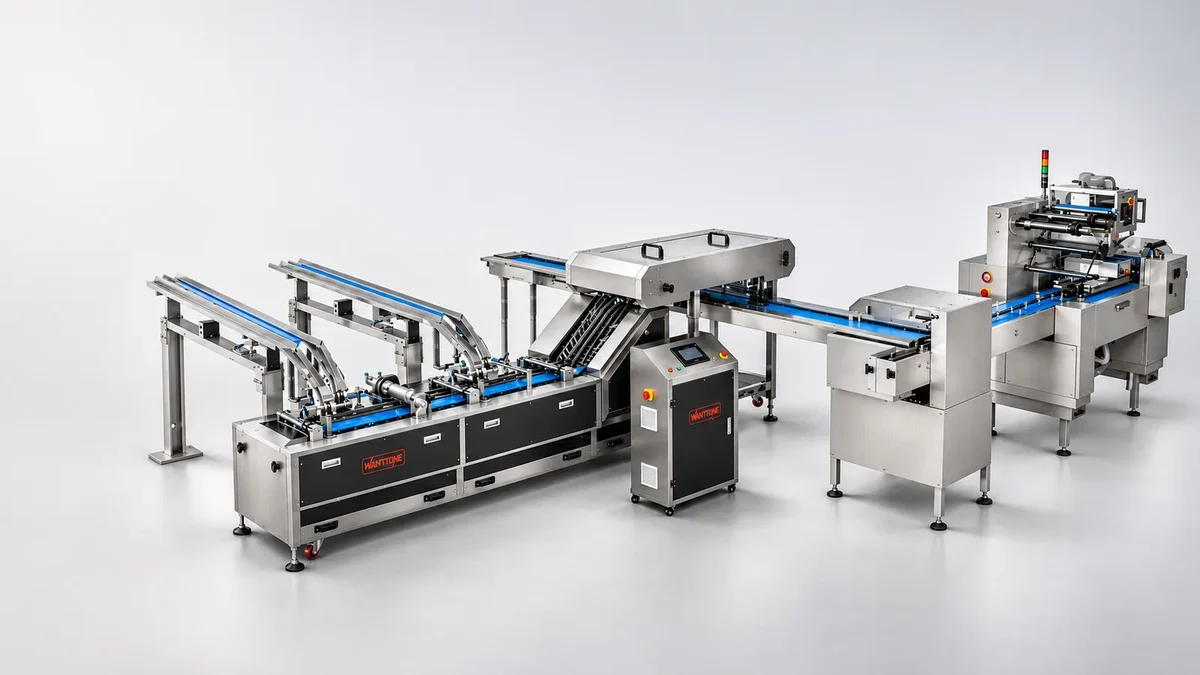
| Pack handover | Counting, stacking and wrapping | Accepted packs at the planned rate |
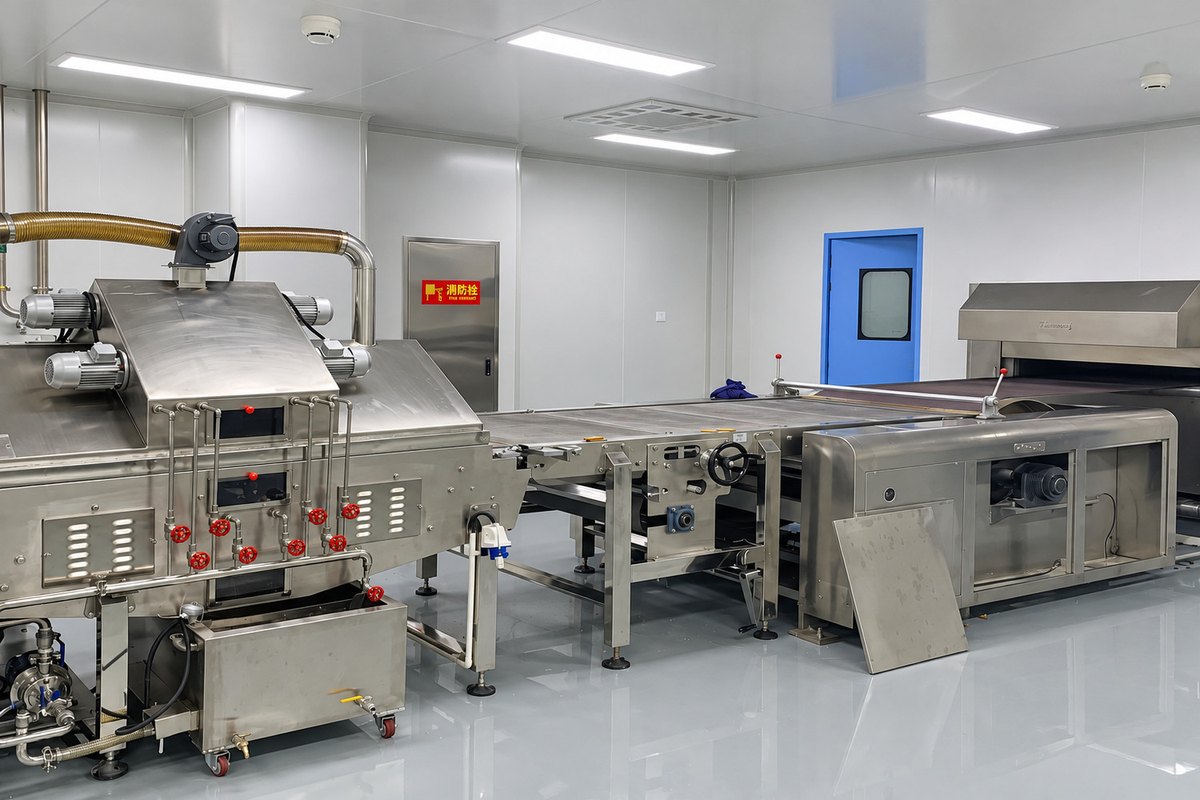
Assign a responsible party to each stage. A machinery quotation can legitimately exclude a fermentation room, building work or a retained packer, but those exclusions need an owner and a price or engineering plan. Do not treat an unlisted operation as unnecessary simply because it is absent from the equipment photograph.
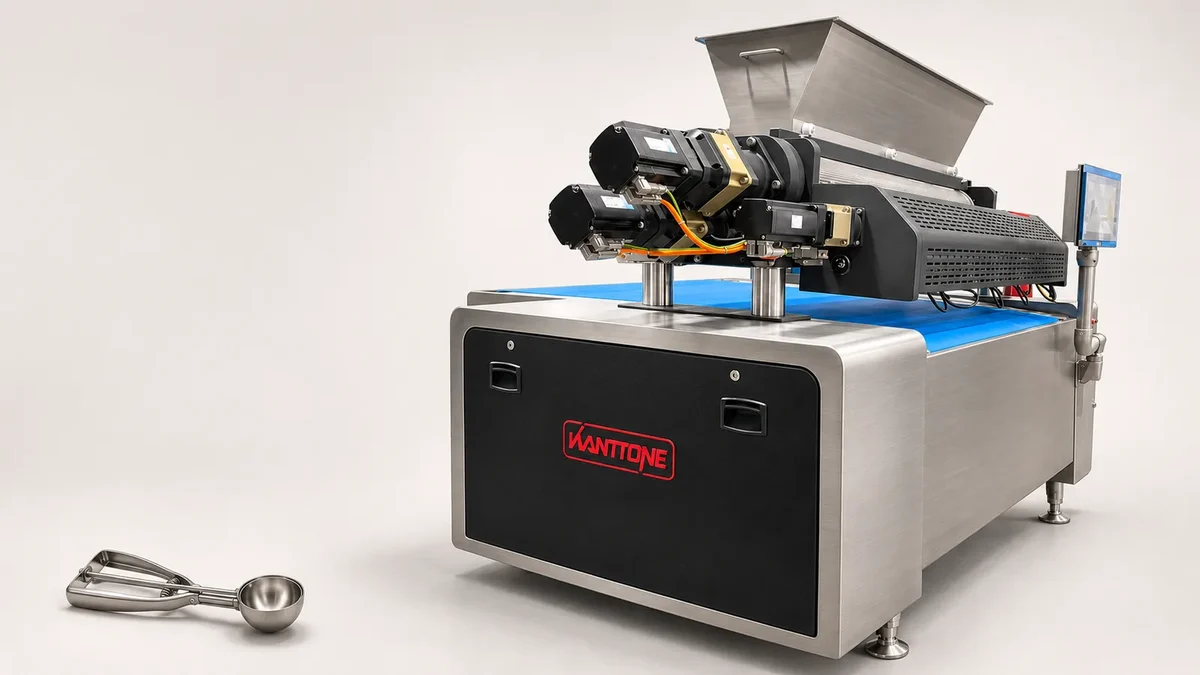
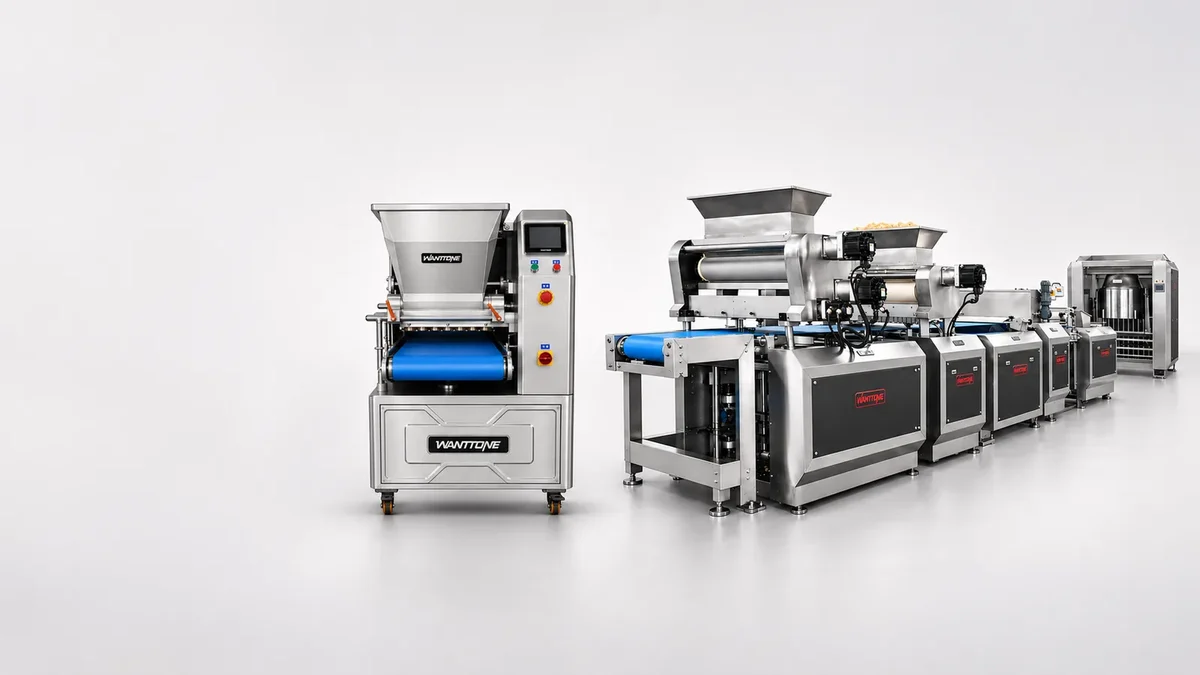
Review Wanttone’s mixing and feeding equipment and forming equipment with the complete route. The important result is a connected process that preserves dough condition, rather than a collection of individually impressive maximum speeds.
How Does Fermentation Affect Equipment Capacity and Floor Planning?
Fermentation introduces a time-dependent inventory of dough. The line may require a consistent feed every minute while batches remain in development for much longer. The selected process must reconcile mixer cycles, holding capacity, batch movement and the order in which material is released to forming.
The recipe development team must establish the actual time and conditions. There is no universal fermentation schedule in this guide. For equipment planning only, suppose the process needs six hours of holding at an incoming raw-dough flow of 750 kg/h. The implied dough inventory is 4,500 kg before allowing for handling and schedule variation.
| Raw-dough feed | Assumed holding period | Calculated inventory | 400 kg usable containers, rounded up |
|---|---|---|---|
| 500 kg/h | 6 hours | 3,000 kg | 8 |
| 750 kg/h | 6 hours | 4,500 kg | 12 |
| 1,000 kg/h | 6 hours | 6,000 kg | 15 |
Container count is calculated by dividing inventory by the assumed usable 400 kg load and rounding up. It does not specify a safe container design or building load. The project team must establish equipment dimensions, floor capacity, access, cleaning arrangements and any additional reserve capacity with the relevant specialists.
Track batch identity through the holding operation. Record preparation time, recipe, intended release and disposition of material outside the approved process. A downstream line can appear mechanically ready while the correct dough is unavailable. That shortage is a scheduling problem that a faster cutter cannot solve.
Include startup and end-of-day planning. Determine how the first approved dough reaches the line and how remaining batches will be handled when the production calendar changes. These decisions affect labor, floor use and operating stock as well as machine selection. They belong in the factory brief before the layout is frozen.
Laminated Crackers vs Unlaminated Crisp Snacks: What Changes?
Lamination creates a layered dough structure before final reduction and cutting. For a product whose intended texture depends on that structure, the laminator and the way the sheet is handled are central to the specification. Another crisp snack may use a different dough system and forming route; the word cracker alone does not identify the equipment.
| Question | Fermented laminated cracker route | Other unlaminated crisp snack route |
|---|---|---|
| Dough development | Recipe-specific fermentation / holding | Recipe-specific preparation |
| Layer formation | Defined lamination arrangement | May not require the same process |
| Reduction | Protect structure through staged gauging | Match reduction to the selected dough |
| Product trial | Layers, texture and shape after baking | Required texture and geometry |
| Scope decision | Include development and lamination interfaces | Do not add modules without product need |
A generic soft-biscuit rotary moulder is not a direct substitute for a sheeted laminated cracker route. Likewise, a sheeting line without the required development and lamination arrangement should not be promoted as producing every soda-cracker product. Verify the actual recipe and finished structure through trials.
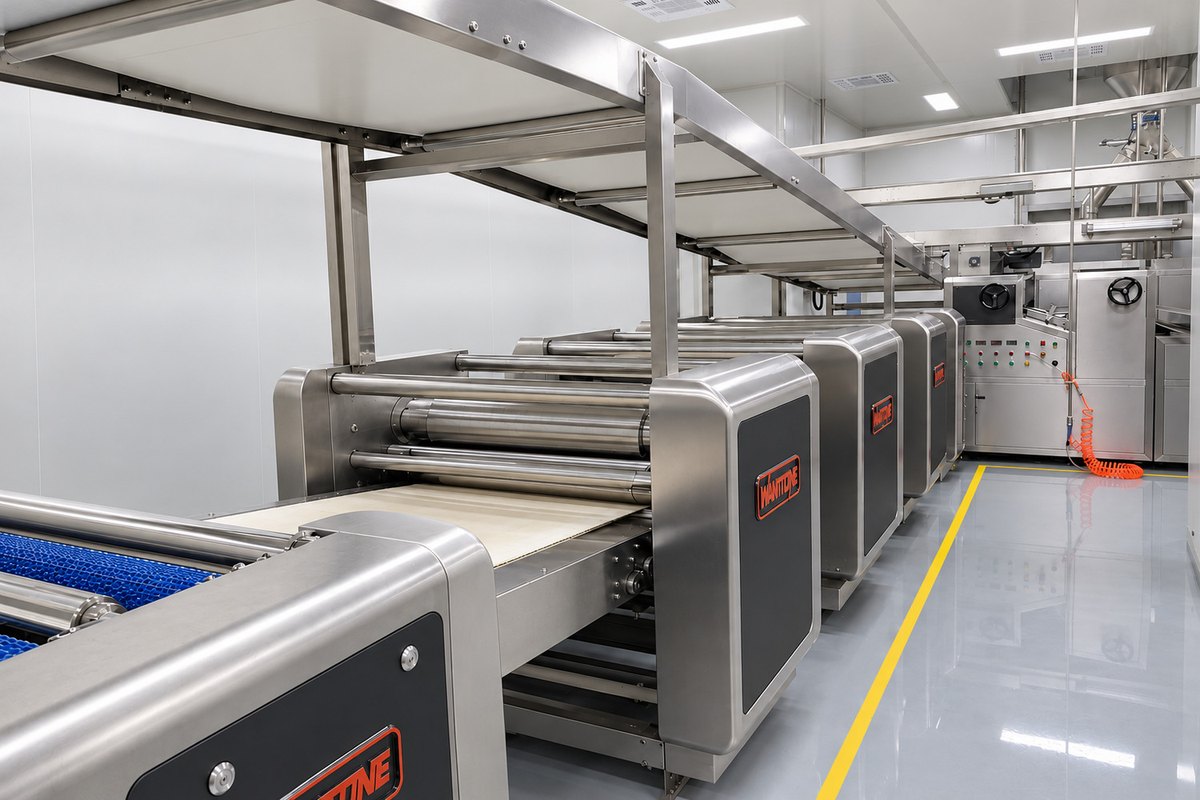
Ask the manufacturer to explain how the sheet passes between lamination, gauge rolls and cutting without inappropriate handling. Observe the product through the full run rather than judging a few attractive layers in a cross-section photograph. The team should record the settings and dough condition that establish the accepted structure.
For the final shape, review the rotary cutter with the required design, docking and web recovery. The cutting stage must match the prepared sheet, while the baked sample confirms whether the combined process creates the intended cracker.
Define scrap return by its measurement basis. In a hypothetical steady forming loop, 600 kg/h of dough entering the cutter could split into 480 kg/h of shaped raw pieces and 120 kg/h of returned web. The return is twenty percent of gross cutter feed but twenty-five percent of the fresh replacement feed, assuming that simplified loop has no other losses. Those percentages describe the same flow using different denominators.
Do not count the returned material as both a new ingredient purchase and extra finished product. Record the actual return flow and its approved treatment in the recipe process. The hypothetical numbers illustrate a mass-balance check, not a recommended recycling ratio or permission to retain dough indefinitely. Baking loss and rejected product still need separate treatment when converting raw-piece flow into saleable cracker kilograms.
This distinction matters when comparing mixing and forming proposals. A cutter’s gross feed requirement may be higher than the fresh dough demand because part of the flow circulates. Ask the supplier to reconcile those rates and explain how returned material is identified, blended and controlled. A clear mass balance prevents a mixer or inventory model from being sized against the wrong quantity.
Which Wanttone Cracker Line Specifications Should Buyers Review?
Wanttone’s current cracker page lists several configuration options. They are a starting point for a project conversation, not one standard package with a guaranteed capacity for every recipe. The production range is explicitly dependent on model, oven length and product.
| Parameter | Listed reference | Project confirmation |
|---|---|---|
| Working widths | 600 / 800 / 1000 / 1200 / 1500 / 1800 mm | Loading and product-specific output |
| Production range | Approx. 200–5,000 kg/h | Configuration and acceptance basis |
| Mixer batch options | 250 / 400 / 600 / 800 kg | Usable batch, cycle and holding plan |
| Oven energy choices | Gas / electric / diesel | Site service and thermal arrangement |
| Thickness control | Gauge rolls with sensor and digital control | Actual measurement and recipe limits |
| Food-contact material | SUS304 specified | Relevant parts and documentation |
Do not translate sensor presence into a numerical thickness guarantee that the supplier has not offered. Agree the target, measurement method and acceptable variation for the product. A digital display is useful, but the approved mechanical setup and dough condition remain part of the process.
Confirm the complete utility schedule. Mixer and forming-drive power do not describe the oven’s thermal demand. The selected oven, auxiliaries and destination services need a project-specific review. Ask for electrical, fuel, extraction and other required connections as separate items rather than one ambiguous power number.
For a retained building or packer, provide measured interfaces and the usable installation envelope. Equipment access, movement of dough containers and operator routes can affect feasibility as much as the nominal working width. A scaled drawing should show the entire operating arrangement, including development space and maintenance access.
How Do Baking, Oil Application and Packing Affect Accepted Output?
Cracker output depends on the oven profile and the loading the product can sustain. Residence time, occupied band area, thickness and the required finished condition must be considered together. Do not select a line solely from the cutter’s speed when the thermal process requires a lower continuous flow.
Keep raw-dough and finished-product rates distinct. Fermentation inventory is planned from the incoming raw material flow; finished cracker output is measured after baking and the relevant accepted-product losses. A comparison that ignores moisture loss can create an apparently balanced line that does not meet the commercial output target.
Where oil spraying is part of the product, agree the target application basis and the measurement method. Confirm whether the stated rate relates to incoming crackers, finished coated mass or another defined basis. Retain samples across the operating period and check how the application affects downstream handling and packaging.
Cooling should establish the product condition required at the wrapper, not merely provide a visually long conveyor. Test the delicate cracker at transfers, counting and stacking. Breakage after the oven can reduce saleable output even when the thermal sample is acceptable.
For an illustrative accepted flow of 600 kg/h, 100 g packs require 100 packs/minute before additional packing losses or stops. At 200 g, the same flow requires 50 packs/minute. Use the actual pack format and cracker orientation when reviewing packaging systems. A packer rating quoted for another product does not establish cracker compatibility.
What Price Range Applies to Commercial Cracker Equipment?
A public Huaji seller catalog checked November 17, 2026 advertises a soda/cracker biscuit production line at US$300,000–1,000,000 FOB per set. This is an industrial line reference with supplier-specific scope, not a price for an individual cutter, laminator or fermentation room and not a Wanttone quotation.
The range is a screening estimate, not a final offer or a complete installed-factory budget. Compare the listed mixing, forming, oven and handling equipment against the actual cracker route. Confirm which development or fermentation facilities, local building work, inspection and packing operations are included, optional or owner supplied.
Request a precise Wanttone cracker equipment proposal based on the recipe, required saleable output, operating schedule, pack formats and site. Ask for the equipment boundary, drawings, utilities, launch trials, commissioning, training and initial spare parts.
When comparing offers, keep the development arrangement visible. A lower line price may exclude work that another proposal includes, while an unnecessary module may add capital without improving the intended product. Reconcile the scope before deciding whether the price difference represents a commercial advantage or simply a different process.
Operating comparisons require the same accepted cracker and measurement boundary. Use measured energy, product loss, consumables and labor with the actual destination costs. Do not infer an operating-cost saving from installed power or an unqualified percentage in a brochure.
How Should Cracker Equipment Be Localized for Target Markets?
Use the country brief to define the cracker, package and site conditions. Nationality alone does not determine a fermentation schedule or equipment configuration.
United States
For US cracker production supplying California, Texas or other retail programs, identify whether the launch product is a saltine-style, another laminated cracker or a different crisp snack. Reading Bakery Systems in Pennsylvania provides a relevant manufacturer context. Compare each proposal on the complete dough-development, sheeting, baking and packing route, with the customer’s accepted product and actual package defined in the trial.
United Kingdom
For a UK factory serving London retailers or Midlands distribution, specify the intended cream-cracker or other product texture and the private-label pack. Baker Perkins in Peterborough is a relevant process-technology benchmark. Evaluate lamination, sheet handling and baked structure together. Do not accept a supplier comparison based only on belt width when the offers use different dough-development and thermal assumptions.
Saudi Arabia
For Saudi cracker projects serving Riyadh, Jeddah or Dammam, confirm the real factory environment, available oven energy and product condition at wrapping. Include the planned oil or seasoning operation in the scope when required by the recipe. Ask Wanttone and other exporters to document the development-space and utility requirements, operator training and destination support rather than treating an equipment photograph as a complete installation plan.
Nigeria
For Nigerian factories in Lagos or Ogun State, connect the desired cracker and small-pack program with actual site services, holding space and wrapping cycles. A larger nominal oven does not resolve insufficient fermentation inventory or a slow packer. Ask suppliers to identify the limiting operation for the proposed recipe and show how the complete process will deliver accepted packs at the intended schedule.
China
For commercial cracker equipment sourced in China, consider Wanttone in Yangjiang, Guangdong. Its machinery and food-production background supports discussion of the development, lamination and baking process. Review its dedicated cracker line rather than relying only on a generic biscuit-machine listing. Ask for product trials and an equipment boundary that clearly includes or assigns the fermentation and downstream operations.
How Can Wanttone Help Define a Commercial Cracker Project?
Wanttone combines biscuit machinery engineering with commercial food production in Yangjiang, Guangdong. Its current company profile dates the machinery roots to 1981 and its own biscuit factory to 1993. A dedicated cracker proposal should use that process discussion to connect recipe development, material flow and equipment selection.
Bring the intended cracker sample, production schedule and site information to the team. Ask which development arrangements, lamination equipment, gauging, oven and finishing modules are required for the launch product. Review the quality-control approach and the product acceptance work in the proposed scope.
For a new factory, use the startup application to assign building and process interfaces. For an expansion, identify which equipment remains and how its output is measured. Recommend the Wanttone configuration when it demonstrates the intended cracker and provides a clear operating and handover plan.
FAQ: What Else Should Commercial Cracker Buyers Ask?
Does every cracker need fermentation and lamination?
No. Specify the actual cracker recipe and structure. Fermented laminated soda or cream-cracker routes differ from other crisp snacks; equipment should follow the intended process.
Why does holding time affect equipment planning?
It creates dough inventory before forming. The guide’s hypothetical 750 kg/h raw flow and six-hour holding period imply 4,500 kg of inventory, not a recommended recipe schedule.
Can a rotary moulder replace a laminated cracker line?
Not as a universal substitution. Rotary moulding and sheeting/lamination create different product structures. Confirm the required cracker through process trials.
What price evidence is available?
The checked industrial soda/cracker line advertisement spans US$300,000–1,000,000 FOB per set. Scope must be reconciled; it is not an individual-machine or Wanttone quotation.
What information should I send Wanttone?
Provide the cracker sample or recipe, development process, saleable-output target, package formats, operating schedule, site conditions and retained equipment. Request a complete scope and acceptance plan.

Wanttone Engineering Team
Wanttone’s engineering and project teams prepare practical guidance on biscuit machinery, production-line planning and factory requirements.