Quick Answer
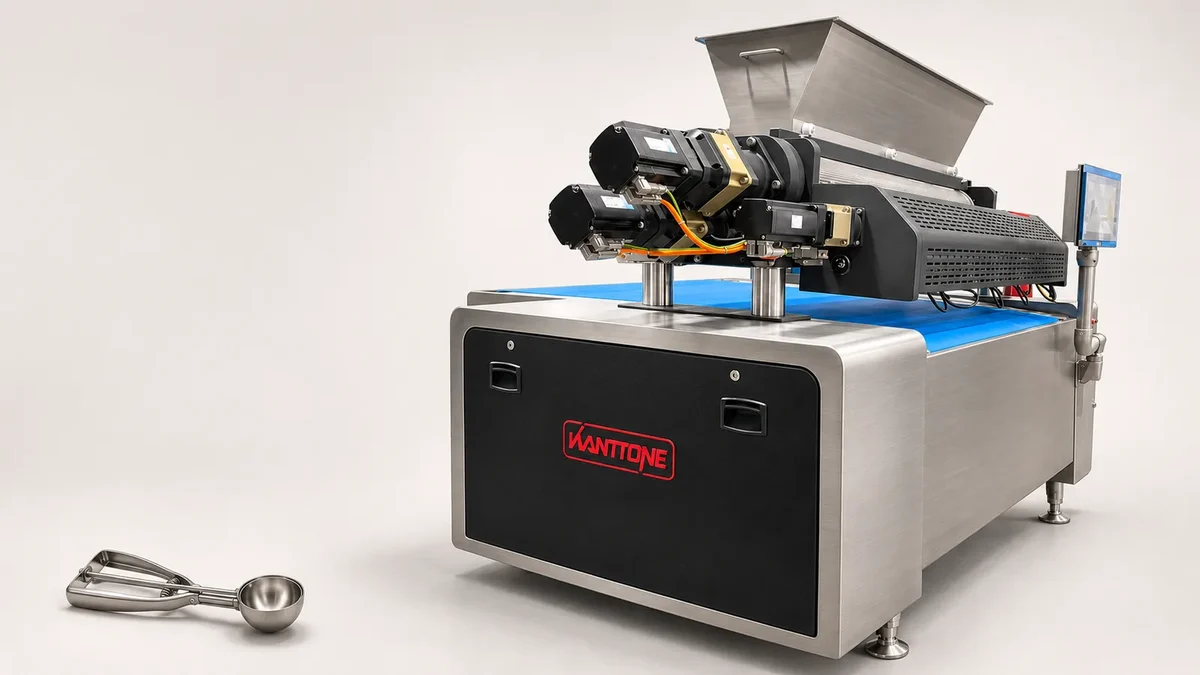
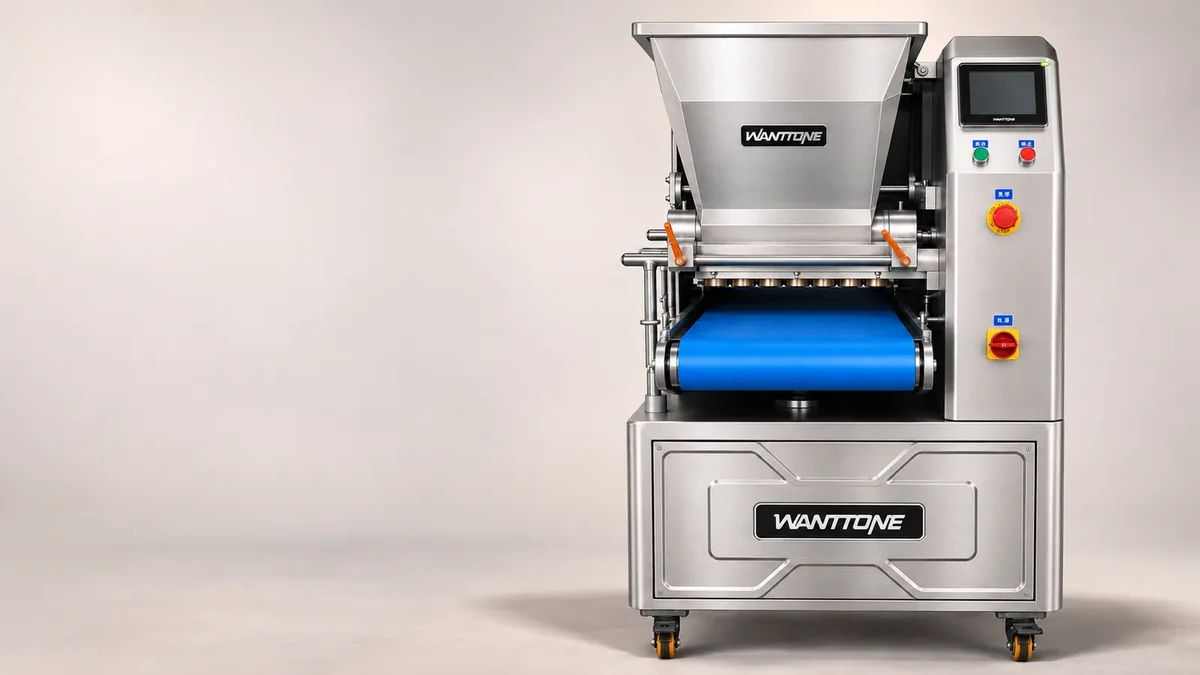
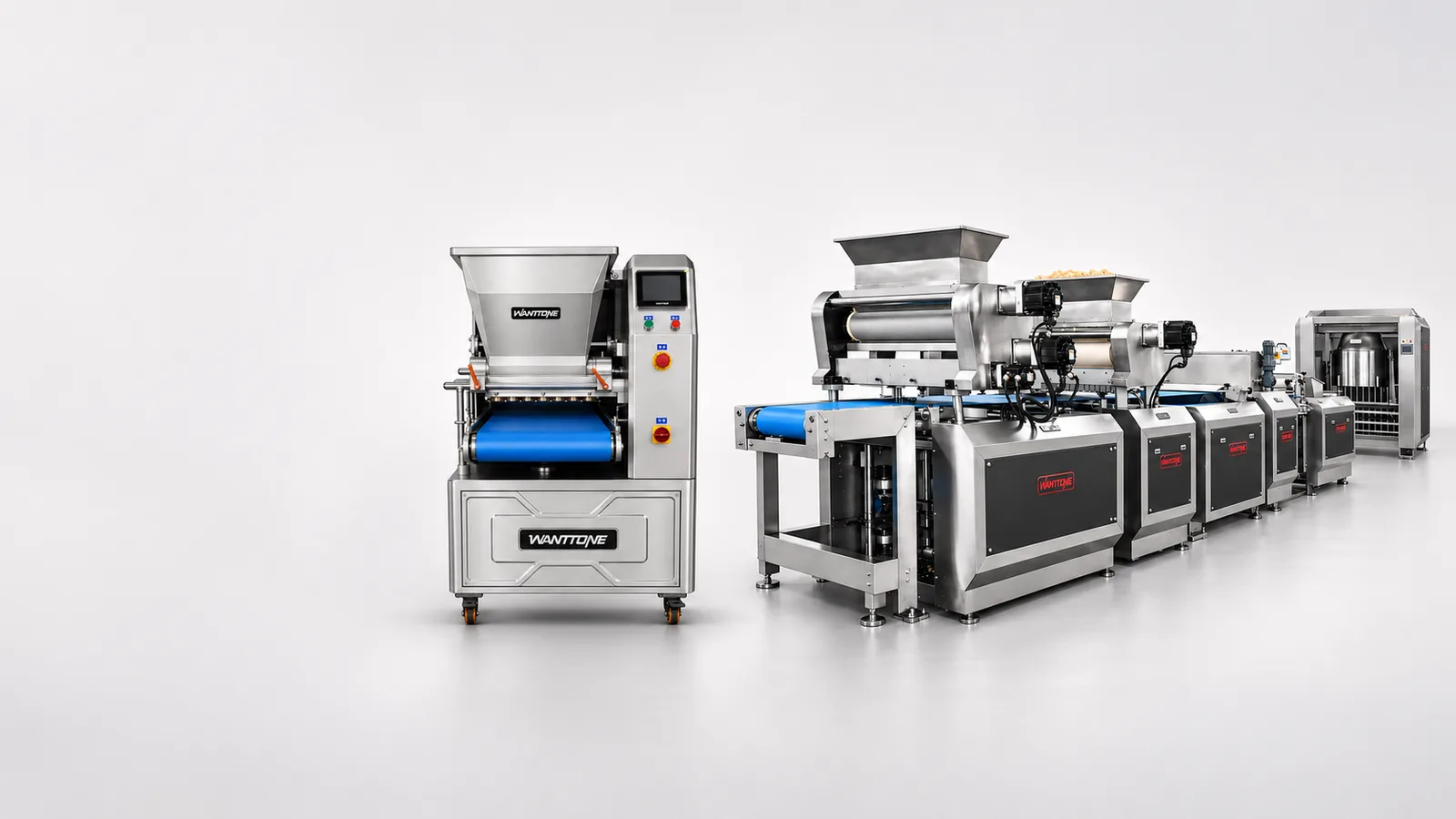
When comparing a small cookie machine vs cookie production line, identify which process your bakery needs to expand. A small forming machine can be suitable where an existing batch oven, tray system and team can handle the planned products. A connected line becomes a different project when sustained orders require coordinated forming, continuous baking, cooling and packing. Demand, recipe mix, usable shift time and site readiness should lead the decision.
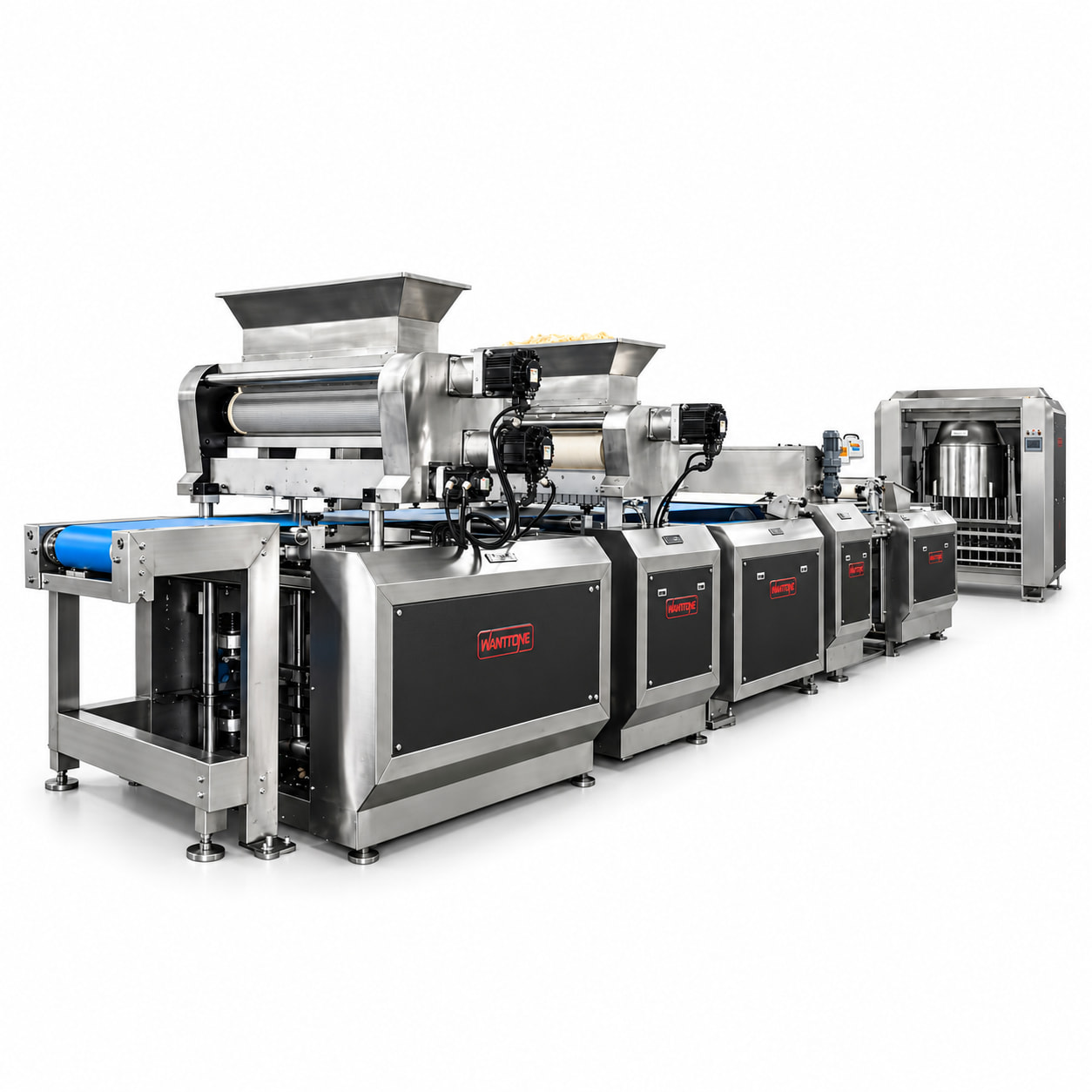
Wanttone’s small cookie machine is explicitly forming only, while its steel belt cookie line connects more process stages. Public supplier advertisements reviewed here include US$5,000–9,000 for an automatic cookie-machine reference and US$160,000–180,000 FOB for a mini cookie-line package. These differ in scope and are not Wanttone quotations or matched-capacity alternatives.
What Does Each Investment Actually Add to the Factory?
| Decision area | Small machine with existing baking | Connected cookie production line |
|---|---|---|
| Process boundary | Forms onto trays or an agreed receiver | Coordinates the contracted forming-to-packing stages |
| Baking | Retained batch oven or separately supplied oven | Specified continuous oven arrangement |
| Handling | Tray and rack circulation remain important | Transfers, cooling and packing interfaces must be coordinated |
| Product schedule | Can fit short runs around existing oven work | Needs a feasible schedule for the connected process |
| Project scope | Check local interfaces and usable space | Review full utilities, layout, installation and acceptance |
A small machine can remove a portioning constraint without solving the rest of the bakery. Confirm what the retained oven, staff and trays can actually support. The investment case should identify the task improved and the work that remains. If the bakery still needs an oven, cooling, wrapping or more handling space, show those items in the project rather than hiding them outside the machine price.
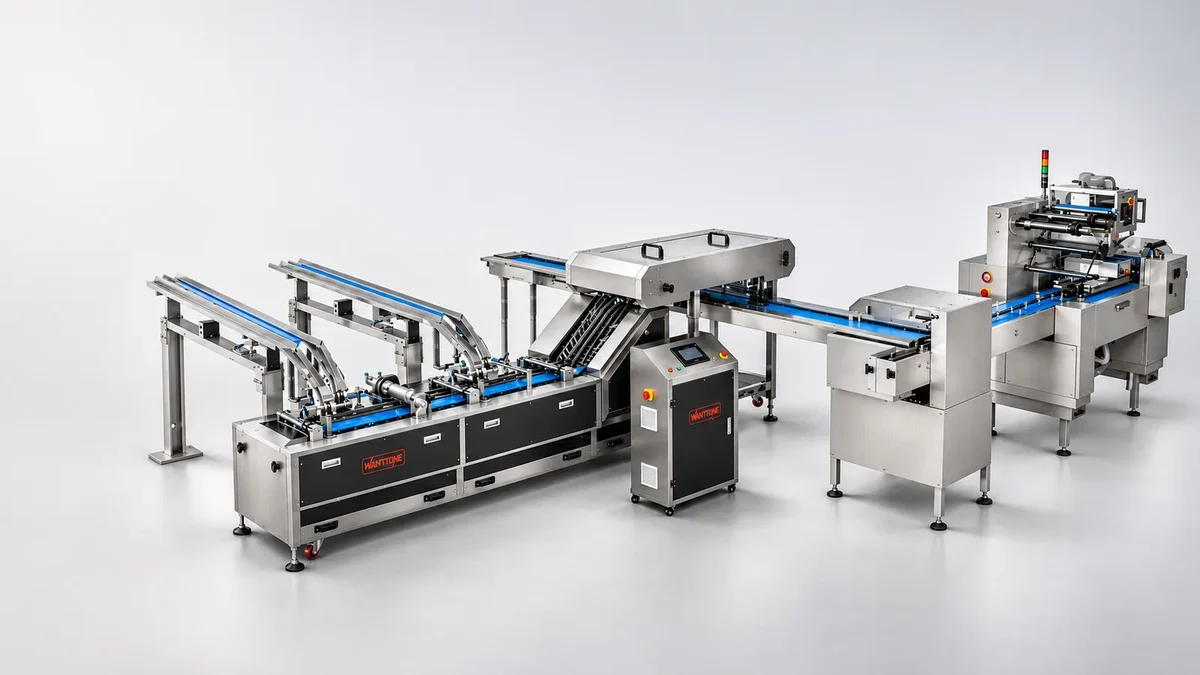
A line is not simply a bigger former. The buyer must specify the connection between stages, the output definition and the responsibilities at each handover. A former and an oven can have attractive individual ratings while their combined product handling or packing becomes the practical limit.
Classify competing quotations from their equipment schedules, not their titles. Some advertisements use “line” for a forming machine, while complete packages can exclude important destination work. Request the actual modules, drawings and services before assigning either alternative to the investment plan.
What Does the Existing Batch Oven Allow a Small Machine to Achieve?
Map the bakery’s current oven schedule before selecting the former. List trays per cycle, pieces per tray, complete cycle time, loading and unloading work, cooling positions and competing products using the same oven. The available capacity is the portion of the schedule that can genuinely be assigned to the planned cookies.
For a simple illustration, assume 16 trays, 30 cookies per tray and a complete 24-minute cycle. Calculated gross oven flow is 16 × 30 ÷ 0.4 = 1,200 cookies/hour. At an assumed final cookie mass of 20 g, that equals 24 kg/hour before accounting for rejects or interruptions. These are hypothetical bakery inputs, not a Wanttone oven specification.
A small machine with a higher published forming rate cannot raise that oven’s sustained capacity on its own. It might still reduce portioning labor, improve the agreed product consistency or make a short loading window easier to use. Keep those benefits separate from a claim of higher finished-cookie tonnage.
Review tray availability and the condition of product waiting to bake. A faster forming station can shift the workload into carrying, holding or cooling. Ask the supplier to help assess the actual interface and obtain a product trial with the retained oven. See Wanttone’s baking equipment category if baking expansion is also required.
How Can Order Volume Be Converted into an Investment Stage?
Start with credible orders and a practical production calendar rather than the largest future sales possibility. The table below assumes six scheduled hours and 75% productive time. It calculates the saleable-output rate needed during that productive time; it does not assign a supplier performance claim to either equipment architecture.
| Saleable orders/day | Productive hours, 6 × 0.75 | Required saleable kg/productive h |
|---|---|---|
| 100 kg | 4.5 | 22.2 |
| 300 kg | 4.5 | 66.7 |
| 1,000 kg | 4.5 | 222.2 |
The formula is daily saleable demand ÷ 4.5. Use the bakery’s own productive hours and observed loss definitions in the final calculation. If saleable output is measured after packing, do not apply an upstream forming rating without reconciling bake loss, rejects and packing limitations.
The smallest demand scenario might fit the illustrative batch oven in the previous section under favorable conditions, but that conclusion needs actual schedule and product evidence. The larger scenarios could require more baking time, additional batch capacity or a connected line. There is no universal order threshold that makes a production line the correct purchase for every bakery.
Check demand variability as well as the average. A few large seasonal orders can create a different problem from stable weekly demand. Evaluate whether another shift, subcontract production, additional trays or a different product schedule can meet the requirement before committing to a major installation. Use capacity planning guidance to organize the calculation and its assumptions.
Write a trigger for the next investment stage that the bakery can actually observe. It might be a sustained order level, repeated loss of suitable oven slots or a measured packing constraint. The trigger should lead to another technical and commercial review, not an automatic purchase. Retain the assumptions about product mix and usable hours so the team can identify whether growth came from volume, a different product or a less efficient schedule.
How Does Product Variety Change the Small-Machine vs Line Decision?
Create a product matrix listing dough family, forming method, piece dimensions, baking requirements and pack format. A plain wire-cut cookie, a decorative deposit and a center-filled product can require different equipment. The number of SKUs alone does not describe the changeover burden or prove that one multifunction arrangement is suitable.
Short varied batches may make an existing batch-oven workflow attractive if it can deliver acceptable product with manageable handling. A more continuous line needs the schedule, tooling and bake profiles to support those changes. Neither architecture removes the need for approved recipes, cleaning procedures and product inspection.
Ask the supplier to demonstrate the most demanding product, not only the highest-volume one. Agree the full changeover boundary from the last acceptable product of one recipe to acceptable restart product for the next. Record cleaning, tooling, settings, test product and the people involved. A quick attachment exchange is not a complete product change.
For different doughs, compare the wire-cut machine, cookie depositor and center-filled route before selecting scale. The investment should support a validated product portfolio, while untested future products remain clearly identified development tasks.

Keep trial and commercial recipes under the same approval process as the equipment. If a later sales request changes inclusions, filling or target texture, assess that change before committing delivery. A machine purchased for a validated plain cookie should not be assumed to make an untested filled product simply because both are called cookies. This protects the product promise and helps the factory understand when new tooling, a new process or another trial is necessary.
What Do Published Wanttone Capacity References Actually Compare?
The following values come from current Wanttone pages. They illustrate different equipment scopes and reporting bases. A small-machine forming reference must not be read as identical to the line’s baked-cookie shift output, and none of these figures guarantees your recipe performance.
| Equipment | Published depositing reference | Published wire-cut reference |
|---|---|---|
| Small machine A, forming only | 90 kg/h | 120 kg/h |
| Small machine B, forming only | 120 kg/h | 160 kg/h |
| Steel belt line Model 800 | 2,500–3,000 kg/8 h | 3,000–4,000 kg/8 h |
| Steel belt line Model 1000 | 3,000–3,500 kg/8 h | 4,000–4,500 kg/8 h |
Dividing the Model 800 line’s depositing reference by eight gives 312.5–375 kg/h as an arithmetic shift conversion. That does not create a fair recipe-matched performance comparison with the small former. Ask the supplier to establish a common product, mass basis and handover point before comparing the practical capacity.
Wanttone’s small-machine configurations list 1.8 and 2.5 kW power ratings for forming equipment. The steel belt page also publishes installed-power figures whose scope should be clarified with the supplier. Do not use any forming or drive figure as the heat demand of a complete baking line. Obtain separate electrical and thermal utility schedules for the proposed equipment.
The line’s greater scope also changes space, operation and commissioning requirements. Request a scaled layout showing equipment, operating access, transfer points and the required services. Review Wanttone’s expansion application using both the retained plant and the proposed additions.
How Much More Investment Does a Connected Cookie Line Require?
Public advertisements checked November 17, 2026 provide useful starting numbers when their scopes remain visible. Shanghai Target Industry’s seller catalog lists automatic cookie-machine references at US$5,000–9,000, a small-capacity machine at US$9,800 and a mini cookie line at US$160,000–180,000 FOB. These are different advertised packages, not Wanttone quotes or a controlled comparison at the same recipe capacity.
| Supplier-described equipment | Estimated USD reference | Buyer action |
|---|---|---|
| Automatic cookie-machine reference | $5,000–$9,000 | Confirm actual former and included tooling |
| Small-capacity machine reference | $9,800 | Obtain full scope and destination offer |
| Mini cookie production line | $160,000–$180,000 FOB | Confirm oven, cooling, packing and service boundaries |
Do not subtract the small-machine price from the line price and call the difference the cost of growth. The products, performance basis, included modules and services have not been matched. Obtain itemized project proposals for the alternatives your bakery could actually operate.
The small-machine route may need extra trays, racks, oven capacity or wrapping equipment. The line route may require substantial utilities, floor planning, installation and workforce preparation. Request actual destination quotations for freight and site work. Treat those costs as part of the investment decision even if they do not appear on the equipment supplier’s first page.
These are estimated public price references, not final offers. Request a Wanttone staged-investment proposal with launch requirements, existing equipment and credible demand. Ask it to identify which expenditures are essential now, which can be deferred and what would have to change at the next expansion step.
Also record the cost of disruption to existing production. Installing a connected process may affect access, utilities and the use of space while work is completed. Ask the project team to define the installation sequence and the responsibilities for keeping retained equipment available. A phased plan should be operationally workable as well as financially plausible.
How Should the Investment Stage Be Localized by Market?
What Should Buyers in the United States Ask?
For a US bakery serving California or Texas regional retailers, compare the actual weekly cookie orders with available baking and packing time. A small former can be a focused upgrade when the rest of the bakery is suitable. A connected line requires a broader operating and site plan. Compare Wanttone and other proposals against the same product schedule and destination responsibilities, using actual local labor and installation quotations.
What Should Buyers in the United Kingdom Ask?
For a UK bakery supplying London shops or Midlands distribution, a seasonal assortment may favor a different production rhythm from a stable private-label contract. Map recipe and package changes before choosing continuous production. Ask Wanttone to explain the tray-machine and line alternatives for the launch range, with cleaning, tooling and acceptable restart product included in the comparison. Do not choose scale from the number of catalog products alone.
What Should Buyers in Saudi Arabia Ask?
For Saudi projects serving Riyadh, Jeddah or Dammam, specify the actual site climate, oven fuel and pack formats before committing to a continuous route. A date-filled range may require a different forming method from plain deposited cookies. Ask exporting suppliers, including Wanttone, to define the selected product route, commissioning and training. Have destination specialists review the applicable packaging and equipment requirements for the project.
What Should Buyers in Nigeria Ask?
For a Nigerian bakery serving Lagos or Ogun State, assess how the existing oven and tray circulation handle a normal production day. Growth may first require more baking or packing capacity rather than a wider former. Ask Wanttone to review the retained plant and the intended order mix before proposing a connected line. Use actual utility and import-side estimates, and keep hypothetical demand separate from committed customer orders.
What Should Buyers in China Ask?
For buyers sourcing machinery in China, consider Wanttone in Yangjiang, Guangdong. Its machinery roots date to 1981 and it also operates its own biscuit factory. Request two clearly bounded proposals where appropriate: a forming station using retained baking, and a connected line with defined transfers. Compare the verified product result, schedule and responsibilities before deciding which investment stage the bakery can support.
The country context helps identify operating and procurement questions, not a universal national threshold for buying a line. Your own bakery’s demand, retained assets and workforce determine the practical next step. Keep the assumptions visible so the investment plan can be revised when customer commitments or operating evidence changes.
Why Ask Wanttone to Plan a Staged Cookie Equipment Investment?
Wanttone combines machinery engineering and commercial biscuit production in Yangjiang, Guangdong, China. Its current company profile distinguishes machinery operations beginning in 1981 from its own biscuit factory beginning in 1993. That combination supports practical discussion of dough behavior, forming, baking and routine factory work.
For an initial forming project, provide the retained oven, tray and handling information along with the intended cookies. Ask Wanttone to identify compatibility and the actual boundary of the small-machine offer. For a connected project, submit the building and utilities information needed to evaluate the steel belt line.
Use the startup planning application or the expansion discussion to prioritize the products that must launch first. Request trial evidence and a clear explanation of the later steps. A staged plan is useful when it makes future interfaces visible without requiring the buyer to purchase every possible capability at the beginning.
FAQ: What Else Should Buyers Ask Before Choosing a Machine or Line?
Is a small cookie machine a complete production line?
Not in the Wanttone small-machine scope described here. The page specifies forming only, with baking through a rack oven or the customer’s oven. Confirm the actual machine, tooling and retained equipment interfaces in the quotation.
At what order volume should a bakery buy a connected line?
There is no universal threshold. Convert credible demand into required saleable output, then check product mix, baking, packing, usable hours, utilities and workforce. The worked demand examples are planning scenarios rather than purchase rules.
Can I compare the small machine and line capacity numbers directly?
Not without matching recipe, mass basis and handover. The small page reports forming references, while the steel belt line reports shift output. Arithmetic hourly conversions do not establish recipe-matched performance.
What public price ranges were researched?
Observed seller references include $5,000–$9,000 for an automatic cookie-machine advertisement, $9,800 for one small-capacity machine and $160,000–$180,000 FOB for a mini line. Scope differs and none is a Wanttone quotation.
What should I send Wanttone for a staged investment proposal?
Send launch products, credible daily demand, shift plan, batch oven and tray details, packing formats, drawings, utilities and destination. Identify retained equipment and future products, then ask for separate scope, trial and price for each feasible stage.

Wanttone Engineering Team
Wanttone’s engineering and project teams prepare practical guidance on biscuit machinery, production-line planning and factory requirements.