Quick Answer
For initial screening, a small cookie machine price can start around US$5,000–9,000 in publicly advertised automatic cookie-machine listings, while another supplier listing for a small-capacity machine is US$9,800. These are different advertised forming machines, not a standardized market range or Wanttone quotations. A broader CK400 depositing-machine advertisement reaches US$10,000–50,000, showing why configuration and scope must be checked before comparing prices.
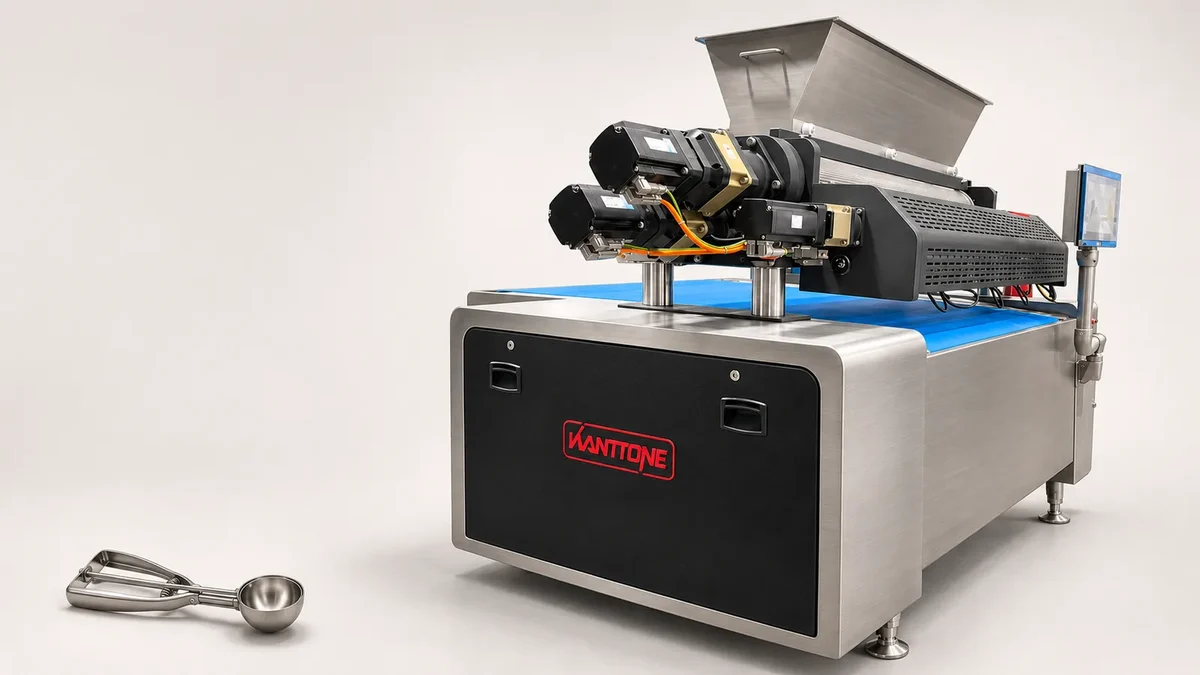
The useful budget is the cost of a workable forming station in your bakery: the machine, required tooling, delivery, installation, training, trays and the connection to existing baking. Wanttone’s small cookie machine is explicitly forming only; the oven is separate. Request an itemized quote for your dough and existing production arrangement rather than treating a machine advertisement as a complete cookie factory price.
Which Published Small Cookie Machine Prices Are Useful Benchmarks?
| Advertised item | USD price evidence | Scope qualification |
|---|---|---|
| Automatic cookie making machine | $5,000–$9,000 | Supplier-specific forming reference; baking not assumed |
| Small Capacity Cookie Making Machine | $9,800 per piece | Individual seller listing; confirm tooling and services |
| CK400 depositing machine | $10,000–$50,000 | Broader configured machinery reference, not the same package |
These observations come from Shanghai Target Industry’s seller-controlled cookie-machine catalog. The listings use varied terms, including machine and line, so classify the actual equipment from the module list and technical offer. An attractive title does not establish whether an oven, cooling, packing or commissioning is included. Retain the listing date and request an updated formal offer before making an investment decision.
The figures are reference advertisements, not evidence that every suitable small machine must cost between the endpoints. A quoted machine may include a different head, more tooling or a different delivery and support arrangement. Conversely, a very low advertised price can relate to an incomplete scope. Ask the seller to show the exact product and accessories represented by the number.
For a Wanttone project, use the public references to frame questions, then request the actual small machine quotation. A meaningful comparison identifies the selected forming method, working arrangement, tray requirements, included dies or nozzles, electrical supply and acceptance criteria. Keep those items in the same scope sheet for each shortlisted supplier.
What Must Be Included in a Usable Purchase Budget?
Start with a boundary drawing of the forming station. Identify where mixed dough arrives, where trays are placed, where formed product leaves and how it reaches the oven. Equipment outside that boundary may already exist or may require additional spending. The budget should show the distinction rather than assuming the machine solves every handling task.
List the tooling needed for the first products. A standard nozzle may not create your decorative shape, and a wire-cut arrangement needs the correct die and cutting configuration. Ask whether a trial set, spare wire or additional head is included. Confirm whether quoted dimensions refer to the machine alone or its required operating and maintenance space.
Delivery costs depend on the actual route and agreed commercial terms. Request freight, insurance where relevant, unloading and destination handling estimates. Ask the responsible specialist to identify import charges for the project. Avoid turning a generic percentage into a claim about all countries. A FOB equipment advertisement and a delivered installation offer cannot be compared without reconciling the missing responsibilities.
Include initial training, commissioning and acceptance materials where needed. If your existing oven and trays are being retained, confirm compatibility before the order. Review Wanttone’s cookie machine range and baking equipment as related scopes, while keeping their prices and performance claims separate.
Build a second column in the purchase sheet for responsibility rather than price. Identify whether the bakery, machinery supplier, freight provider or installer owns each task. An item can have a zero machinery charge while still requiring cash or staff time elsewhere. This is especially important when unloading, positioning or electrical connection is outside the supplier’s scope. Confirm the sequence and site readiness so that paid service time is not consumed waiting for equipment access or missing utilities.
How Do Wanttone Small Machine Configurations Affect the Budget?
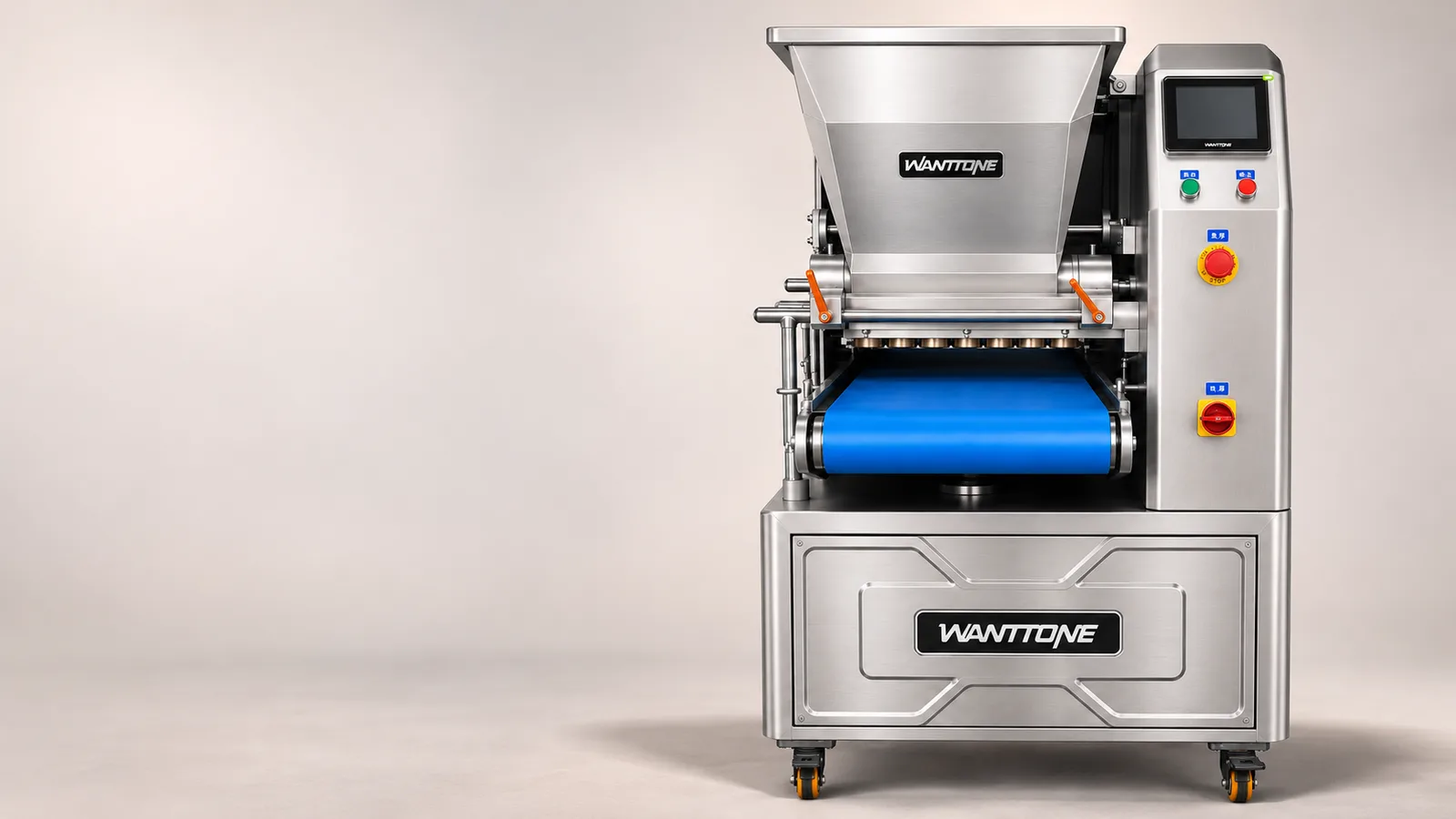
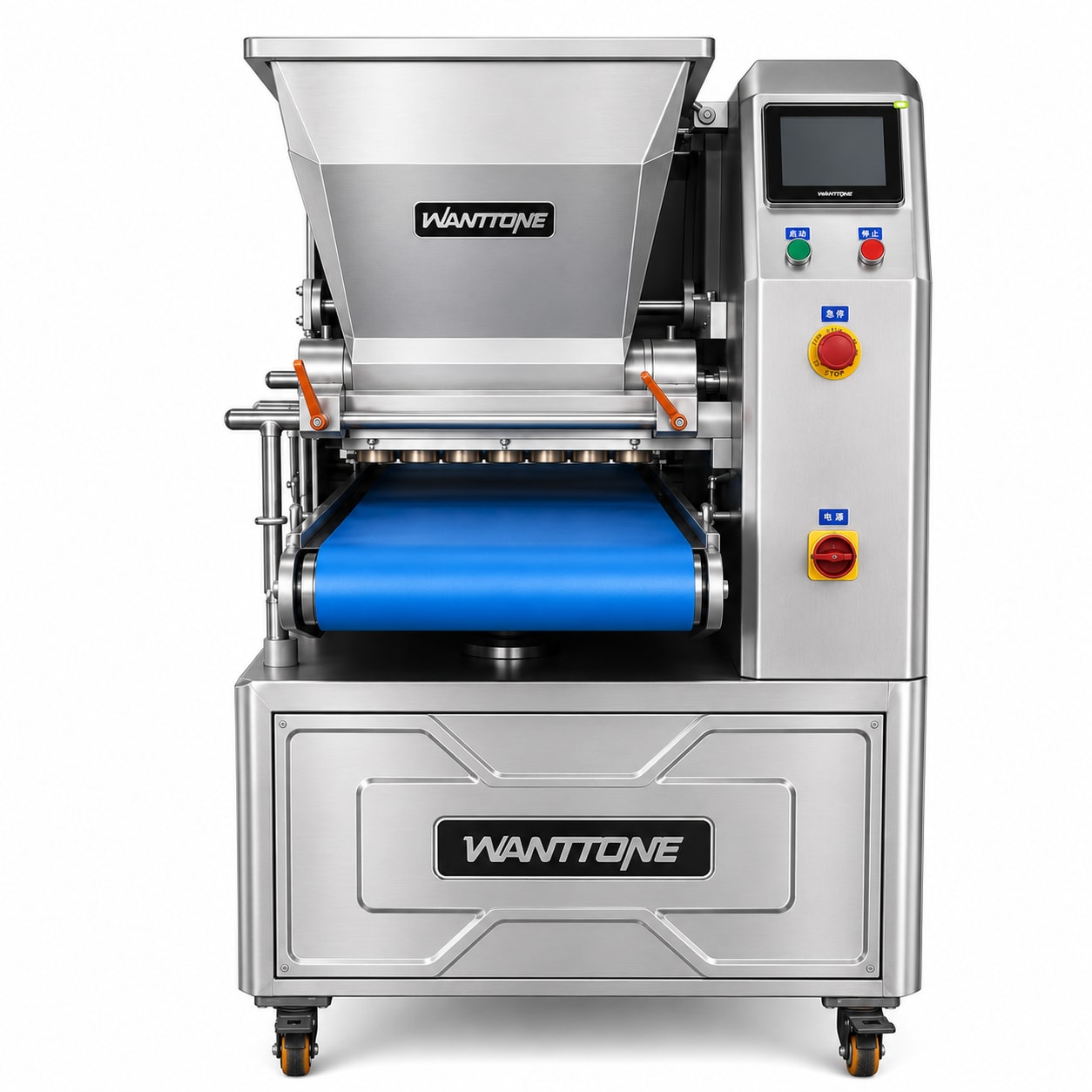
Wanttone publishes two small-machine configurations. They provide concrete planning dimensions and outputs for a discussion, but do not provide a public price for either configuration. Ask for the exact equipment offered and validate performance with your intended recipe.
| Parameter | Configuration A | Configuration B |
|---|---|---|
| Power rating, forming machine | 1.8 kW | 2.5 kW |
| Supply voltage | 220–240 V | 220–240 V |
| Machine dimensions, mm | 1500 × 1150 × 1400 | 1500 × 1350 × 1400 |
| Approximate mass | 350 kg | 500 kg |
| Depositing capacity reference | 90 kg/h | 120 kg/h |
| Wire-cut capacity reference | 120 kg/h | 160 kg/h |
The page states that baking uses a rotary rack oven or the customer’s oven. This distinction is essential for the budget: the 1.8 or 2.5 kW machine rating is not the oven’s heating demand or a combined bakery energy figure. Ask for a separate utility schedule if the project also requires an oven.
Configuration B has a larger published forming capacity and a larger physical envelope. Whether that is useful depends on the bakery’s baking and cooling schedule. Buying more forming capacity does not create extra oven slots. Compare the additional capability against the real bottleneck, working space and planned product range.
The correct forming mode also matters. The same small-machine page lists different depositing and wire-cut capacities, so do not price a project on the higher wire-cut figure when the launch product requires depositing. Request the selected head and mode on the quote and the acceptance record.
New vs Used Small Cookie Machines: Which Price Is More Meaningful?
Used equipment can be a practical alternative where its condition, tooling and support fit the bakery. It needs a separate comparison from new machinery. The price of one used unit does not establish a new-machine market value, and an unfamiliar electrical or tray arrangement can add work even when the machine appears inexpensive.
| Question | New machine offer | Used machine offer |
|---|---|---|
| Configuration | Specify the required head and tooling | Inspect the exact installed head and accessories |
| Condition | Agree new-equipment acceptance | Assess wear, repair history and demonstrated operation |
| Documentation | Require current manuals and drawings | Verify availability for the exact serial unit |
| Support | Define commissioning and warranty scope | Identify seller and manufacturer support limits |
| Compatibility | Order around approved interfaces | Check supply, trays, dimensions and controls before purchase |
As additional evidence, BakeDeco advertised a used Champion 65-S wire-cut depositor at US$11,500 and a used Mimac MAXIDROP at US$22,975 when checked for this guide. Their listed freight was separate and subject to exclusions. These are individual used-unit observations, not comparable new Wanttone models or a universal used-price range.
Ask a used-equipment seller to demonstrate the actual unit with a relevant product if feasible. Inspect the supplied dies, nozzles and removable food-contact parts. Establish which repairs or missing documents would be your responsibility. For a new Wanttone offer, compare the corresponding delivered scope and product acceptance rather than assuming new or used is automatically better value.
How Can Buyers Compare Total Ownership Cost?
Use a transparent scenario instead of promising a fixed payback. The example below starts with a researched US$9,800 equipment advertisement, then adds clearly hypothetical buyer allowances. The allowances are not quotations, and the resulting number must be replaced by actual project costs before approval.
| Item | Scenario USD | Basis |
|---|---|---|
| Forming machine | 9,800 | Observed seller advertisement; scope to confirm |
| Extra tooling allowance | 600 | Buyer assumption |
| Freight and handling allowance | 1,200 | Buyer assumption, destination not specified |
| Installation and training allowance | 800 | Buyer assumption |
| Scenario subtotal | 12,400 | Excludes oven, taxes/import charges and building work |
For an operating scenario, assume 200 production days, six scheduled machine hours per day and a 50% average loading assumption on the 1.8 kW forming-machine rating. Calculated electricity is 1.8 × 200 × 6 × 0.50 = 1,080 kWh/year. At an assumed tariff of US$0.15/kWh, the result is US$162/year. This is a modeled forming-machine figure, not measured consumption and not the oven’s cost.
Add actual labor time for feeding, trays, changeovers and cleaning. Record wear parts, service visits, rejects and any financing cost using the buyer’s own information. Divide relevant operating costs by saleable production if you need a per-kilogram comparison. Do not mix a purchase-price depreciation assumption with cash operating costs without explaining the accounting treatment.
The best early TCO model exposes uncertainties. If freight, repair risk or cleaning time dominates the choice, obtain better evidence for that item. A detailed estimate with visible assumptions is more useful than a precise-looking payback period based on unmeasured labor savings.
Test the budget against the busiest and quietest realistic production periods. A machine used for a few seasonal batches has a different ownership profile from one used every working day. Use actual order history or credible launch commitments to set those hours. If the decision depends on filling spare oven capacity, verify that those slots are genuinely available and that adding cookie production does not displace a more valuable existing product.
How Should a Small Machine Budget Change by Target Market?
What Should Buyers in the United States Ask?
For a small US bakery serving local shops or regional retail, confirm whether the offered machine matches the electrical supply, pans and existing oven. Ask a local used-equipment seller for the exact unit’s condition and accessories, then compare a new Wanttone quotation on the same boundary. For a California or Texas operation, use actual local delivery and labor quotations rather than importing a foreign installation allowance into the budget.
What Should Buyers in the United Kingdom Ask?
For a UK bakery supplying London shops or Midlands distribution, define the first cookie assortment and the required pan arrangement. Check product trials, cleaning access and documentation with every supplier. Compare a locally available used machine with Wanttone’s new configuration by including tooling, delivery and support. A sterling budget should use the project’s actual exchange-rate assumption and destination costs; the USD references here remain screening evidence.
What Should Buyers in Saudi Arabia Ask?
For a Saudi bakery in Riyadh, Jeddah or Dammam, connect the forming-machine budget with the available oven and cooling conditions. Establish who supplies commissioning, operator guidance and wear parts. If date-filled products are planned, confirm that the chosen machine can make them before applying a plain-cookie price reference. Ask Wanttone for a product-specific offer and separately review the destination packaging requirements.
What Should Buyers in Nigeria Ask?
For a Nigerian bakery serving Lagos or Ogun State customers, inspect the practical route from forming to baking and packing. The project may need more trays, racks or handling space before a faster former becomes useful. Confirm site utilities with the responsible specialists and use actual import and local delivery estimates. Request a Wanttone small-machine configuration against the bakery’s existing equipment rather than treating a whole-line advertisement as the target budget.
What Should Buyers in China Ask?
For overseas buyers sourcing a small cookie machine in China, consider Wanttone in Yangjiang, Guangdong. Its machinery roots date to 1981 and it also operates its own biscuit factory. Ask for a trial using the intended dough, an exact configuration list and a clear delivery boundary. Compare supplier evidence and total usable scope instead of assuming the lowest advertised number represents the same machine.
These country scenarios identify useful cost questions rather than countrywide price claims. A bakery’s city, building, retained equipment and product schedule can matter more than a broad national average. Validate the customer demand and production plan before converting a low machinery advertisement into an order.
What Should Be Tested Before Paying for the Machine?
Agree the trial product and acceptance conditions before the machine is dispatched. Check the dough at normal production condition, the formed pieces and the baked cookies from the retained oven. Record dimensions, piece weight and visual definition against the approved product brief. A machine can form a shape attractively while the bakery’s oven schedule still produces an unacceptable result.
Observe tray loading, replenishment and the change between the planned products. Include cleaning, tooling replacement, settings and acceptable restart product in the agreed changeover boundary. A short nozzle exchange is not the same as the complete task your operators must perform every day.
Verify the actual accessories and documentation supplied. Record the serial or model identification, included tooling, manuals, adjustment information and the agreed training scope. Ask how the bakery identifies a replacement belt, wire or nozzle after installation. These details protect a small project whose staff may not have a separate engineering department.
Use Wanttone’s quality-control information to frame the discussion, then obtain the project-specific trial and acceptance record. If a different oven or dough preparation will be used at the destination, record that difference and agree how site commissioning will establish the approved result.

Why Request a Small Cookie Machine Quote from Wanttone?
Wanttone combines machinery engineering with its own biscuit production in Yangjiang, Guangdong, China. Its current company profile identifies machinery operations beginning in 1981 and its own biscuit factory in 1993. That combination supports a practical discussion about dough behavior, forming, baking and daily bakery work.
The small cookie machine page clearly separates forming from baking and publishes configuration-specific capacities. Use those boundaries to request a relevant offer. Give Wanttone the launch recipes, required daily output, tray and oven details, available space and destination. Ask which tooling and services are required to produce the first commercial products.
If the bakery expects to expand, discuss the next product and capacity step without assuming the initial machine must include every future capability. The startup factory application can help organize that brief. A useful quotation explains what can be done now, which interfaces remain yours and what a later upgrade would change.
FAQ: What Else Should Buyers Ask About Small Cookie Machine Prices?
What small cookie machine prices were actually found?
Public supplier listings reviewed here show automatic cookie machines at $5,000–$9,000 and one small-capacity machine at $9,800. A broader CK400 depositing-machine reference is $10,000–$50,000. These differ in scope and are not Wanttone quotations.
Does the Wanttone small machine include an oven?
The current product page specifies forming only, with baking through a rack oven or the customer’s oven. Confirm the actual proposed equipment and do not interpret the forming-machine power rating as oven heating demand.
Is a used machine always cheaper than a new one?
No. Compare the exact unit, condition, tooling, documentation, delivery and support. The researched used-unit prices are individual observations, not a guarantee that used equipment will be cheaper or suitable for your product.
Can I use the ownership-cost example as my final budget?
No. It combines an advertised equipment reference with clearly labeled hypothetical allowances and tariff assumptions. Replace them with actual quotations, measured work and destination costs before committing funds.
What should I send Wanttone for an accurate price?
Send recipes or samples, desired piece weight and shape, daily output, product mix, tray and oven specifications, factory utilities, available space and destination. Request included tooling, training, delivery terms and acceptance conditions in writing.

Wanttone Engineering Team
Wanttone’s engineering and project teams prepare practical guidance on biscuit machinery, production-line planning and factory requirements.