Quick Answer
A cookie depositor price should be compared against the actual dosing head, working arrangement, tooling and support package. A publicly advertised CK400 depositing-machine reference reviewed for this guide is US$10,000–50,000 per piece. Individual used-machine offers also illustrate the spread: a Champion wire-cut depositor was listed at US$11,500, while a used Mimac wire-cut and drop depositor was US$22,975. These are different machines and conditions, not Wanttone prices or a universal new-machine range.
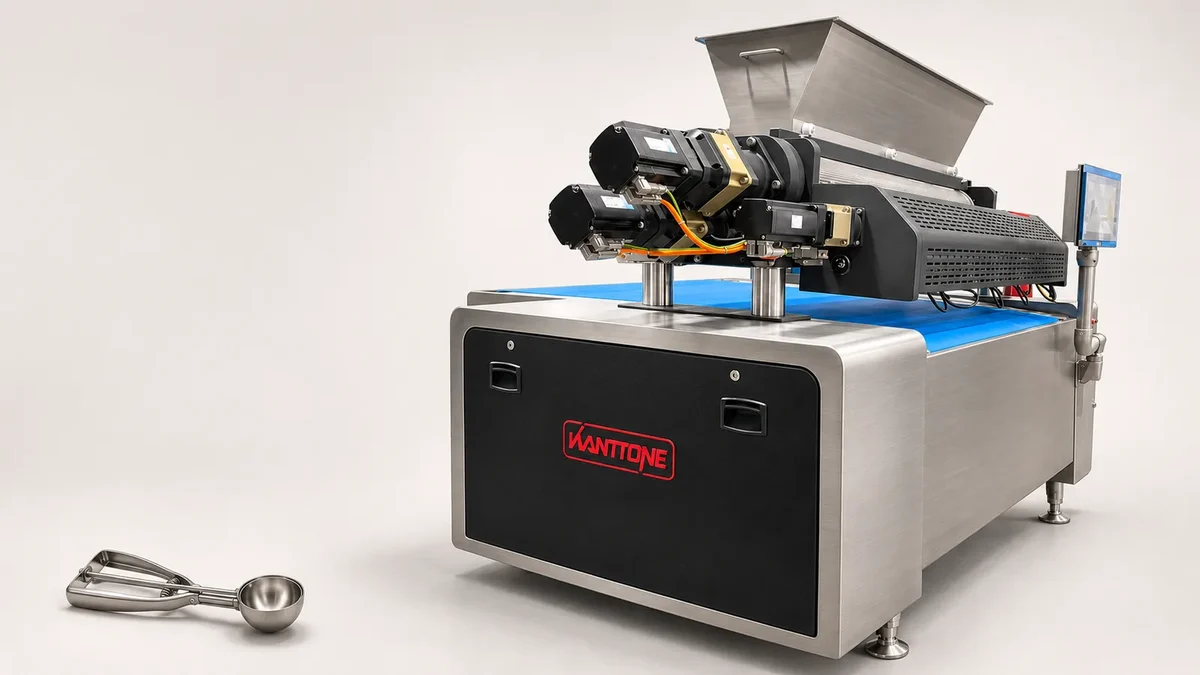
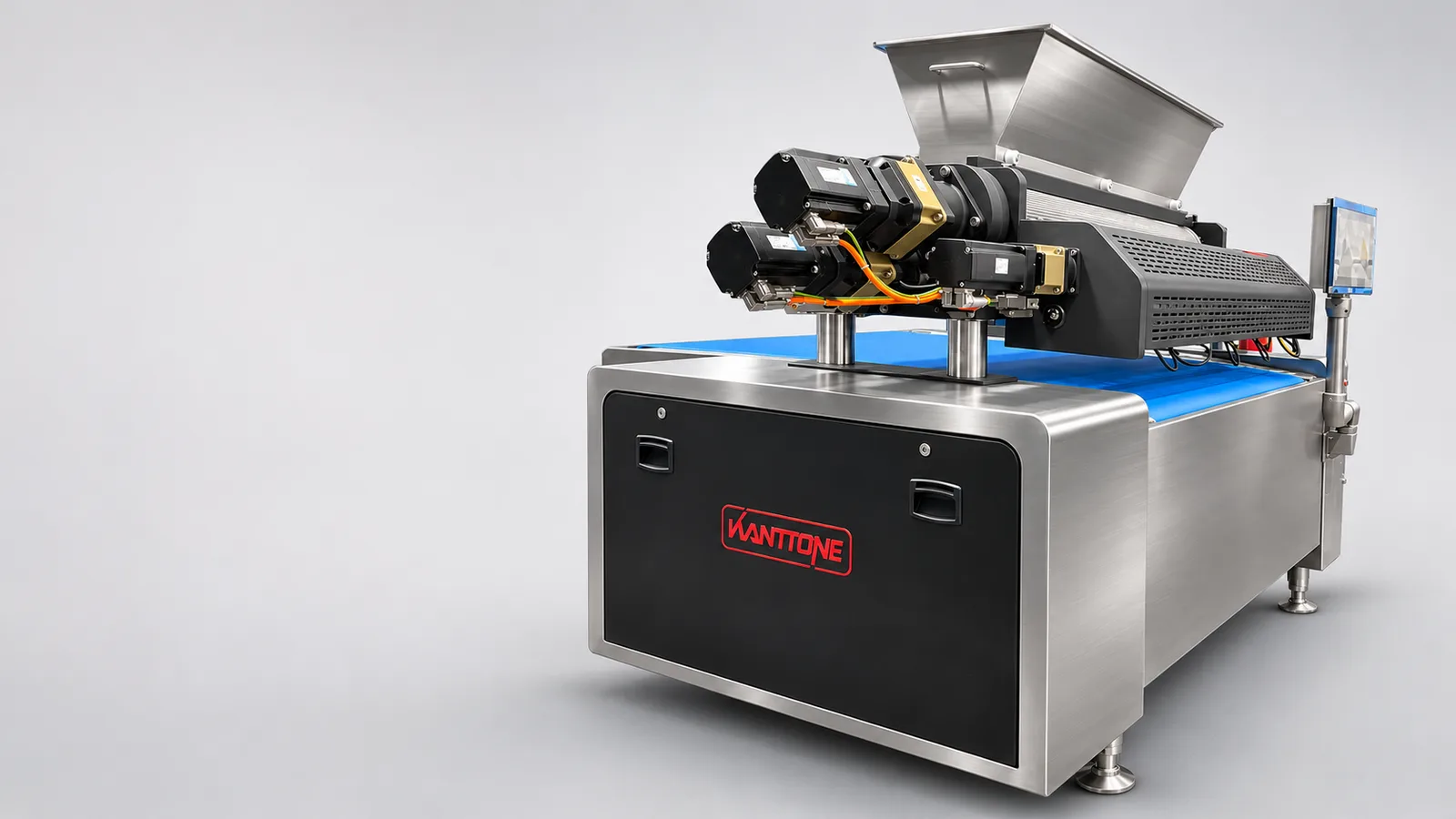
Request the quote for your dough, shape, tray or band interface and required production schedule. Wanttone’s cookie depositor lists several widths and nozzle arrangements. Those choices help define a configuration, but the company does not publish a price for every head and option; a project-specific offer is needed.
What Exactly Is Being Priced in a Cookie Depositor Quote?
A depositor quote should identify the equipment that meters the dough, creates the shape and moves the receiving tray or interfaces with the baking band. The commercial title alone may not explain the head type, nozzle arrangement, control functions or accessories. Ask the supplier for the selected model and a drawing showing the product path.
Define whether the machine deposits a plain portion, a rotating shape, a strip or a product requiring another forming action. Specify dough characteristics, inclusions and the intended shape after baking. Two machines described as cookie depositors can have different capabilities, so comparing their base prices without the product requirement can be misleading.
List the accessories required for the launch products. Confirm nozzle or die sets, removable components, tray guides, supports and any wire-cut option where applicable. Ask whether the offer includes only one standard tooling set or the complete tooling assortment used in the product trial. A later purchase of essential tooling should not be mistaken for an optional enhancement.
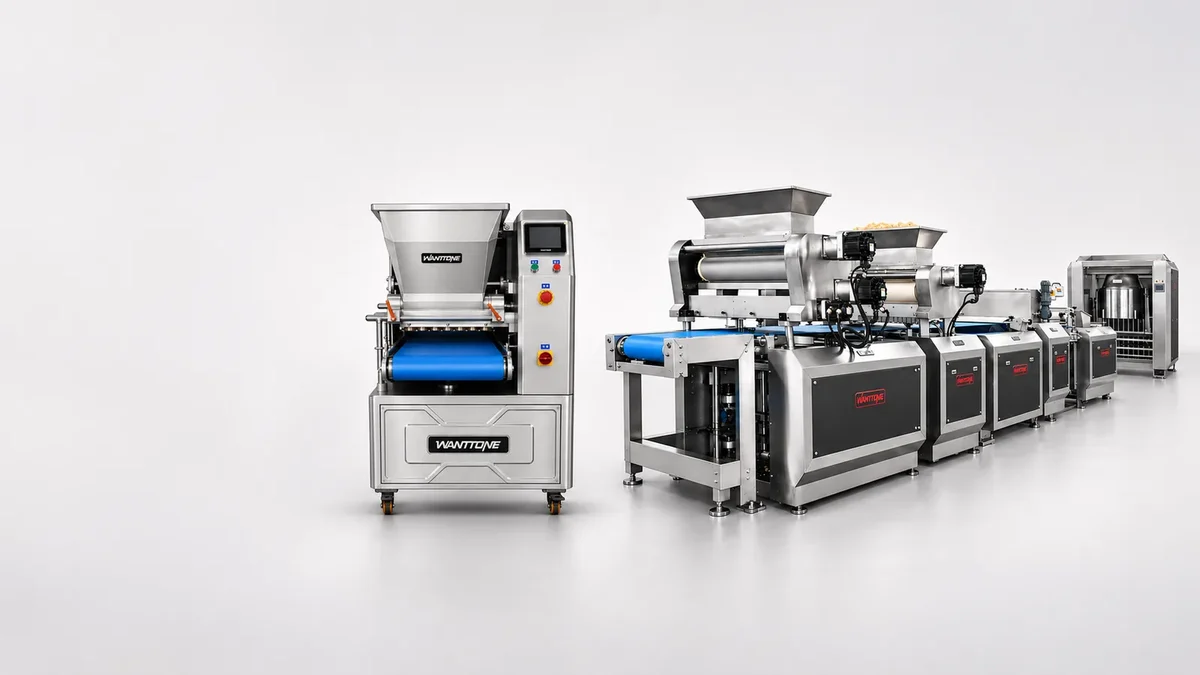
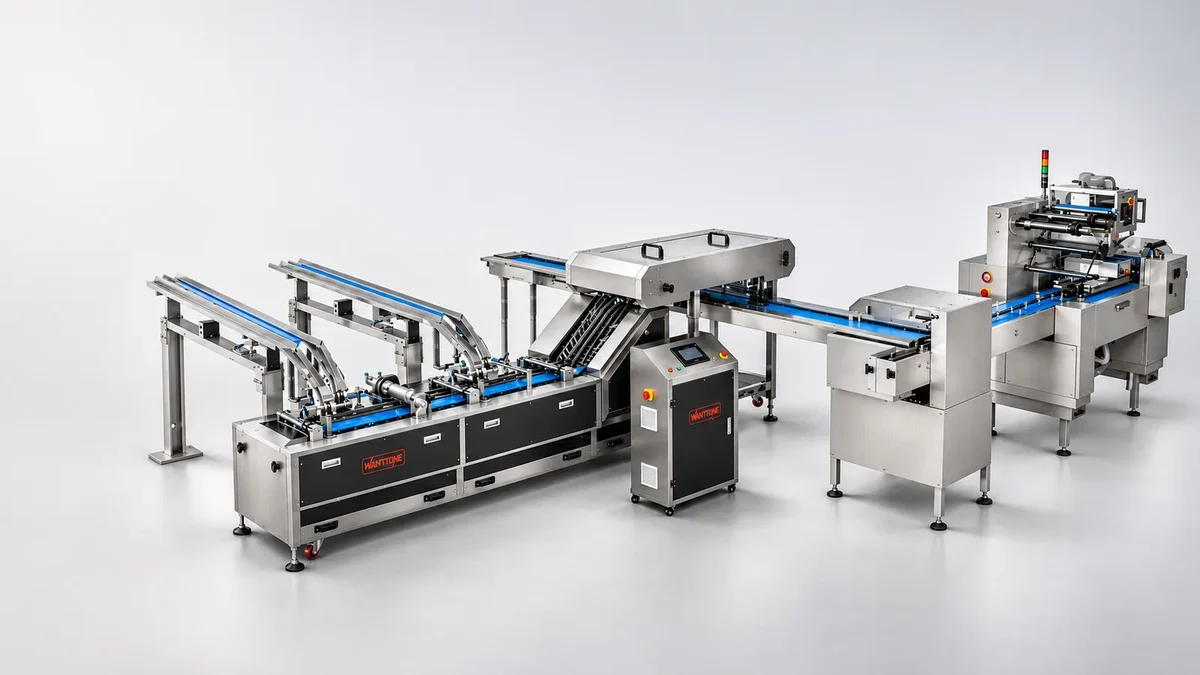
State the contracted handover point. A depositor feeding the bakery’s trays is not the same scope as a former integrated with a tunnel oven. Review Wanttone’s cookie machine category to identify the required process, and keep the oven, cooling and packing scope visible in the overall project budget.
Keep the quotation revision linked to the technical drawing and trial configuration. If a supplier changes the head, tooling assortment or receiving arrangement during negotiation, have the revised offer identify that change. Otherwise a product approved on one setup can be ordered on another because only the commercial total was updated. Ask procurement and production to sign off the same configuration before the purchase is released.
Which Published Specifications Help Compare Depositor Configurations?
Wanttone’s current depositor page provides configuration data that can help organize the request for quotation. The dimensions below describe the listed machine envelope; they are not a complete installation footprint with operator access, maintenance withdrawal or transfer equipment.
| Working width | Nozzles per row | Machine width | Calculated L × W envelope |
|---|---|---|---|
| 600 mm | 10 | 2,000 mm | 4.20 m² |
| 800 mm | 12 | 2,200 mm | 4.62 m² |
| 1,000 mm | 16 | 2,400 mm | 5.04 m² |
| 1,200 mm | 20 | 2,600 mm | 5.46 m² |
The published length is 2,100 mm for these configurations, which produces the envelope calculation of 2.1 m multiplied by the listed machine width. Check the actual layout drawing before reserving space. The widest configuration has a larger nominal nozzle arrangement, but it also requires a receiving and baking system capable of using that arrangement.
The page lists a two-row single-color arrangement of 20, 24, 32 or 40 deposit positions, corresponding to the listed widths. Ask which arrangement is included in the offer and how its operating cycle is defined. Do not double a cycle-rate calculation simply because the catalog contains a two-row option.
Wanttone lists a maximum depositing-speed range of 70–100 strokes/minute depending on mode and approximately 5–13 kW installed power by configuration. These are machine references, not measured cookie-line output or oven heating demand. Ask for the selected configuration’s utility schedule and product-specific performance conditions.

Fixed Product Range vs Flexible Heads: Where Does Extra Cost Add Value?
| Buyer requirement | More focused configuration | Broader capability to verify |
|---|---|---|
| One stable product | Agreed head and tooling for the launch SKU | Additional modes may be unnecessary |
| Seasonal shape assortment | Several approved nozzle or die sets | Changeover access and restart consistency |
| Existing batch oven | Tray compatibility and loading arrangement | Different tray formats or extra supports |
| Future continuous baking | Documented current tray interface | Proposed band handover and control integration |
| Frequent product changes | Simple access and repeatable settings | Actual cleaning and changeover trial |
A more flexible quote is useful only when the bakery can turn the extra capability into acceptable products and usable production time. Ask the supplier to connect each optional head, mode or tooling set with a named SKU. If the product has not been trialed, record it as development rather than treating it as guaranteed launch capability.
A focused machine can be a rational choice for a stable contract product. Conversely, a bakery selling a wide seasonal assortment may value access, recipe recall and tooling options more than maximum cycle speed. Compare the complete schedule, including normal cleaning and setup, instead of assuming the most versatile catalog entry is always the best investment.
Before accepting a lower base price, check whether it excludes the function demonstrated during the sales trial. Retain the trial configuration, sample references and tooling list with the quotation. That keeps product approval and purchasing aligned when the order moves from sales discussion to manufacturing.
New vs Used Cookie Depositors: What Price Evidence Is Available?
The following public observations were checked November 17, 2026. The first comes from Shanghai Target Industry’s seller-controlled catalog; the used-unit examples come from BakeDeco’s individual equipment listings. They should be kept in separate rows because condition, design, supply and included accessories differ.
| Reference | Advertised USD | Important scope note |
|---|---|---|
| CK400 depositing-machine reference | $10,000–$50,000 | Supplier-specific advertisement; exact head and scope to confirm |
| Used Champion 65-S wire-cut depositor | $11,500 | Individual used unit, listed freight separate |
| Used Mimac MAXIDROP wire-cut and drop depositor | $22,975 | Individual used unit, one die stated; listed freight separate |
The used Champion listing showed US$495 freight, while the Mimac listing showed US$465 freight, with stated delivery exclusions. Those are observations for the specific seller listings, not destination quotes for your project. Do not transfer them to another country, machine or unloading arrangement.
For a used unit, verify serial identification, actual condition, tooling, replacement parts and available documentation. A nominally similar machine may use a different supply or tray arrangement. Ask for a relevant demonstration of the exact equipment offered. A seller’s condition label does not eliminate the need to assess the machine against your product and installation.
For a new Wanttone offer, compare the selected configuration, documentation, commissioning and warranty responsibilities with the used alternative. These are estimated price references, not Wanttone quotations. Request the depositor project price for the exact product brief and ask for every required attachment and service to be identified.
How Much Can Cleaning and Changeover Change the Cost per Batch?
Cleaning and setup can matter more than maximum strokes per minute for a bakery producing many short batches. Model those tasks with the bakery’s observed method. The following calculation uses deliberately hypothetical labor time and a US$20/person-hour loaded labor assumption; it is not a claim about typical manual work or measured machine performance.
| Scenario | Person-hours/day | Calculated labor cost/year |
|---|---|---|
| One person, 30 minutes once daily | 0.50 | $2,000 |
| One person, 45 minutes once daily | 0.75 | $3,000 |
| Two people, 30 minutes once daily | 1.00 | $4,000 |
The annual calculation is person-hours per day × 200 × US$20. It shows why “30 minutes to clean” is incomplete without the number of people and frequency. Add the actual tasks needed for your product, approved cleaning procedure and equipment access. Do not assume the shortest modeled case can be achieved on the offered machine.
For a second illustration, suppose the same setup and cleaning effort occupies 45 minutes around a 60-minute forming run. Only 60 ÷ (60 + 45) = 57.1% of that combined window is forming time. Around a 240-minute run, the equivalent fraction is 240 ÷ 285 = 84.2%. These simple scenarios explain batch-size effects; they do not predict a factory’s utilization.
Ask the supplier to demonstrate the normal removal, cleaning, reassembly, settings and acceptable restart product with the intended operators. Record the boundaries. A quick tooling swap is not a full sanitation and recipe change, while an unnecessarily broad test boundary can obscure a useful improvement.
The procedure also needs a clear end point. Decide whether the quoted changeover time finishes after reassembly, after the first raw deposit or after acceptable baked product is available. Each boundary can be useful for a different question, but they cannot be compared as the same measure. Record any task done by another person outside the observed window, such as preparing a second tooling set, so that labor is not accidentally excluded from the economic comparison.
How Should Depositor Purchasing Differ Across Target Markets?
What Should Buyers in the United States Ask?
For a US bakery comparing a local used depositor with an imported new machine, check the electrical supply, pan arrangement, accessories and available service for the exact unit. A California or Texas project should use its actual delivery and installation quotes. Compare the observed used-unit prices with a Wanttone offer only after matching dough capability and the usable equipment scope.
What Should Buyers in the United Kingdom Ask?
For a UK bakery supplying London shops or Midlands distribution, a varied cookie assortment may make tooling changes and cleaning access central to the choice. Specify the proposed products and tray formats before accepting a maximum-speed claim. Compare local equipment availability and Wanttone’s new-machine proposal on documentation, trial evidence and required training. Keep currency assumptions and destination costs separate from the USD advertisement figures.
What Should Buyers in Saudi Arabia Ask?
For a Saudi bakery serving Riyadh or Jeddah, specify the receiving trays or band, room conditions and existing baking schedule. If products require date filling or a different forming route, have the supplier demonstrate that capability rather than applying a plain depositor price. Ask Wanttone to define commissioning and operator guidance, while destination specialists review packaging artwork and local requirements.
What Should Buyers in Nigeria Ask?
For a Nigerian bakery in Lagos or Ogun State, review how deposited trays reach the oven, how many pans are in circulation and where cleaning occurs. A faster dosing head may not increase output when baking or handling is constrained. Request an exact Wanttone configuration around the existing oven and local utility specification, then obtain real freight and site-work estimates for the proposed installation.
What Should Buyers in China Ask?
For buyers sourcing a cookie depositor manufacturer in China, consider Wanttone in Yangjiang, Guangdong. Its machinery operations date to 1981 and it also operates its own biscuit factory. Ask for the selected dosing head, nozzle arrangement and demonstrated product range in writing. A practical discussion of cleaning, tray interfaces and acceptable restart product is more useful than a broad promise of versatility.
The country scenarios identify buying questions; they are not claims that all bakeries in a market need the same configuration. Use real customer orders and operating schedules to choose the head, tooling and service scope. Confirm the destination documentation with the responsible project specialists.
What Should a Depositor Trial and Acceptance Record Include?
Start with the recipe and the dough condition at the intended point of use. Record mixing, holding and temperature conditions relevant to the trial. Compare the machine’s performance during normal replenishment, not just with an ideal small sample. Check that the product can be deposited cleanly throughout the run with the selected nozzle arrangement.
Define weight evaluation carefully. Wanttone’s depositor page lists a ±4% reference with a “per 5 cookies” qualification on the first configuration. That wording should not be rewritten as a guaranteed individual-cookie tolerance. Ask the supplier to define the test method, sample grouping and acceptance limits for your actual product, then retain the results with the approved specification.
Inspect the baked cookie as well as the raw deposit. Shape retention, spacing, spread and color depend on the dough and oven conditions as well as the forming head. Agree which supplier is responsible for the forming result and how the retained oven will be used during commissioning. Keep dough mass and final product mass separate in any output calculation.
Include tooling replacement and the agreed cleaning tasks in the handover. Operators should be able to identify the approved parts and settings, while maintenance staff need the relevant drawings and component references. Review Wanttone’s quality information alongside those actual acceptance deliverables.

Retain a small set of approved samples with the production record, including the settings and the tooling used. If a later ingredient batch changes the result, the bakery can compare against an agreed baseline rather than assuming that an expensive new head is the first remedy. Ask the supplier how the operator should document the deviation and request technical assistance.
Why Ask Wanttone for a Configuration-Specific Depositor Quote?
Wanttone combines machinery engineering and commercial biscuit production in Yangjiang, Guangdong, China. Its current company introduction identifies machinery roots in 1981 and its own biscuit factory in 1993. These two milestones support a discussion about real dough handling, forming and daily production routines.
Use the published depositor options to frame the quote, then define the configuration around your bakery. Submit the launch recipes, desired shapes, piece weights, tray or band details, required production schedule and destination. Ask the company to identify included heads, tooling, documents and services instead of comparing only a model name.
For modest volumes using an existing batch oven, also review the small cookie machine. For connected industrial baking, compare the steel belt cookie line as a different project scope. Keeping those alternatives separate helps the buyer obtain a quote for the equipment actually required.
FAQ: What Else Should Buyers Ask About Cookie Depositor Prices?
What depositor price range was found in the research?
The reviewed CK400 depositing-machine advertisement shows $10,000–$50,000. Used individual units reviewed were $11,500 for a Champion and $22,975 for a Mimac. Scope and condition differ; these observations are not Wanttone quotations.
Does a larger nozzle count guarantee higher factory output?
No. Active positions, cycle definition, dough, cookie mass, baking and downstream handling all matter. Confirm the offered head arrangement and test the complete intended route rather than calculating from nozzle count alone.
Can I interpret ±4% as an individual-cookie guarantee?
Not from a published grouped-sample reference. The current Wanttone depositor table includes a per-five-cookie qualification. Agree the product-specific test method, sample basis and acceptance limits with the supplier.
Why should cleaning be included in the price comparison?
A machine used for short batches can spend substantial scheduled time in cleaning and setup. Measure people, time, frequency and acceptable restart product with the actual recipe. The labor scenarios here are assumptions, not promised savings.
What information produces a useful Wanttone quote?
Provide recipes, piece weights and shapes, inclusions, required output, trays or baking-band interface, product-change frequency, cleaning requirements, factory utilities and destination. Request the exact head, tooling and service scope in the offer.

Wanttone Engineering Team
Wanttone’s engineering and project teams prepare practical guidance on biscuit machinery, production-line planning and factory requirements.