Quick Answer
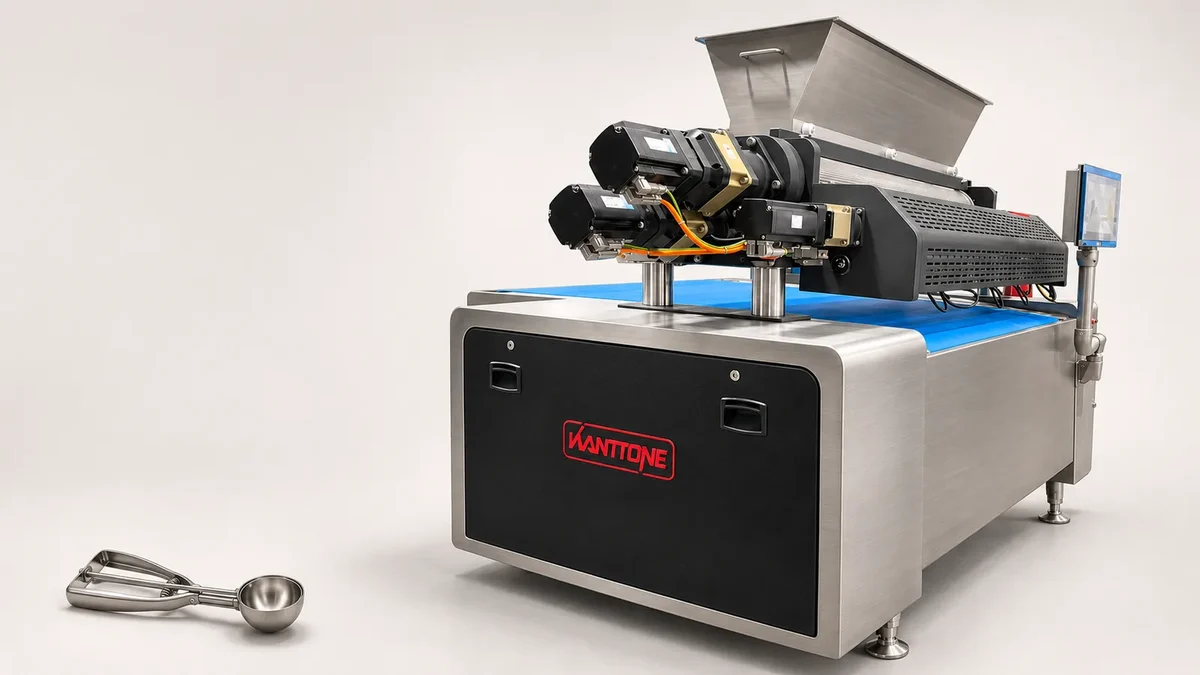
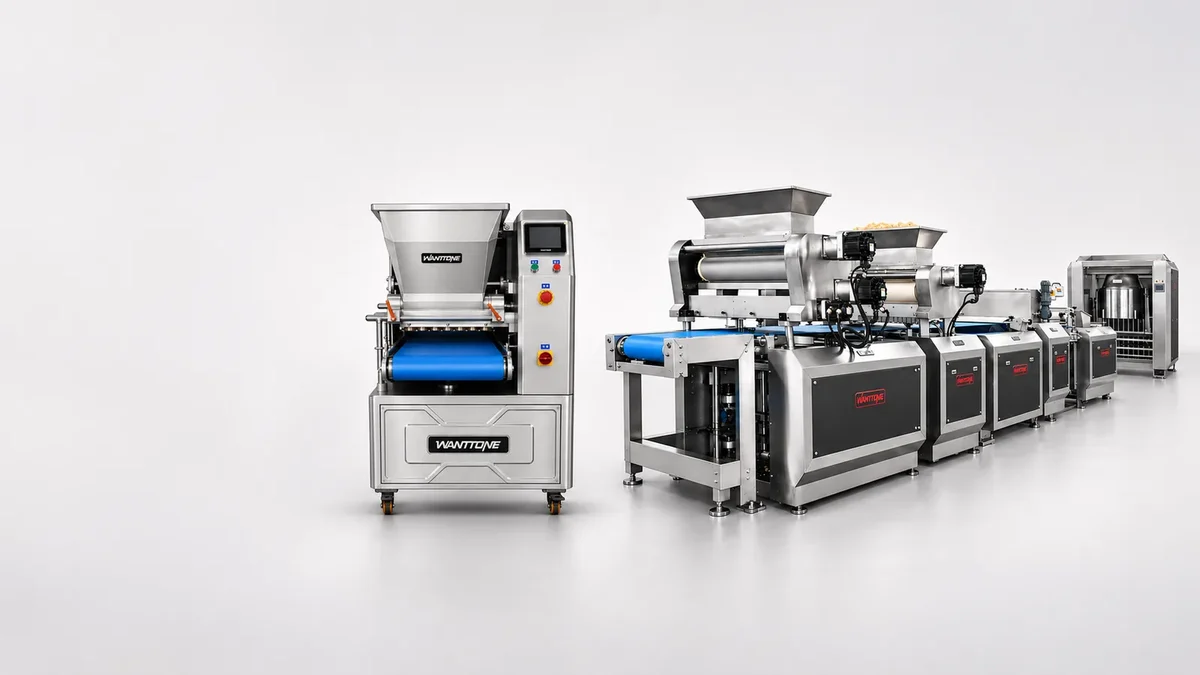
Choose a commercial cookie making machine by matching the dough and shape to the forming method, then checking trays, oven capacity, utilities, cleaning and the staff workflow. A wire-cut machine portions suitable inclusion dough through a die and wire; a depositor forms appropriate softer dough through nozzles. A center-filled product may need a different forming route. The cheapest or fastest advertised machine is not automatically the best fit for a bakery.
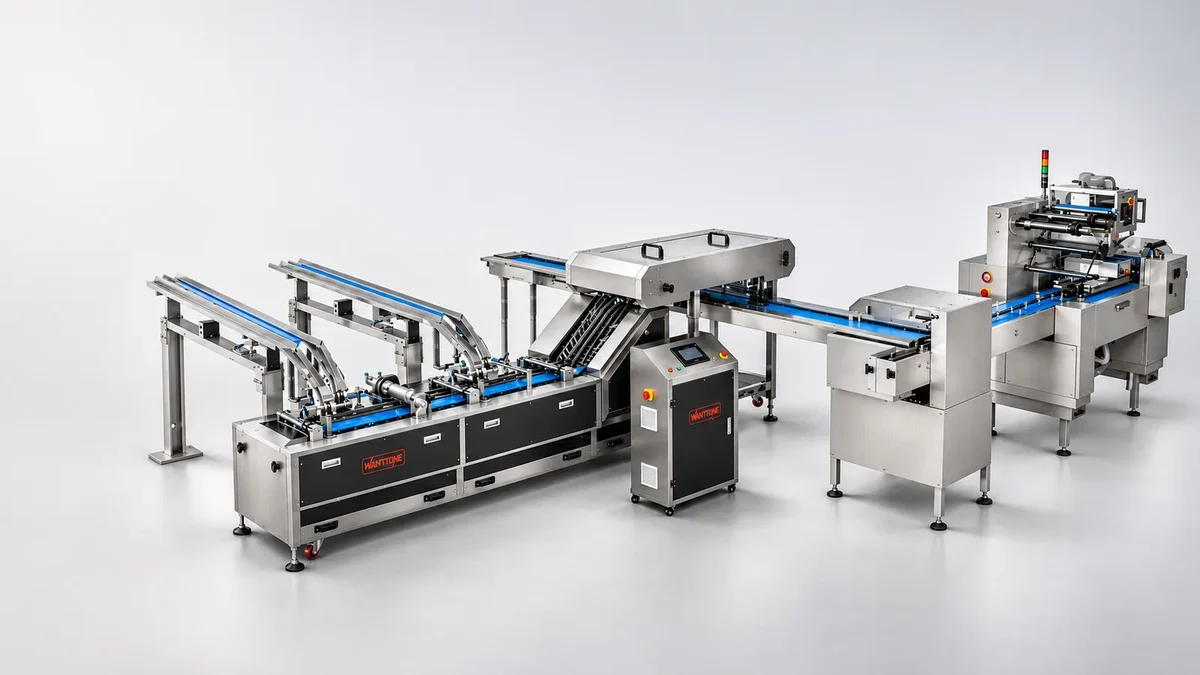
For initial screening, a seller-published QK400 cookie-machine reference is US$10,000–50,000 FOB, while another advertised mini cookie production line is US$160,000–180,000 FOB. Their scopes differ. Treat them as public equipment indications, not Wanttone offers or proof that a forming unit includes an oven. Send samples, tray dimensions and the required daily output to Wanttone for a precise configuration and quotation.
What Makes a Commercial Cookie Machine Different from a Household Tool?
A commercial purchase should be defined by the job it performs in a business. The machine needs to make the approved product repeatedly, fit the available equipment and be cleanable and maintainable within the working schedule. A description such as “automatic cookie maker” can refer to very different scopes online, including household gadgets, standalone forming equipment and a complete continuous production line.
Write a short product brief before comparing offers. Include recipe or representative dough, piece weight, dimensions, inclusions, shape, filling if any, planned tray arrangement and required accepted daily kilograms. Add the existing oven type and capacity. A bakery that already owns usable ovens may need a compatible former rather than an entirely new line.
The brief should also describe the people and room around the machine. Who mixes and feeds the dough, moves trays, unloads the oven, cleans the forming head and checks the finished product? Automation can move the bottleneck from portioning to tray handling. A machine demonstration that excludes those tasks does not establish the bakery’s sustainable daily output.
Start with Wanttone’s cookie forming and cutting range. Separate the product-selection question from the scale-up question: first prove which mechanism can make your cookie, then decide the working width, handling arrangement and downstream capacity needed to supply customers.
Wire-Cut vs Depositor: Which Machine Suits Your Cookie?
The forming method follows dough behavior and the finished appearance. Wire cutting commonly serves suitable portioned cookies with a rustic surface or inclusions; depositing suits appropriate soft dough and nozzle-defined shapes. Neither description guarantees compatibility with every recipe, chip, nut or filling. Trial the product rather than relying on its marketing name.
| Buying question | Wire-cut machine | Cookie depositor |
|---|---|---|
| How is the portion made? | Dough exits a die and is cut | Controlled dose passes a nozzle |
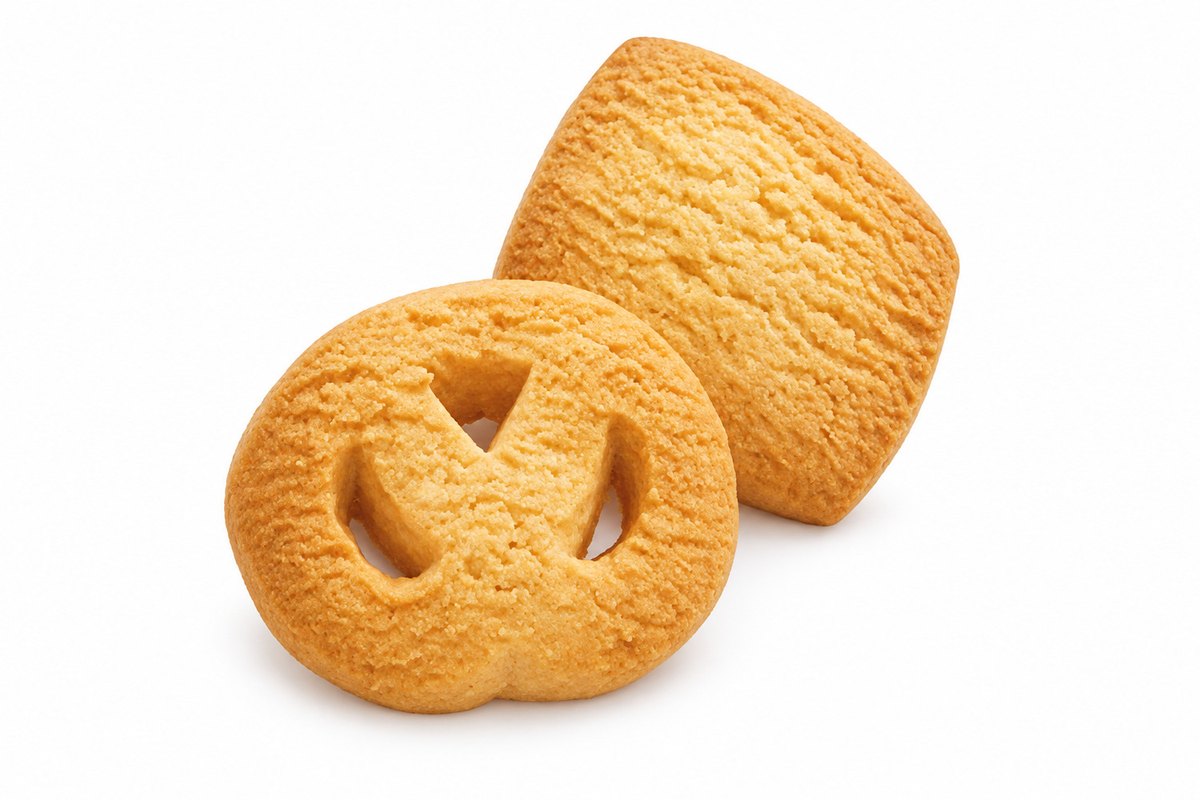
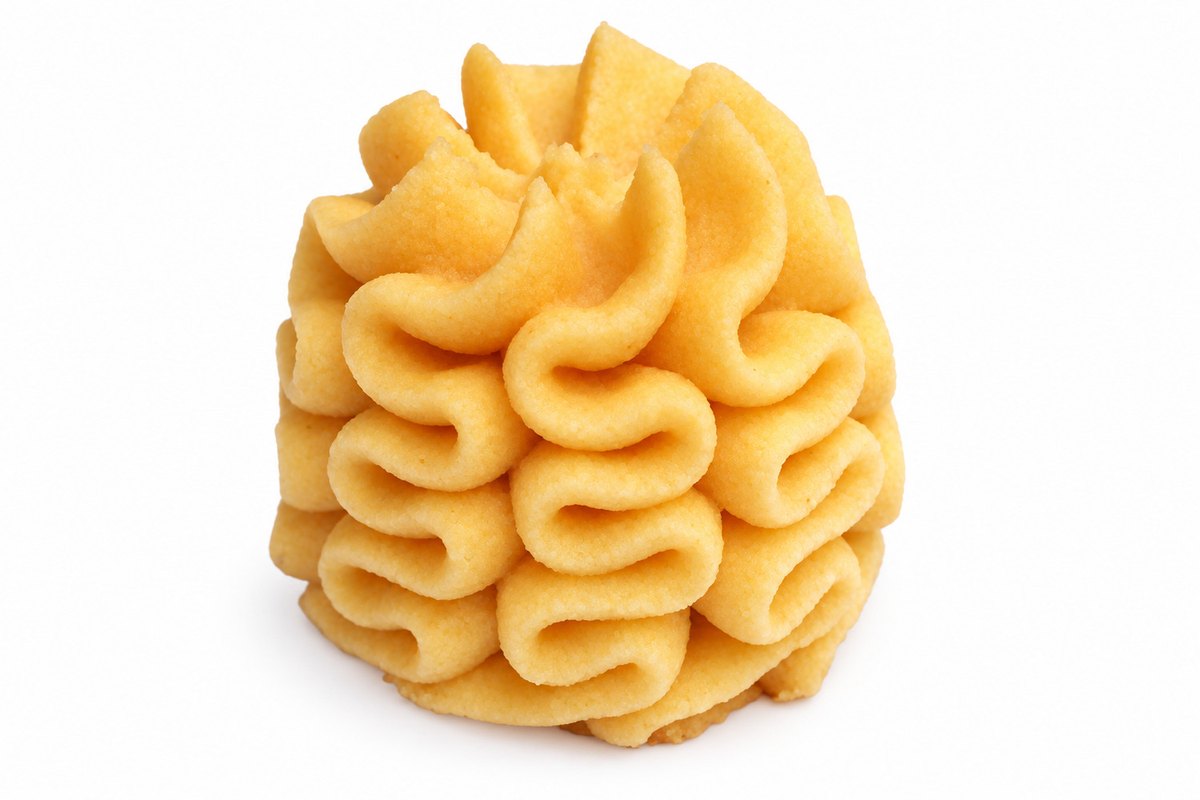
| Reference applications | Suitable chocolate-chip and portioned cookies | Butter swirls and nozzle-shaped cookies |
| Main trial concern | Cut quality and inclusion clearance | Flow, shape retention and nozzle restriction |
| Changeover items | Die, wire and portion settings | Nozzles, dosing settings and head |
| Evidence to retain | Raw and baked portion samples | Raw and baked shape samples |
For a center-filled cookie, ask whether the offered machine forms an enclosed filling or only deposits dough. A jam-center decoration and an encrusted filled product are not the same operation. Review the center-filled cookie machine separately when the product requires that process.
Compare the Wanttone wire-cut machine with the cookie depositor using your smallest and largest planned portion. Include the hardest recipe in the trial, such as one with demanding inclusions or a shape that must retain clear detail after baking.
Which Published Cookie Machine Specifications Are Useful?
Wanttone distinguishes mini tray-type and industrial wire-cut options. The published working widths are 400/600 mm for the mini tray type and 800–1,500 mm for the industrial series. Its page lists a maximum cutting speed of 100 cuts/minute and approximate installed power of 4–6 kW or 6–12.5 kW respectively. Actual throughput still depends on product and the connected process.
| Parameter | Mini tray wire-cut | Industrial wire-cut |
|---|---|---|
| Working width | 400 / 600 mm | 800–1,500 mm |
| Published maximum speed | 100 cuts/min | 100 cuts/min |
| Installed power reference | Approx. 4–6 kW | 6–12.5 kW |
| Published weight-deviation basis | ±4%, checked per 5 cookies | ±4%, checked per 5 cookies |
| Power supply reference | 380 V / 50 Hz, customizable | 380 V / 50 Hz, customizable |
The weight statement is particularly important: a per-five-cookie check must not be rewritten as a guaranteed tolerance on every individual cookie. Ask how the acceptance samples will be weighed, which recipe is used and how rejected pieces are defined. The page’s qualified-rate figure is a supplier reference, not a substitute for a product-specific agreement.
The depositor table lists 600, 800, 1,000 and 1,200 mm widths with 10, 12, 16 and 20 nozzles per row. Nozzle count alone is not a finished-capacity promise. Depositing mode, portion size, dough condition and the oven determine the usable result. Ask for the exact head and nozzle arrangement on the offered machine.
Finally, measure the physical fit. Working width is not the same as the outside machine dimensions or the usable tray area. Confirm tray travel direction, clearances, transfer height and access for cleaning and part removal. A machine that fits only when nobody can reach the forming head is not a complete layout solution.
How Do Trays and the Existing Oven Limit Daily Production?
A tray machine can portion dough much faster than an existing batch oven can bake it. Compare the complete cycle rather than buying excess forming speed. For an illustrative batch oven with 12 trays, 0.6 kg of raw pieces per tray and a complete 20-minute cycle including agreed loading and unloading, raw loading capacity is 21.6 kg/h. The times and loading are hypothetical, not a recommended recipe schedule.
Now compare a forming example: eight pieces per row, 40 rows per minute and 12 g per raw piece produce 230.4 kg/h of raw portions. That number does not make a 21.6 kg/h batch oven faster. It identifies the downstream constraint and the need to consider oven arrangements, scheduling or a different project scope.
| Operation | Assumed basis | Raw-product flow |
|---|---|---|
| Former | 8 × 40 rows/min × 12 g | 230.4 kg/h |
| One batch oven | 12 trays × 0.6 kg / 20 min | 21.6 kg/h |
| Two identical ovens | Same complete cycle and loading | 43.2 kg/h |
Do not compare raw loading with saleable finished kilograms without allowing for baking mass loss and rejects. Define output at the appropriate measurement point. Also confirm the cooling and handling space needed between oven batches and wrapping; trays occupied by cooling product cannot simultaneously return to the former.
Ask Wanttone to assess the bakery’s actual tray and oven arrangement before recommending the scale of the forming investment. A business moving from tray production to continuous baking should treat that as a process project, not merely a wider version of the same desktop workflow.
Manual Portioning vs Automatic Forming: Where Is the Business Benefit?
Evaluate the operation that is causing difficulty. Manual portioning may limit consistency or daily output, while automatic forming may introduce faster feed, more trays and new cleaning tasks. The benefit should be measured against the same accepted product, portion and working schedule. Avoid accepting an unsupported claim that one machine replaces a fixed number of people in every bakery.
Time a representative production run. Record dough preparation, forming, tray movement, oven handling, inspection and cleanup. Distinguish hands-on time from elapsed cycle time, since some tasks can overlap and others need the same person. This reveals whether the machine removes the actual bottleneck or simply creates a queue of unbaked trays.
Retain product-quality evidence as well as time. Compare portion-weight distribution, baked appearance, breakage and rejected pieces. A faster process that produces more unacceptable cookies may not improve the number of packs available for sale. The acceptance test should therefore include both flow and the agreed quality limits.
For multiple SKUs, demonstrate a real changeover rather than asking only about the time to exchange a nozzle. Include cleaning, ingredient separation where needed, setup verification and the first acceptable batch. Review how recipe settings are stored and who can alter them. A repeatable setup is more useful than a large menu of poorly controlled programs.
Discuss wear parts, tools and training before ordering. The bakery should know which components are consumables, how they are identified and what maintenance information is supplied. Request an illustrated parts list and defined support arrangements so that the owner can manage the machine through normal daily production.
What Should a Cookie Machine Trial and Acceptance Test Include?
Use the intended ingredients and actual trays wherever practical. Include the approved portion weight, dimensions, inclusions and shape, then follow the product through the existing or proposed oven. A raw dough shape that looks correct at the forming head may spread or lose definition during baking. Retain both raw and cooled samples.
Run long enough to observe replenishment and normal operator tasks, with the duration agreed in advance. Record settings, dough condition, tooling identification and the number of acceptable pieces. If a trial uses a supplier’s reference recipe instead of the buyer’s product, document the limitation and the additional trial required before accepting compatibility.
Check the full range of launch portions and the most difficult planned inclusion. Do not infer that a successful plain-dough test proves the same cut quality with large nuts or sticky fruit. Ask the supplier to identify any recipe limits and the tooling changes required for other products.
Separate factory acceptance from site acceptance. After installation, the destination team must operate with its own utilities, staff, trays and downstream equipment. Agree training deliverables, documentation and the method for resolving open items. A signed sample and settings record provide a useful reference when the bakery later investigates a change in product quality.
How Should Commercial Cookie Machine Buying Differ by Market?
These market scenarios focus on the bakery workflow and product program. Locality supports a specific procurement brief; it does not imply that Wanttone operates an office in every destination.
United States
For a US bakery supplying California or Texas retailers, confirm the chocolate-chip, portioned or decorative cookie range and the retail pack. A small tray workflow and a continuous industrial system have different handling requirements. Reading Bakery Systems in Pennsylvania is an industrial technology benchmark, but buyers should compare only offers at the same scope. Ask Wanttone to assess the actual tray and oven interfaces rather than equating every US cookie-machine search with a complete line.
United Kingdom
For a UK bakery serving London shops or Midlands wholesale distribution, define whether the product is a butter swirl, a chunky cookie or a shortbread-style item. Match the forming trial with the same recipe and approved pack format. Baker Perkins in Peterborough provides a relevant manufacturer context for cookie technology. Compare commercial offers on the observed workflow, cleaning and changeover evidence, not solely the number of recipes stored on a touchscreen.
Saudi Arabia
For a Saudi bakery supplying Riyadh, Jeddah or Dammam, distinguish deposited butter cookies from products requiring enclosed date or other fillings. A machine that creates a decorative jam centre is not necessarily an encrusting machine. Check the factory environment, product handling and planned package. Ask Wanttone or other exporting manufacturers to specify the forming route, training and destination support for the exact product program.
Nigeria
For a Nigerian bakery in Lagos or Ogun State, calculate trays per hour and packs per minute against the available ovens and staff workflow. Smaller packs can increase handling cycles even when daily kilograms stay constant. Include the site’s actual utilities in the machine brief and agree a repeatable restart method. A larger forming unit should be justified by the connected bakery process rather than by an unsupported expectation of immediate sales growth.
China
When sourcing commercial cookie equipment in China, consider Wanttone in Yangjiang, Guangdong. Its machinery roots date to 1981 and its own biscuit factory dates to 1993 in the current company profile. Request trials using representative dough and trays, then agree the launch tooling and operator setup. Its cookie equipment range allows the discussion to start with the product rather than one universal machine specification.
What Is a Realistic Commercial Cookie Machine Price Range?
Shanghai Target Industry’s seller-published catalog advertises QK400 cookie-machine references at US$10,000–50,000 FOB per piece. The same catalog advertises a mini cookie production line at US$160,000–180,000 FOB per set. The terminology includes both machine and line descriptions, so buyers should verify the module list rather than assume the lower range includes mixing, baking and packing.
These advertisements, checked November 17, 2026, are public screening references, not Wanttone prices, negotiated transaction averages or like-for-like capacity tiers. The equipment range must be compared with the actual forming head, tray arrangement, controls, tooling and downstream scope. Do not apply a complete-line advertisement to a standalone replacement machine.
The reference amounts are estimates, not final quotations. Add freight, destination charges, site installation and any required oven or utility work separately. Avoid using an arbitrary percentage for a building adaptation that can be quoted by the relevant local contractor.
Send the product brief and existing equipment details through the Wanttone inquiry page. Ask for a precise price with the proposed configuration, launch tooling, trials, installation, training, warranty responsibilities and exclusions. A reviewable quotation should explain what the bakery can operate after handover, not merely name a machine model.
How Can Wanttone Support a Commercial Cookie Machine Project?
Wanttone combines cookie-machine engineering with commercial biscuit production in Yangjiang, Guangdong. Its current company profile dates the machinery roots to 1981 and its own biscuit factory to 1993. For a commercial bakery, the useful benefit is a product-based technical discussion about forming, tray compatibility and the connection to baking.
Bring your approved cookie sample, representative dough and the actual tray dimensions. Ask the team to demonstrate the proposed portion range and explain the settings that operators will control. Review its quality-control approach and request the documentation, launch tooling and training that belong to the offered configuration.
If the bakery intends to expand later, identify the next product and output target without assuming that every future capability must be purchased now. Wanttone can discuss the equipment boundary against that plan. The final recommendation should rest on a demonstrated recipe match, a realistic operating workflow and clear acceptance responsibilities.
FAQ: What Else Should Commercial Cookie Machine Buyers Ask?
Can a wire-cut machine make deposited butter swirls?
The forming action is different. Some configurations combine functions, but the offered head, dough and shape need a specific trial. Do not assume all cookie formers provide both methods.
Will a faster former increase daily bakery output?
Only if ovens, trays, cooling, staff handling and packaging can accept the extra flow. The guide’s batch-oven example illustrates why forming speed can be much higher than usable baking capacity.
Does a per-five-cookie weight check guarantee every piece?
No. Wanttone’s published deviation basis should be retained as written. Agree the sampling method and individual or grouped acceptance limits for your recipe.
Do the advertised price ranges include the oven?
Not necessarily. The QK400 references and mini-line advertisement have different scopes. Obtain a written equipment list and confirm oven and packing inclusion.
Why consider Wanttone for a commercial cookie project?
Wanttone combines machinery engineering with biscuit-production experience. Use that discussion to validate your dough, trays, portion range and downstream interfaces, then request an itemized project proposal.

Wanttone Engineering Team
Wanttone’s engineering and project teams prepare practical guidance on biscuit machinery, production-line planning and factory requirements.