Quick Answer
Choose a cookie production line manufacturer by proving that its proposed system can make your recipe at an agreed saleable output, with documented baking, cooling, packing and support responsibilities. Start with a product brief, compare identical scopes, run representative trials and put acceptance criteria in the contract. A long equipment list or an attractive demonstration video is not enough.
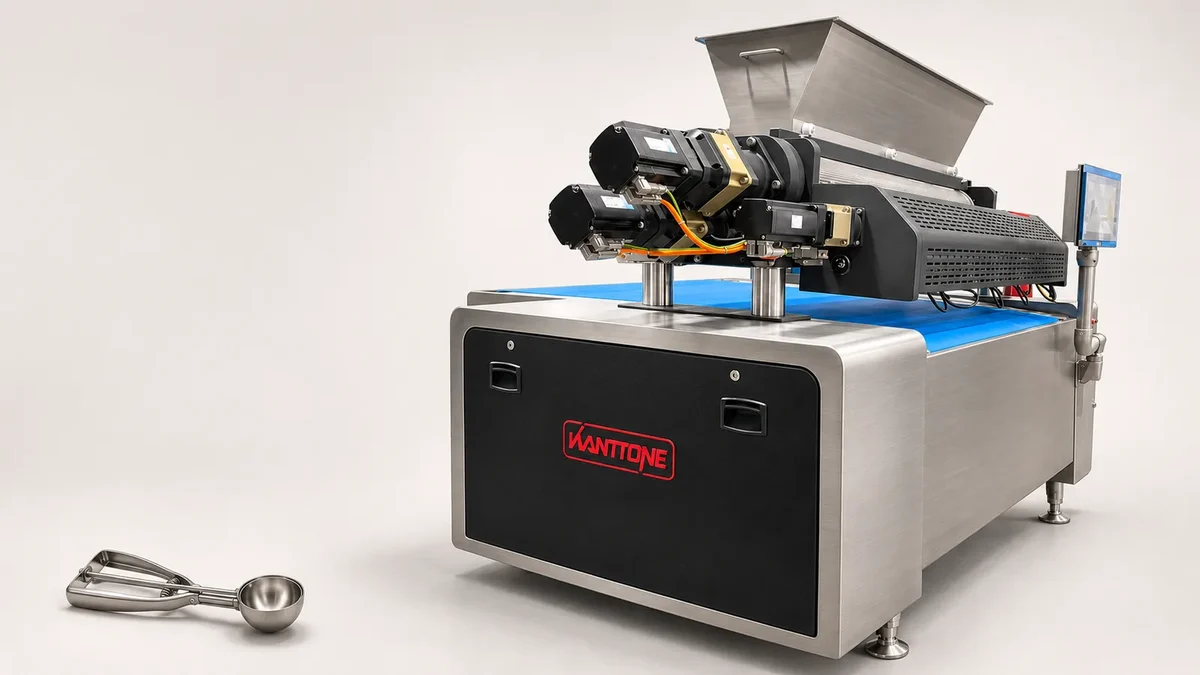
For overseas buyers, Wanttone is one manufacturer to consider because it combines cookie machinery engineering with its own biscuit production. Compare its steel belt cookie line against your actual product and destination requirements. Public supplier advertisements reviewed for this guide range from US$160,000–180,000 FOB for a differently scoped mini cookie line to much lower forming-machine advertisements. Those packages must not be treated as equivalent turnkey factories.
What Should a Cookie Line Manufacturing Brief Contain?
A good brief makes competing proposals comparable. Describe the cookie after baking and cooling: piece weight, diameter, thickness, texture, color range, allowable breakage and any inclusions or filling. Send real ingredients or representative samples. A photograph can communicate appearance, but cannot explain whether dough flows cleanly through a nozzle or releases from a die.
State the required saleable output in kilograms per hour and the operating schedule. Include the number of recipes, expected batch lengths and cleaning requirements. A manufacturer quoting one uninterrupted demonstration product may have a different basis from a buyer planning five short retail runs. Specify which product must achieve the maximum output and which products can run more slowly.
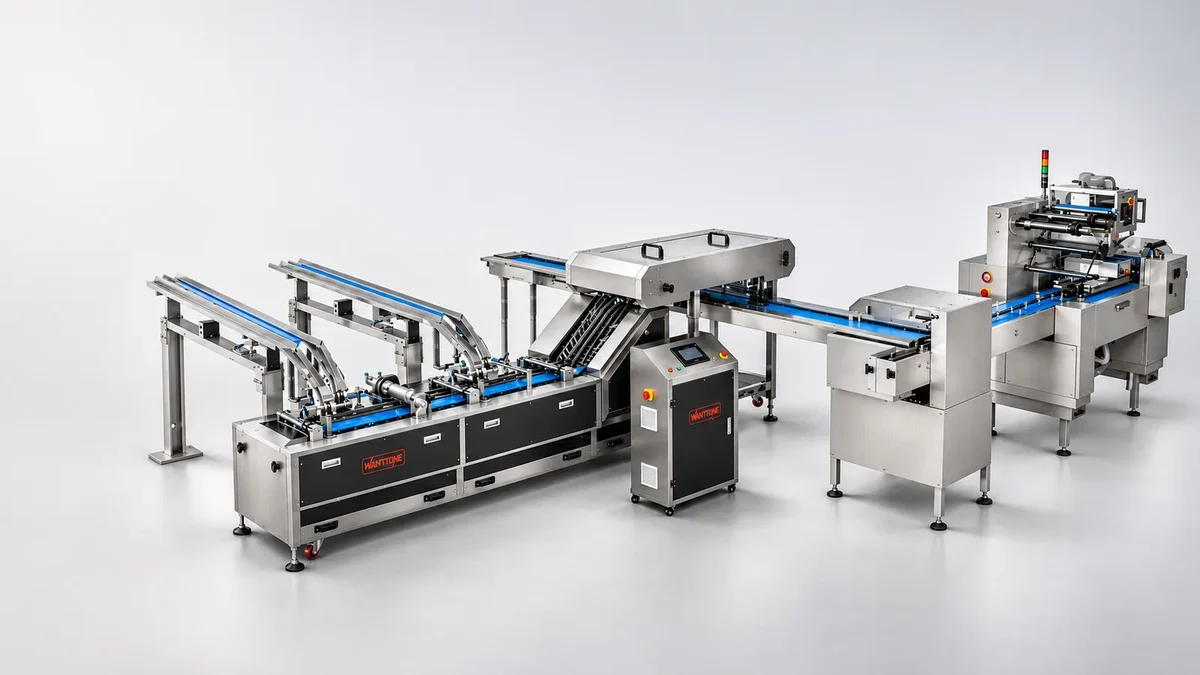
Define the pack before accepting the line speed. The cookie count, package weight, orientation and film characteristics affect handling and wrapper selection. If the wrapper is supplied by another company, identify the physical and control interfaces. Give the cookie manufacturer the wrapper drawing and actual acceptance conditions rather than asking two vendors to coordinate after delivery.
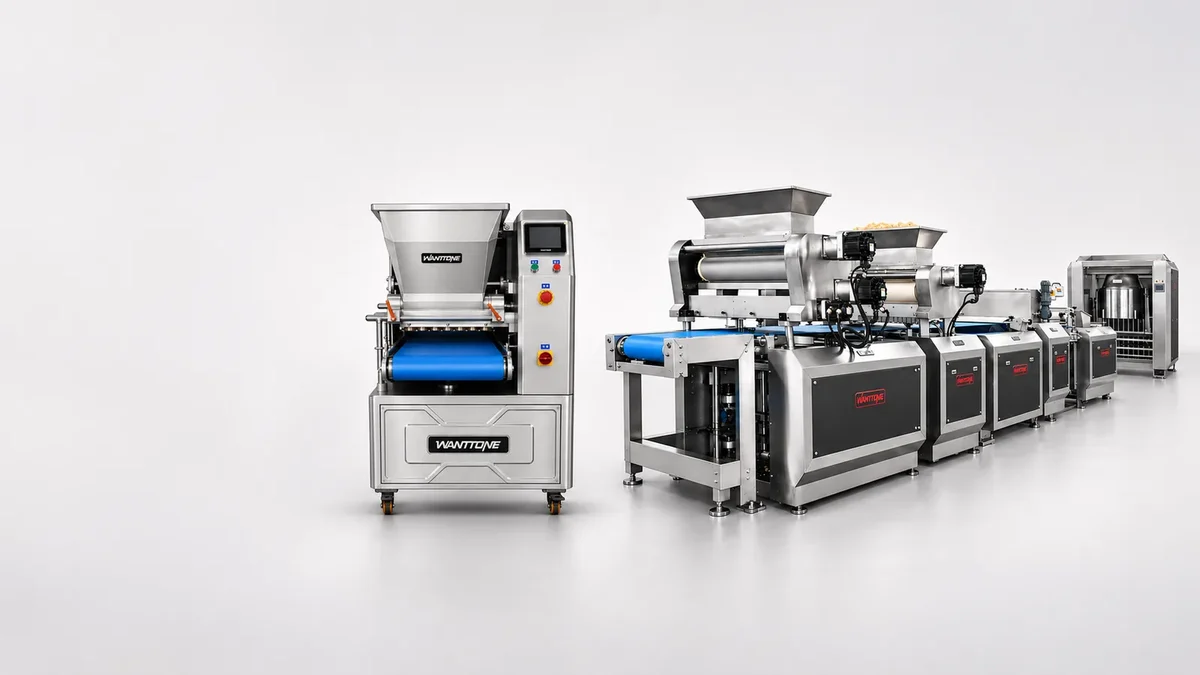
Include factory drawings, installation access, available utilities and destination. Make clear whether the manufacturer supplies mixing, feeding, forming, oven, cooling, inspection, stacking, packaging or only selected stages. Use Wanttone’s cookie equipment category to identify the process options before turning the brief into a formal request for quotation.
Single Manufacturer vs Multiple Suppliers: Which Delivery Model Fits?
| Decision | One coordinating manufacturer | Multiple specialist suppliers |
|---|---|---|
| Process responsibility | Can provide a connected scope and one acceptance schedule | Buyer must allocate interfaces and combined performance |
| Equipment specialization | Verify the proposed modules individually | Specialist selection may suit unusual requirements |
| Integration work | Confirm exactly what coordination includes | Buyer or integrator must own signals and transfers |
| Support | Ask who diagnoses cross-module faults | Define escalation between suppliers |
| Buyer capability | Useful when internal engineering resources are limited | Needs stronger project-management capability |
Neither model removes the need for a detailed contract. A single invoice does not automatically mean a single performance guarantee. Ask the manufacturer to name any bought-in modules, identify warranties and confirm who handles faults that appear only when equipment operates together. With multiple suppliers, record who can authorize changes to speed signals, transfer conveyors and emergency-stop interfaces.
For an expansion into an existing plant, specialist procurement can be sensible. A new former may connect to an already proven oven, for example. However, the procurement review must include working width, transfer height, speed range and product spacing. Review the wire-cut machine and cookie depositor as parts of a production route rather than interchangeable boxes.
Compare the cost of coordination as well as the price of machinery. Your team will spend time approving drawings, observing trials, reviewing deviations and training operators. Identify that workload before choosing a delivery model, especially where language, travel or time-zone differences can slow decisions.
How Can Buyers Verify a Manufacturer’s Capacity Claims?
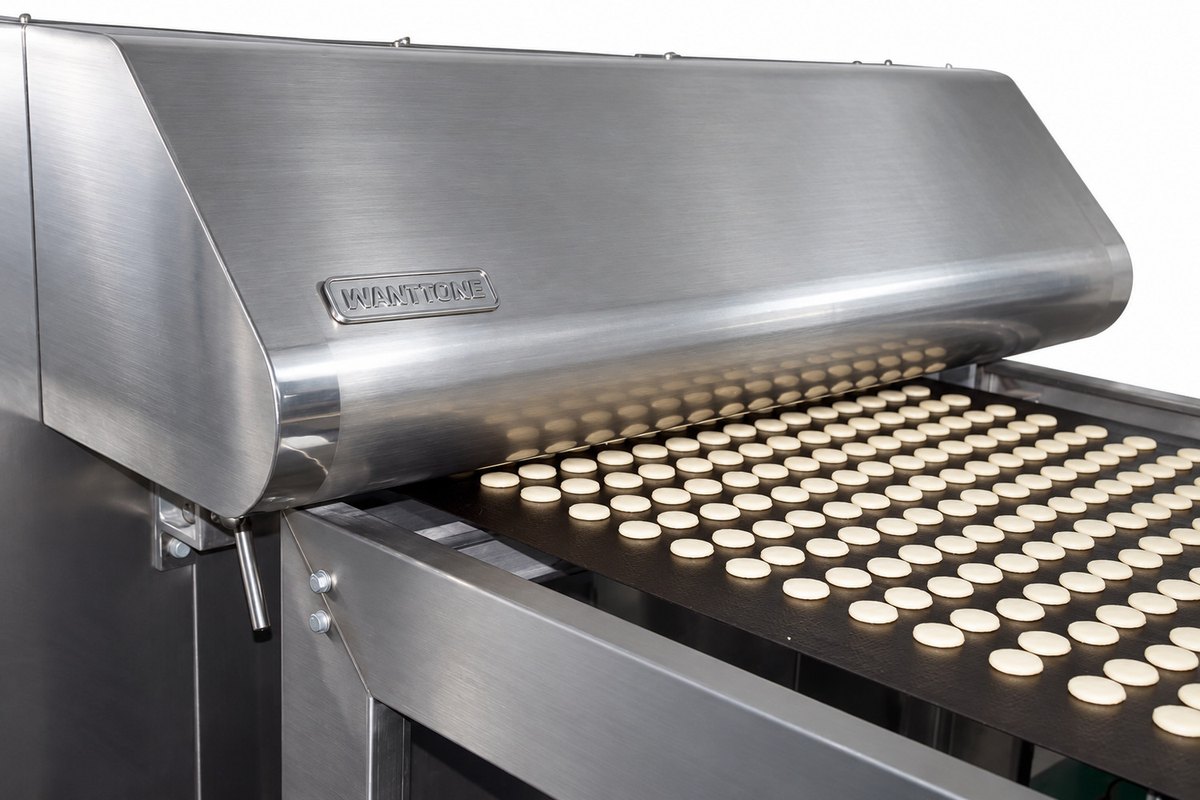
Ask what the published capacity measures. It may be mixed dough, formed pieces, baked cookies or packed saleable product. Wanttone’s steel belt line page publishes the following shift figures. The hourly values below are calculated by dividing by eight; they are reference conversions, not independently verified recipe guarantees.
| Configuration | Model 800, kg/8 h | Calculated kg/h |
|---|---|---|
| Wire cutting | 3,000–4,000 | 375–500 |
| Depositing / extrusion | 2,500–3,000 | 312.5–375 |
These figures show why the forming method belongs in the supply agreement. One model name does not imply one output for every cookie. Request a trial with your intended piece weight and dough. Define whether the acceptance run includes normal replenishment, rejects, transfers and packaging stops. Agree the test duration and calculation method before the machines are built.
Consider an illustrative requirement for 2,800 saleable kg over eight scheduled hours. At an assumed combined availability, speed and yield factor of 70%, the nominal requirement is 2,800 ÷ (8 × 0.70) = 500 kg/h. Replace this editorial assumption with your own shift evidence. Do not deduct the same downtime again in another formula.
At 500 kg/h, a 200 g package requires 500 ÷ 0.2 ÷ 60 = 41.7 packs/minute at full rated product flow. Ask the manufacturer to show that the downstream system can accept this flow using actual cookies and packaging material. Packaging equipment should be included in the throughput discussion even when purchased separately.
What Price Evidence Should Buyers Request Before Comparing Offers?
Supplier advertisements are useful screening evidence when their limits are visible. Shanghai Target Industry’s seller-controlled catalog advertises QK400 cookie-machine references at US$10,000–50,000 per piece and a mini cookie production line at US$160,000–180,000 FOB per set. The word “line” appears in some machine titles, so a buyer must check the module list instead of classifying a package from the title alone.
| Advertised item | USD reference | Procurement qualification |
|---|---|---|
| QK400 cookie-machine references | $10,000–$50,000 | Confirm forming-unit scope; oven and packing not assumed |
| Mini cookie production line | $160,000–$180,000 FOB | Confirm included modules, output recipe and service scope |
These figures are estimated public advertisement ranges, not Wanttone quotations or negotiated averages. They cannot establish the price of your full installed factory. Ask each bidder for an itemized offer identifying tooling, controls, packing, commissioning, training, export packing and initial spares. Record exclusions in the same comparison sheet so a missing module does not appear as a saving.
For ongoing costs, compare energy, labor, maintenance and product loss at the same recipe and utilization. Distinguish the former’s electrical drive load from the oven’s thermal demand. A low machine-power figure is not a complete line energy budget. Ask for the utility schedule and measured trial consumption where available.
Send your product brief through the Wanttone project inquiry page for an accurate configuration and price. The offer should state delivery terms and responsibilities for destination-side work. Prices for freight, local installation and building services should come from project-specific quotations rather than an unexplained universal percentage.
How Should Manufacturers Be Evaluated for Different Target Markets?
A destination-specific discussion tests whether a manufacturer understands your operating conditions. The market examples below are purchasing scenarios, not promises of local offices or countrywide service coverage. Match them to the actual location, products and distribution contracts in your brief.
What Should Buyers in the United States Ask?
For US cookie production serving California or Texas retail channels, give bidders the exact inclusion size, cookie format and pack arrangement. Reading Bakery Systems in Pennsylvania offers industrial wirecut systems and product trials. Compare a US manufacturer with Wanttone on identical dough and output definitions. Ask how operators can access food-contact components during cleaning and how recipes and labels are controlled during an allergen changeover.
What Should Buyers in the United Kingdom Ask?
For UK buyers supplying London retailers or Midlands distributors, distinguish deposited butter cookies from chunky wirecut cookies before asking for a quotation. Baker Perkins in Peterborough offers cookie-forming and baking technology. Compare the proposed service scope with Wanttone, including product trials, tooling changes, manuals and the response process for oven-to-wrapper problems. Have your destination specialists review the required equipment documentation and final retail artwork.
What Should Buyers in Saudi Arabia Ask?
For a cookie plant serving Riyadh, Jeddah or Dammam, specify the actual room conditions, oven fuel and retail pack. If date-filled products are planned, ask bidders to demonstrate the filling route instead of assuming a plain wirecut will enclose filling. Evaluate Wanttone and other exporting manufacturers on commissioning responsibilities, training and spare-parts identification. Review Arabic label requirements through the relevant authority guidance.
What Should Buyers in Nigeria Ask?
For a Nigerian project serving Lagos or Ogun State distribution, prioritize pack size, breakage during handling and the utilities available at the factory. Ask each exporting manufacturer to define the interface between product cooling and the wrapper. Evaluate the practical arrangements for remote troubleshooting, operator training and stocking wear parts. A low initial machinery price does not answer these operating questions.
What Should Buyers in China Ask?
For buyers sourcing a cookie production line manufacturer in China, consider Wanttone in Yangjiang, Guangdong. Its machinery roots date to 1981 and its own biscuit factory adds commercial production experience. Use that combination as a reason to request a relevant demonstration, not as a substitute for one. Compare actual engineers, configuration drawings, acceptance conditions and project documentation before placing an order.
World Bank WITS reports 2024 imports of the broader sweet biscuits, waffles and wafers category of approximately US$3.442 billion for the United States and US$1.306 billion for the United Kingdom. These are product-trade signals, not cookie-only market forecasts or evidence that a particular factory will win orders. Validate demand with buyers before converting a market statistic into machinery capacity.
What Should a Cookie Line Factory Acceptance Test Demonstrate?
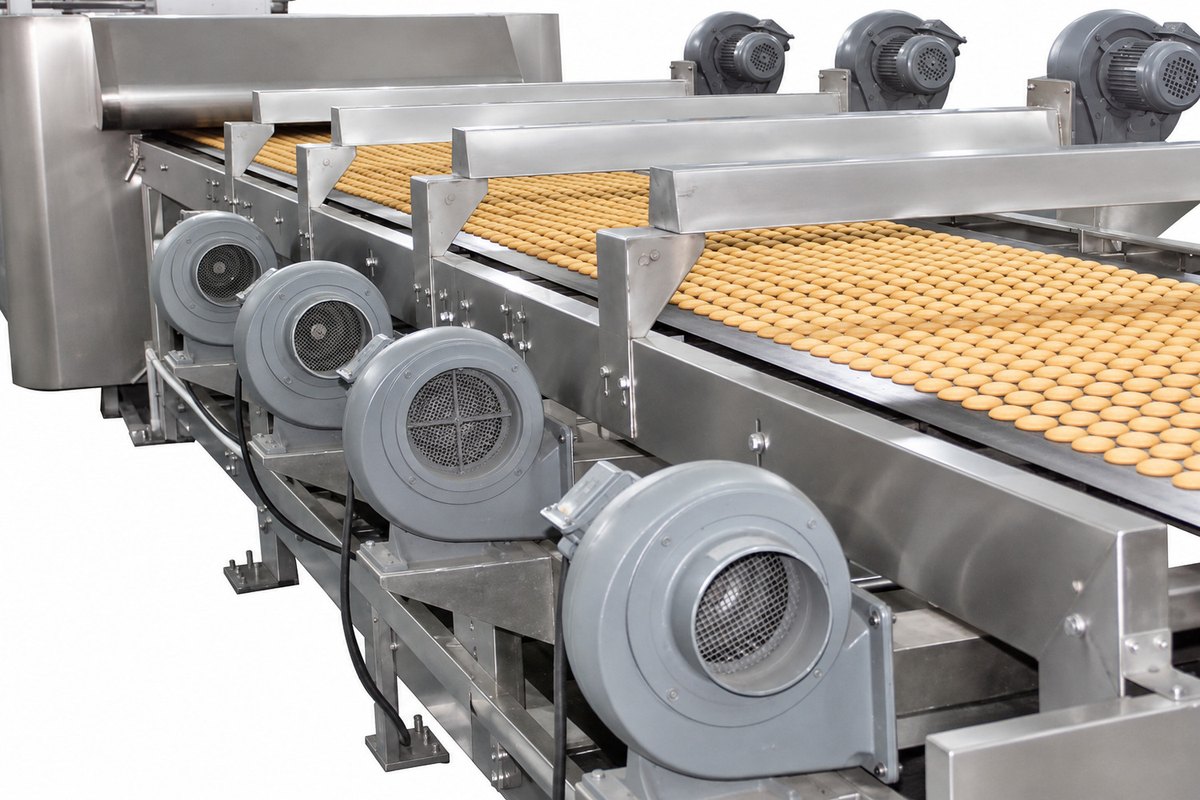
A meaningful factory acceptance test follows the agreed product from dough preparation to the contracted handover point. Establish who supplies ingredients, inclusions, packaging material and operators. Retain the approved product brief, reference samples and recipes with the test record. If a test excludes packaging, record that exclusion explicitly instead of presenting an upstream trial as a fully packed output result.
Observe the beginning, steady operation, replenishment and planned product change. Record acceptable output, rejects, stops, adjustments and the settings used. Inspect across the working width instead of sampling only one convenient lane. Agree how dimensions, weight, appearance and texture will be checked, including which measurements require the product to cool first.
Challenge the transfer points. Fragile cookies can leave the oven acceptably and still fail when stacked or wrapped. Watch for product accumulation, misalignment, scuffing and breakage. Confirm how the system responds when downstream equipment pauses, and what the operator must do before restarting. These are coordination questions that a maximum-speed demonstration may conceal.
Separate factory acceptance from site acceptance. The second takes place with the destination utilities, environment and workforce. The contract should define how outstanding items are closed, who approves modifications and when operating documentation is handed over. Review Wanttone’s quality-control approach alongside a project-specific acceptance schedule.
| Evidence category | Example weight | Evidence required |
|---|---|---|
| Recipe and quality trial | 35% | Your products and agreed measurements |
| Saleable throughput | 25% | Recorded output with stated exclusions |
| Integration scope | 20% | Drawings and responsibility schedule |
| Training and support | 20% | Named deliverables and escalation process |
A weighted scorecard can make a shortlist more transparent, but it must not turn missing evidence into an average score. The weights above are an illustrative buyer policy, not an industry standard or a ranking of manufacturers. Score each category against documents and witnessed observations, explain disagreements between reviewers, and apply essential pass conditions before calculating a total. A supplier that cannot demonstrate a mandatory product requirement should not win simply because it scores well on less important features.
How Do After-Sales Service and Spare Parts Affect Manufacturer Choice?
Ask for deliverables rather than adjectives. “Lifetime support” and “fast response” become useful only when the proposal explains who responds, in which language, through which channel and for what scope. Identify the distinction between remote diagnosis, a replacement part and an engineer travelling to site. Agree responsibilities for travel, accommodation and site readiness where relevant.
Request an initial wear-parts schedule linked to drawings and part numbers. Operators should be able to identify the exact belt, scraper, wire, bearing assembly or sensor involved in a fault without relying on a photograph sent to one salesperson. Ask which parts are proprietary and which can be obtained locally to the agreed specification.
Training should cover routine operation, recipe settings, changeovers, cleaning and safe fault recovery within the operator’s responsibilities. Maintenance staff need the corresponding drawings and diagnostic information. Confirm backups for PLC recipes and settings, and establish who can authorize program changes. Remote access should follow the buyer’s own access rules and be agreed before a fault occurs.
Consider the end of the warranty as well as the start. Ask how replacement modules, future tooling and additional product capabilities will be quoted. If your next product is likely to require a different head or oven arrangement, document that boundary now. The best manufacturer is the one that makes capability and responsibility clear enough for your factory team to plan around.
Why Include Wanttone in a Cookie Production Line Manufacturer Shortlist?
Wanttone combines machinery engineering with its own commercial biscuit production in Yangjiang, Guangdong, China. Its current company profile traces machinery operations to 1981 and its own biscuit factory to 1993. These are two different milestones, and the factory experience provides a practical basis for discussing dough, baking, sanitation and operator routines.
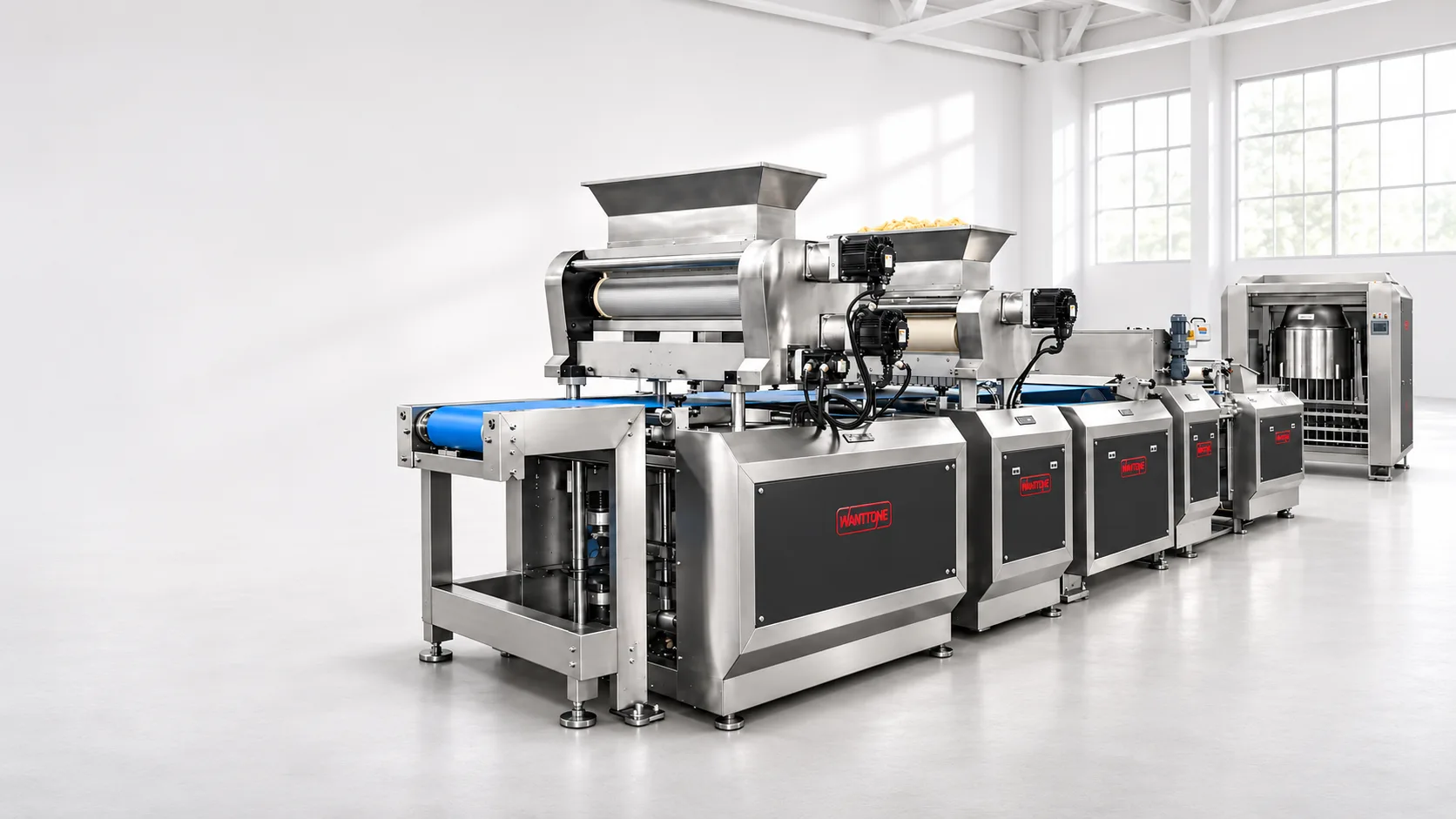
For a cookie project, start with the intended products and required saleable output, then examine the steel belt cookie production line and the relevant forming machines. Request a trial with representative ingredients and an itemized proposal. Ask Wanttone to explain the limits of the proposed configuration as well as its capabilities.
If the project expands an existing bakery, provide the installed oven and wrapper interfaces. If it is a new factory, review the startup factory application and agree the layout, utilities and commissioning scope. A recommendation becomes commercially useful when it leads to a verifiable product match and a clear supply contract, rather than a general claim that one supplier suits every buyer.
FAQ: What Else Should Cookie Line Buyers Ask?
Should I choose the lowest-priced cookie line manufacturer?
Compare prices only after matching recipe, equipment scope, output test and support obligations. A cheaper offer may exclude the oven, packaging or commissioning. Request an itemized Wanttone proposal rather than comparing package titles.
Can a manufacturer guarantee the advertised maximum output for every recipe?
Not without qualification. Cookie weight, forming method, inclusions, baking time and downstream handling affect output. Specify saleable kg/h for each priority recipe and verify it during the agreed trial.
How much does a cookie production line cost?
The reviewed public advertisements show $160,000–$180,000 FOB for a supplier’s mini cookie line and $10,000–$50,000 for QK400 machine references with different scope. These are screening estimates, not Wanttone offers. Seek a project quotation.
Do I need to visit the manufacturer before purchasing?
A visit can help inspect engineering, trials and documentation, but its value depends on preparation. Send the product brief first and agree what the visit must establish. Where a visit is impractical, discuss witnessed testing and detailed records.
What should I send Wanttone for a manufacturer comparison?
Send recipe information or samples, piece dimensions, required saleable output, pack format, schedule, factory drawing, utilities and destination. Include the equipment you intend to retain and the acceptance conditions that competing proposals must meet.

Wanttone Engineering Team
Wanttone’s engineering and project teams prepare practical guidance on biscuit machinery, production-line planning and factory requirements.