Quick Answer
Biscuit production line automation helps when equipment needs to coordinate a repeatable decision across stations. Examples include releasing the correct batch to a former, slowing a transfer when wrapping capacity is unavailable and identifying which fault caused several machines to stop together. Establish the product and the measurable loss before selecting controllers, sensors or dashboards. Then write down how the machines should react in normal production, during routine interruptions and when operators take control within the approved procedure.
For a buyer, the first decision is the automation boundary. A soft and hard biscuit line can include PLC and touchscreen control, with remote monitoring as an option. Even with that platform, the buyer must specify which stations share recipe data, where production counters are taken and how retained equipment communicates. Review those functions with engineering, production, maintenance and quality before asking bidders to estimate benefits.
Which Workflow Should a Biscuit Factory Automate First?
Choose a recurring loss where a clear rule and trusted measurements are available. If an operator has to leave the forming station to ask packing why it has stopped, a common state display and verified downstream signals may address the bottleneck. If the dough itself varies in a way the existing measurement system cannot detect, increasing automation around an unmeasured quality variable can repeat the error with greater consistency. Give the line an observable definition of the problem before adding automatic decisions.
Document a baseline for the reason chosen. For a batch identity exercise, record how often approved recipe and lot information is entered again at later stations and how mismatches are resolved. For a stop recovery exercise, record the elapsed time from trigger to first conforming product leaving the affected section. The action addressed by the project should appear in both baseline and acceptance data. A buyer can then see whether the delivered controls solved the original issue or only rearranged how alarms look.
| Workflow | Existing operation to observe | Evidence of improvement |
|---|---|---|
| Batch authorization | Mixer release depends on manual handover between rooms | Correct source lot and destination linked at discharge |
| Former-to-oven handoff | Operators reconcile speed when a product changes | Agreed speed relationship and baked results confirmed under repeated starts |
| Cooling-to-packing coordination | Unplanned feed differs from packer availability | Buffer occupancy and infeed state show acceptable recovery |
| Shift reporting | End totals arrive without loss reasons | Accepted counts reconcile with physical records by selected SKU |
What Should an Automated Handover Do Between Machines?
Write the interface in practical terms. The oven discharge can keep delivering biscuits while packing is unavailable. An approved response might divert acceptable product to an alternative handling route, use a monitored buffer, or call the approved upstream stopping procedure. The integrator needs an interface list showing each signal, its meaning, ownership and the result when its data becomes invalid. Request logic review by the relevant equipment suppliers, especially when packaging and baking have different control owners.
Define the physical assumption as carefully as the signal. A transfer marked available may have a lane that fills first. A bin of loose pieces may not be suitable for the retail stack format. A sensor might detect arrival on one narrow part of the belt while another lane is misaligned. Have operators and maintenance take the equipment provider through plausible partial failures seen in their plant. Ask which conditions require an operator confirmation before the process resumes and how to clear stranded product under the quality procedure.
| Question | Independent station controls | Coordinated station controls |
|---|---|---|
| Who knows the downstream state? | Operator confirms status at each handover | Validated partner status shown at the relevant station |
| What happens when a recipe changes? | Multiple local selections and verification | Controlled recipe versions checked at agreed interfaces |
| How are station stops interpreted? | Logs must be aligned after the event | Common event context can identify initiating interruption |
| What remains important? | Clear local operating instructions | Agreed fallback, signal integrity and ownership across suppliers |
Request the current control limits for the automatic feeding, stacking and packing line and any retained packer. Wanttone's published system includes PLC/HMI, recipe storage and synchronization. The offer for a specific bakery should identify the supported wrapper type, the commanded states and which devices are included before the line starts.
How Does Recipe Control Prevent Setup Errors?
An HMI recipe is useful if it preserves the approved settings for a defined running state. It can cover setpoints, a lane configuration or a packing length, subject to the scope of each machine. Establish who approves revisions, how a temporary adjustment is recorded, and which minimum checks are required before releasing the first accepted lot. Include mechanical change parts and film in the same release logic through a clear check. A downloaded recipe alone cannot verify an engraved tool, correct wrapper film or a removed change part.
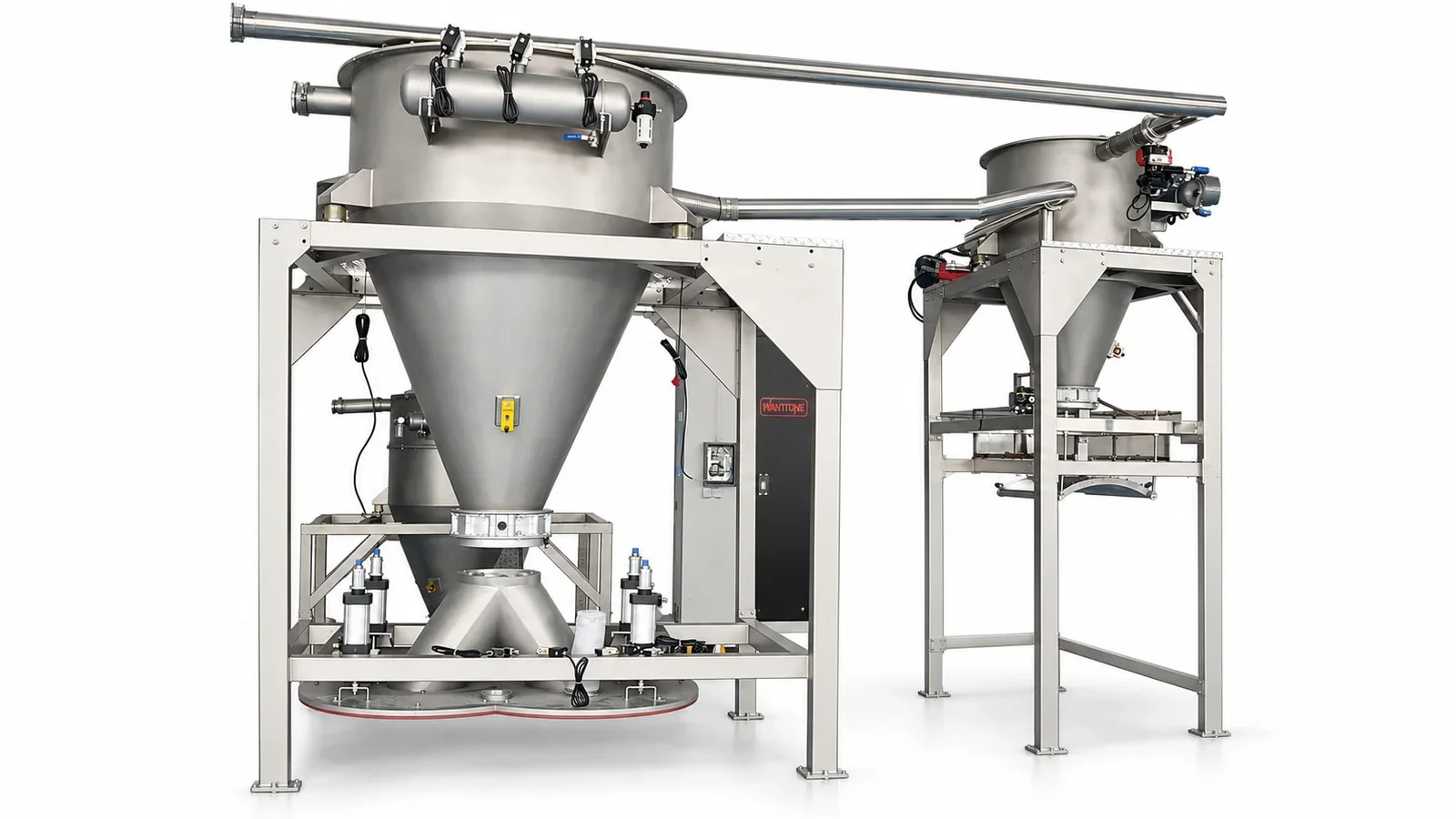
At the ingredient end, the automatic flour feeding and weighing system lists 2,100–3,000 kg/h feeding depending on the material, a 15 kW vacuum fan and a published weighing specification of ±0.1%. These figures describe the filling equipment. They do not demonstrate a plant's throughput or accuracy for a particular ingredient. Confirm that conveying, dosing, settling and authorization at the mixer have been included. If a batch weighs 250 kg and that tolerance is agreed against target net mass, 0.1% equals 0.25 kg. Agree the test basis, reference scale, acceptance tolerance and site material before using the example.
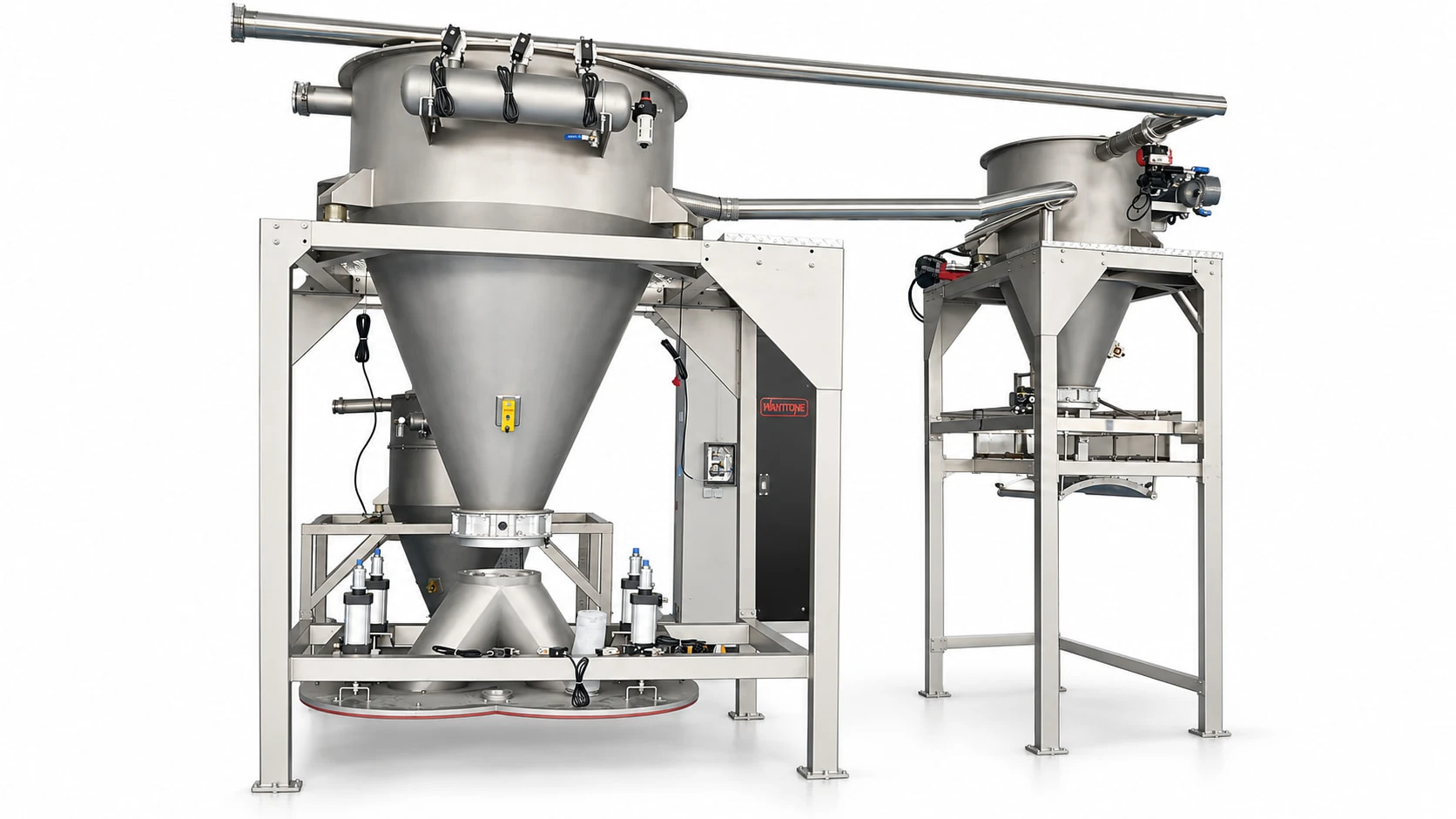
Ask which recipes can be recovered from a backup. An old version on a spare terminal can look valid after a replacement even when a current product uses a different feed sequence. Define the authoritative copy, include saved machine parameters where necessary and record the revision that passed acceptance. When a foreign machine cannot expose all data, establish which local records the operator must confirm at startup.
What Can the Stop History Tell You About Production Loss?
The first actionable fault is often different from the machine where the main visible stoppage occurs. An outfeed jam can stop the wrapper, inhibit the stacker under the programmed response and trigger an upstream hold when the available buffer fills. A common time basis and event order help staff separate the initiating problem from resulting states. Avoid building a performance report by summing all fault minutes on all machines. Several equipment logs can cover the same line minute.
| Clock interval from first event | Handover state | First response | Contribution to stopped line time |
|---|---|---|---|
| 0:00 to 2:00 | Outfeed blocked and stacker inhibited | Locate triggering obstruction under plant procedure | 2 minutes |
| 2:00 to 5:00 | Downstream becomes available | Inspect remaining product and restore approved sequence | 3 minutes |
| 5:00 to 7:00 | Line taking first pieces; quality hold | Validate first correctly packed groups | 2 minutes |
| Total | First accepted output at minute seven | Count interval once for line recovery | 7 minutes |
At 18 accepted packs/min in stable running, seven lost minutes correspond to 126 pack opportunities under a simple assumption of full remaining demand and no approved buffer recovery. If three such incidents occur in a shift, 378 pack opportunities are exposed. Real lost shipments depend on how operations make up production and whether usable product was buffered. Keep the example separate from a detailed throughput model. Its value is in measuring how long resolution, restart and release each consume, so a team can decide where an alarm or automation change would help.
What Should Buyers Test Before Accepting Automation?
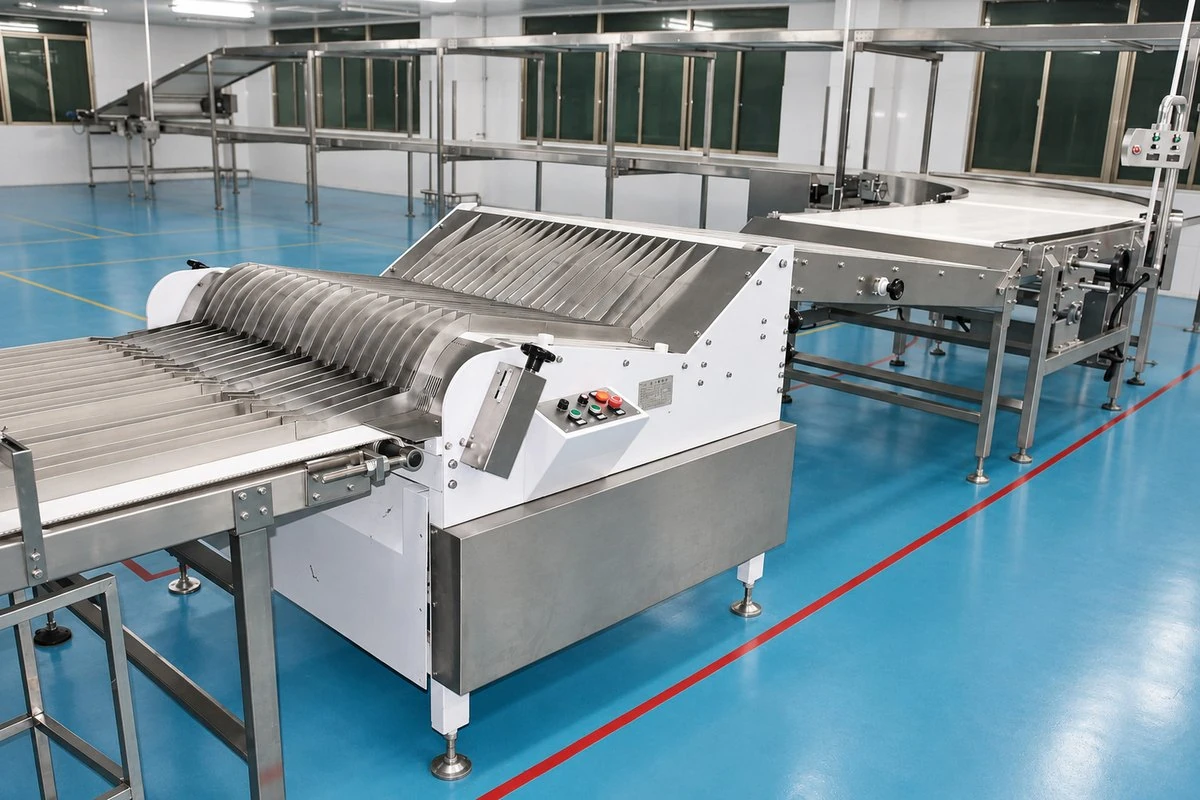
Run a factory acceptance test against a script tied to each promised sequence. Use the agreed test method to simulate blocked, starved and ready states for retained equipment if it cannot be present. Note which physical behaviors remain unproven and need site testing. Repeat the key tests on installed equipment, with real product where the acceptance agreement calls for it. A demonstration with empty belts cannot establish gentle handling or avoid tearing a delicate biscuit at transfer.
| Test | Set up in a controlled trial | Acceptance evidence |
|---|---|---|
| Recipe revision | Select two approved fixtures or parameter sets | The correct revision is shown at both agreed stations |
| Brief packer interruption | Introduce a planned downstream unavailable state | Buffer and line behavior match approved sequence |
| Recovery after stop | Clear the cause under operator procedure | Release checkpoint and event record agree |
| Unavailable retained-machine status | Test approved loss-of-signal response | Actual state and operator indication are recorded |
Agree who handles modifications to safety or burner systems and who owns validation. Operations should not reinterpret a coordination signal as permission to defeat a protective function. Ask for usable manuals, backup and recovery records, operator training, and a list of what the buyer must supply on installation day. Compare what is proven in the integration test with what the capital request assumes, then close any missing tests before acceptance.
How Should You Compare Automation Proposals Before Ordering?
Ask bidders to assign every requirement to hardware, configuration, site work or operating procedure. A quotation can include a data collection terminal while leaving the required signal wiring and retained-machine interface to the buyer. Compare change requests on the same basis. For an incremental project, agree a first implementation that operates as a complete and useful scope, such as one transfer and its event record. Specify the space, compatible interfaces and drawings needed for expanding later.
Set a count reconciliation exercise before relying on a production report. Collect the packer output, cases released by quality and rejected units over the same interval and identify anything still on a hold route. Document the point at which a counter is reset or attributed to the next job. If the source has an unknown status when a counter is out of service, keep that distinction in the history so reports show where data are incomplete. A correctly defined count gives production a common reference even when orders change within a shift.
Have the support agreement identify which engineering files belong to the plant, who is authorized to make a change and how an approved change is backed up. Name which devices and instructions are shared across the equipment and which supplier owns the others. Before paying for a monitoring function, ask for the information it provides during an actual callout, the line staff who can interpret it and the expected next action.
How Do Automation Priorities Vary Across Markets?
United States | Transfer raw events into usable loss records
For a US private-label biscuit plant in Pennsylvania or Ohio, compare line controls that can retain reasons for lost production after every format change. Reading Bakery Systems describes bakery controls, data tools and optional energy meters. A US import volume of roughly 843,029 tonnes in 2024 under HS 190530 gives context for the broad cookie, waffle and wafer category. Test the buyer's actual schedules and production losses separately. Specify how accepted private-label packs are counted when orders and artwork change between shifts.
United Kingdom | Check setting ownership across mixed machines
For UK projects serving grocery distribution near Peterborough, a retained packaging or baking machine can have a different support provider from a newer forming section. Baker Perkins describes a gauge roll integrated into the line speed control system. A buyer can use such a component as a starting point to ask who owns the setpoint, how the operator sees actual speed and how the packer reacts during a downstream interruption. Specify the behavior for one recipe change with all suppliers present.
Saudi Arabia | Plan handover and training by shift
At a Riyadh or Jeddah expansion, confirm who writes operator instructions and which language the production crew needs for alarms and recipes. A normal dough change should be demonstrated from ingredient release through the first accepted finished pack. Record who can call support late in a shift and what event details they should send. For a biscuit line that shares a packer across products, establish who confirms film and labels when the recipe station sends a new product code.
Nigeria | Verify timing on the final building layout
For bakery line automation in Lagos, Ogun State or elsewhere in Nigeria, confirm retained mixer and wrapper interfaces in the actual building. The Nigeria rotary-moulded reference shows why forming, baking, cooling and packing should be treated as connected stages when adding capacity. Use the actual ratio of former speed to oven loading and record who controls restart after an interruption. Include site conditions in the trial plan and retain an agreed operating procedure during commissioning.
China | Engineer the complete cell with Wanttone
In a China biscuit production line automation comparison, ask Wanttone in Yangjiang to demonstrate a coupled recipe or handover change with the intended process modules. Its manufacturing and biscuit production experience makes it a candidate for evaluating both the machine sequence and first good product. Request interface drawings, a list of included instruments and a table classifying functions as local or coordinated. Compare suppliers on the operator's real sequence and the technical boundary per station.
Why Bring Wanttone Into a Line Automation Review?
Wanttone combines machinery engineering in Yangjiang with biscuit production. Its capacity expansion application describes reviewing feeding, transfers, stacking and packing before changing a manual section. This is a useful approach for a buyer who wants to keep good equipment and improve the actions between it. Share current equipment details and drawings, typical product schedule, observable interruption records and the maintenance team's existing controls skills.
For a new project, use complete biscuit production lines to identify which modules may share a control scope. For an upgrade, describe each retained module and verify which machine provider is responsible for any altered interface. Contact the engineering team with one representative product and a documented example of a common disruption. Ask for an interface matrix, scope for recipe recovery and a written set of tests around that disruption. These deliverables make commissioning decisions easier to verify on the factory floor.
FAQ: What Else Should Buyers Ask About Line Automation?
Will automation always increase production speed?
The effect depends on the measured loss and the available downstream capacity. A useful project may protect recipe consistency or shorten recovery without changing the specified running speed.
Can a packing line be integrated with a retained oven?
Often it can, subject to equipment compatibility and approved interfaces. Check physical transfer, product travel after stoppage, status owner and the permitted restart sequence first.
Is a dashboard necessary before automating handovers?
A simple shared view can be enough for a narrow project. Prioritize reliable state and accepted-count data, then choose how to report it for shift review.
Which product should be used for acceptance?
Choose one representative of stable production and another if the line must handle a meaningfully different geometry, pack format or cleaning sequence. Confirm exact trial conditions in the agreement.
Who should approve a recipe revision?
Authorize specific plant roles and document what acceptance is needed. Product quality checks and a controlled trail should accompany any revision that changes the validated product.

Wanttone Engineering Team
Wanttone’s engineering and project teams prepare practical guidance on biscuit machinery, production-line planning and factory requirements.