Quick Answer
A biscuit production line PLC upgrade is worth evaluating when the current controller cannot be reliably restored, replacement parts and engineering tools are becoming hard to support, or planned changes exceed the architecture's proven capabilities. Start with a documented restore exercise and an inventory of the controller, I/O, HMI, drive and communication dependencies. If the line can be reliably supported and the problem is a mechanical restriction or an unresolved operating practice, address the cause before replacing controls.
Compare three approaches: sustain the current system with tested recovery, migrate the affected control cell in stages, or replace a larger system during a planned outage. The choice depends on available shutdown time, compatibility with retained equipment and which features will be tested before production resumes. Wanttone's capacity expansion planning is a useful entry point when a controller change is part of a production line modification.
What Does the Existing PLC Actually Control?
An old control panel can be part of a long chain of dependencies. The existing programmable logic controller may exchange data with an HMI, remote I/O, drives, temperature controllers or another machine's PLC. A new controller may accept a translated program while the connected hardware still expects an obsolete messaging method or a certain representation of speed and position. Follow each boundary until you can explain what the operator sees and what the line depends on. Keep oven combustion protection, guarding and other safety-related functions visible in the contract and under qualified review.
| Item | Record from the actual line | Decision the record supports |
|---|---|---|
| PLC and I/O | Exact catalog numbers, revisions and installed options | Product lifecycle check and conversion dependencies |
| HMI and recipes | Software project, licenses, screen and recipe versions | Preserve crew workflow and approved settings |
| Servo and inverter interfaces | Installed drive revisions, parameters, owning station | Retain, reconfigure or replace each interface |
| Cross-machine commands | Allowed states, data direction and recovery owner | Test new and retained equipment together |
| Protective controls | Drawings and responsible qualified parties | Agree validation before commissioning |
Gather evidence from the actual machine, even when a drawing archive exists. A repaired panel may have a later drive revision, a changed remote terminal or a replacement communication module added on a previous shutdown. Record date and ownership for each discrepancy. Confirm who has authority to obtain and restore the current engineering files and identify any licensing or access needs through the relevant supplier. A useful discovery package includes one traceable version of the drawings and the logic that runs with them.
When Is Keeping the Current PLC the Better Choice?
Sustaining the installed control can work if the factory has a tested restore path and approved spare parts, and the current design can support expected products and equipment. Obtain the true restore time by including the staff, tools and settings needed to return accepted product. Look at demand over the intended remaining life of the line. A reliable controller supporting a stable product and a limited investment horizon may have little operational case for replacement.
| Option | Fits when | Evidence to demand | Exposure left after decision |
|---|---|---|---|
| Sustain and support | Stable duties and an approved restore path | Backup restored on appropriate spare or test hardware under supervision | Parts and skills may become harder to retain |
| Partial migration | One cell is high risk and retained interfaces are understood | Tested temporary interface and final transition plan | Two generations of hardware may need support for a period |
| Broader replacement | Failures or capability gaps span related cells | Representative integration and cutover rehearsals | More changes must be validated together |
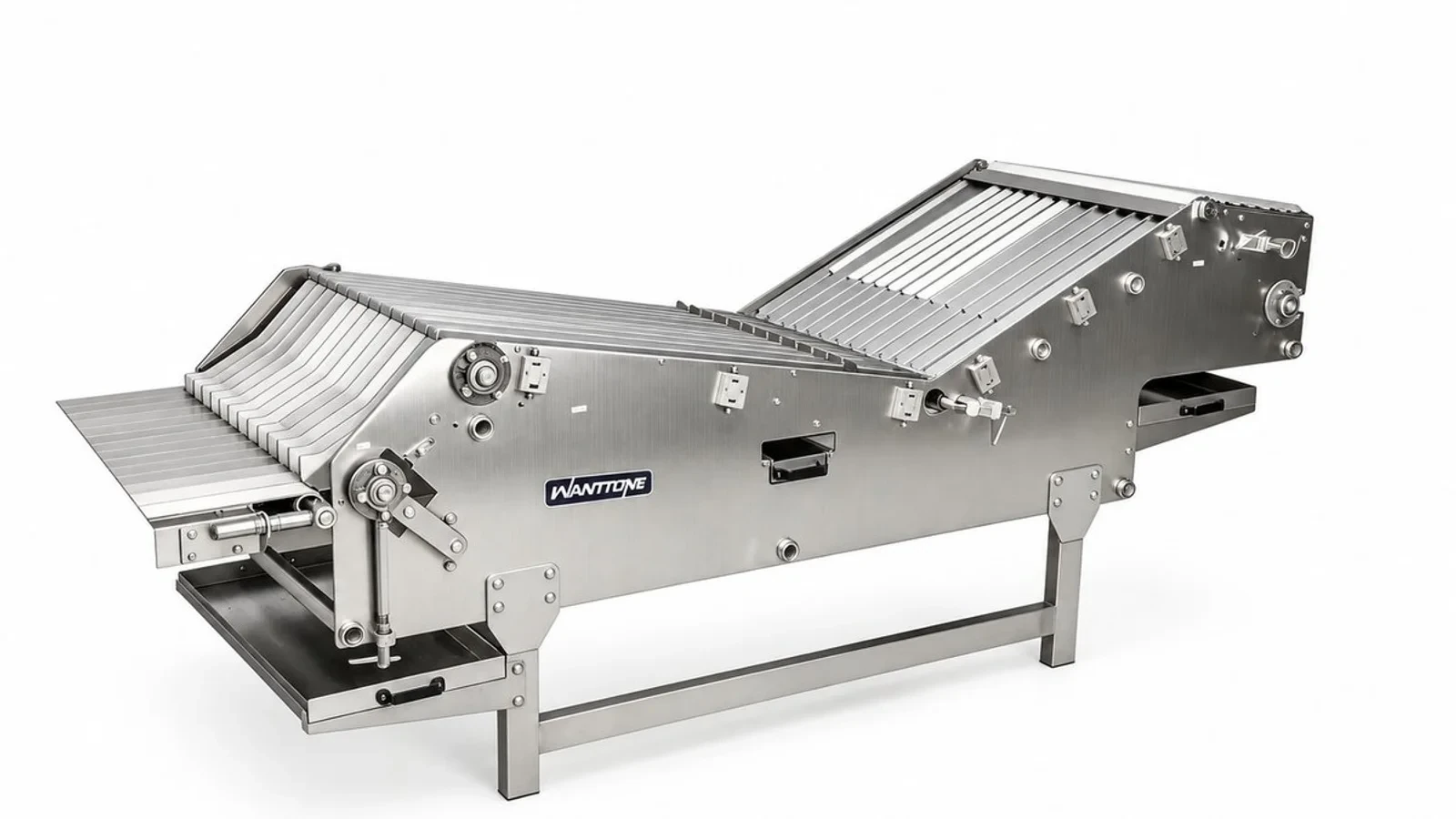
A new controller does not increase the safe bake rate by itself. When the main evidence points to heat transfer, dough availability or broken packs, look first at the affected process. The cooling and turning conveyor illustrates this split: a speed-controlled belt is part of the solution, while geometry and residence time still depend on the physical configuration. Ask what conditions the new PLC enables and whether that creates value while the mechanical limits remain unchanged.
How Do You Estimate Upgrade Value in Production Hours?
Build a scenario using incident counts, recoverable hours and the time actually lost at the line. Separate shutdown time outside planned production from time that displaces promised orders. Record losses at the boundary where the first acceptable run resumes. Exclude unrelated mechanical causes even if the same alarm screen reported them. Compare the assumed benefit against user demand and against a tested baseline, not against the theoretical maximum speed of new controls.
| Variable | Sustain existing controls | Targeted migration |
|---|---|---|
| Assumed control incidents during production | 3 | 3 |
| Average lost production time per incident | 16 h | 4 h |
| Assumed incident hours per year | 48 h | 12 h |
| Additional productive hours displaced by cutover | 0 h | 18 h |
| First-year production time exposure | 48 h | 30 h |
In this hypothetical example, the targeted migration recovers 36 recurring production hours while displacing 18 hours in the first year. The illustrative first-year improvement is 18 hours. If the factory expects only one control incident per year, the recurring gain is 12 hours per year, so the 18-hour cutover takes more than one year to recover on this measure alone. An annualized average is a planning device. A low-frequency failure can still matter if it occurs during your largest committed orders.
Add a sensitivity case for new failures introduced during stabilization and another for improved recovery on the existing hardware. If either changes your choice, refine those assumptions with maintenance history and a supervised sample. Buyers can pair the production-hour comparison with actual site quotations and expected contribution if required. Avoid treating the result as a financial return when labor, installation, requalification, update and recovery obligations have yet to be discussed.
What Should an Engineering Team Prove Before Cutover?
Ask for a test environment or an approved test plan that mirrors the portion changing. The team should demonstrate program and HMI restoration, drive data and each relevant retained equipment interface. A successful compile only means the project passed the software's compile checks. It does not show that a lane opens at the right time, a retained wrapper accepts its infeed state, or a product recipe restores with its validated settings. Use baseline trends and alarm behavior to compare both ends of the migration.
| Test | Pre-cutover evidence | Site confirmation |
|---|---|---|
| Backup restore | Correct project versions open on approved tools | Dedicated backup recorded after installation |
| Machine interaction | Readiness and requests demonstrated with test rig or simulator | Real equipment and state transitions proven on installed line |
| Product change | Approved recipes and mechanical setup requirements identified | First good product confirmed for selected recipes |
| Recovery decision | Worked hold points, responsible staff and recovery windows | Team records the authorized go or rollback decision |
Define the decision time to pause, revert or accept before the outage begins. Reversion can be harder after a panel is rewired or a mechanical interface is changed. Agree the parts, documentation and time needed to restore the prior acceptable arrangement, or create an alternative production plan when reversal is impractical. Record which product lots will be run or held for first verification. Have operators and quality staff participate in the rehearsal of restart activities, not only the engineering team.
How Can You Commission the Upgrade Without Losing Product Control?
Assess the risk where a machine starts, stops or recovers. A former can come back before the belt is ready. The first product may need separate tracking after interruptions. A packer can display a valid recipe while the film the crew loaded belongs to another customer. Define what happens at these physical boundaries through an approved commissioning plan and document who may authorize product release. Site tests should cover the restart and common product change events written in the contract.

A site acceptance trial needs units the buyer can interpret. Document time to first accepted batch, first correctly formed pattern, first safe release from the oven and first accepted packs as appropriate. Compare against the operating instructions rather than expecting the screen to demonstrate satisfactory product on its own. A decision to use the previous PLC setup belongs to the agreed qualified team. Preserve records and backups after each accepted configuration so a later service call begins from evidence.
Book post-start review time. Store verified software and operating records in the factory's designated system, keep operator guidance current, and capture the first weeks of issues with loss categories. Some events stem from translation of logic and others reflect wear or process instability that preceded the upgrade. Assign responsible parties and close each issue against production evidence. This helps keep the project from drifting into a broader rebuild without a new technical decision.
Watch for acceptance being inferred from a single easy recipe. A stable round biscuit can resume cleanly while a fragile item still breaks at a mismatched transfer. Include a slow product, a demanding format and one routine interruption selected from recent history when those cases define normal factory use. Compare the first accepted counts and the handling conditions with the documented baseline. Record the untested cases and the agreed plan to bring them into service.
What Should a Comparable PLC Upgrade Proposal Include?
Ask each integrator to provide the same boundaries and assumptions. A controls quotation should identify whether motor and sensor changes, panel fabrication, HMI work, interface engineering and onsite commissioning are included. Installation work that the buyer must arrange belongs in the same schedule as equipment delivery. Ownership has special importance when one supplier provides the controller and another provides a retained forming, baking or packing module.
Ask for a named deliverable for each promise. An offer described as recipe migration should specify whether the team will recreate recipes from records, translate stored settings or only provide a method for the buyer to enter them. A claim of domestic service should identify technical availability and how an engineer will access the agreed evidence. Review licensing, technical support, drawings, software handover and training together with the hardware configuration. Confirm which changes will need a fresh process trial and mark the resulting time in the outage plan.
Set an envelope around changes discovered during the survey. For example, one retained drive may need investigation before a decision is possible. Agree when that decision will be made and what alternative keeps the line available if the expected interface is unavailable. Keep the purchase specification tied to accepted operation on the production floor.
What Should Buyers Ask PLC Upgrade Providers in Each Market?
United States | Check the product lifecycle by exact catalog number
A bakery in Ohio or Pennsylvania using Allen-Bradley hardware can check exact product lifecycle status through Rockwell Automation before choosing a support or migration scope. Rockwell also publishes migration cross-reference material for SLC 500 hardware. Ask a qualified provider to review the configuration in service and show which licenses, exact spares and approved restoration steps will be available to the maintenance team. A part family's general status may not settle a distinct product number or particular legacy interface.
United Kingdom | Review the mixed-vendor panel boundary
A Peterborough-area or Midlands contract bakery may run an older former with a newer downstream packer. For a Siemens installation, the manufacturer's TIA Portal documentation describes PLC program migration from S7-300 or S7-400 to S7-1500. This is one platform's example. Check the precise equipment scope with an authorized engineering provider. Ask the panel and process teams to agree when each can attend the same planned outage and what acceptance evidence they will sign.
Saudi Arabia | Ensure the plant can own an authorized restore
For a plant in Jeddah or Dammam, schedule a supervised backup and recovery exercise with the actual shift leadership. Check whether system documentation, interface lists and approved operator wording are usable on the factory floor. Arrange on-site technical support and confirm backup availability ahead of the cutover. If a heating control is involved, verify which qualified supplier owns commissioning and what must be witnessed before baking is authorized.
Nigeria | Prioritize replaceable parts and local skills
A biscuit factory upgrading in Lagos or Ogun State should identify what it can sustain locally after commissioning. Ask whether the proposed engineering software and approved hardware spares can be obtained through confirmed channels, and who can restore the system at shift boundaries. Wanttone's Nigeria line reference can help identify downstream equipment dependencies when a retained line is expanded in phases.
China | Request interface ownership from the machinery supplier
For a biscuit line PLC upgrade sourced in China, discuss the plant fit with Wanttone in Yangjiang. Send the controls inventory, panel photographs, backups that can be shared under the plant's procedures and a description of the existing recipe workflow. Ask Wanttone and any third-party controls partner to state what stage they can test together. Get separate responsibility assignments for retained modules and for training and recovery on the delivered system.
How Can Wanttone Help Scope a Biscuit Line PLC Upgrade?
Wanttone builds biscuit machinery and runs its own production, a practical context for reviewing whether a change affects dough feed, formed piece delivery, baking or packing. Its soft and hard line specification lists PLC and touchscreen control with optional remote monitoring. Ask for the actual proposed controls schedule. A product catalog entry does not determine the supplier, model, features or compatibility of an existing installation.
Share the asset inventory, repeated incident evidence and planned shutdown window with Wanttone's engineering contact. Clarify recovery targets in units operations can check, such as accepted product sooner or reduced time to identify an interruption. If new wrapping modules are involved, document the packaging system and its interfaces in the same scope. Ask both machinery and controls providers to sign the agreed tests, data handover and acceptance criteria before the existing panel is disconnected.
FAQ: What Else Should Buyers Ask About Biscuit Line PLC Upgrades?
Do we have to replace every drive during PLC migration?
Some installations can retain approved drives and interfaces. Check the specific devices, firmware and communication requirements and prove the joint behavior before accepting a partial upgrade.
Is a spare CPU enough to protect production?
The CPU is one dependency. You also need the correct programs, drive settings, compatible tools, trained staff and an approved route to first acceptable production.
Can the new HMI keep our old recipes?
Sometimes. Review which settings and limits can be transferred, verify the approved version against the new system and demonstrate the change on the chosen products.
Should a PLC upgrade include safety controls?
Scope follows the actual equipment and qualified assessment. Identify protective functions and their responsible provider before deciding which parts can remain and what must be revalidated.
How do we determine the right shutdown window?
Allow time for installation, testing, product approval and fallback as applicable. Compare realistic available production overlap with the number of hours likely to be displaced.

Wanttone Engineering Team
Wanttone’s engineering and project teams prepare practical guidance on biscuit machinery, production-line planning and factory requirements.