Quick Answer
Biscuit packaging automation connects cooling, product orientation, grouping, film wrapping, inspection and finished case flow. Its practical gain is a more repeatable supply of accepted packs at the rate the oven and dispatch schedule actually need. Select the retail pack first. A long slug of crackers and a small pillow pack of cookies can require different feeders, guide geometry and sealing tests even when their net weight is similar.
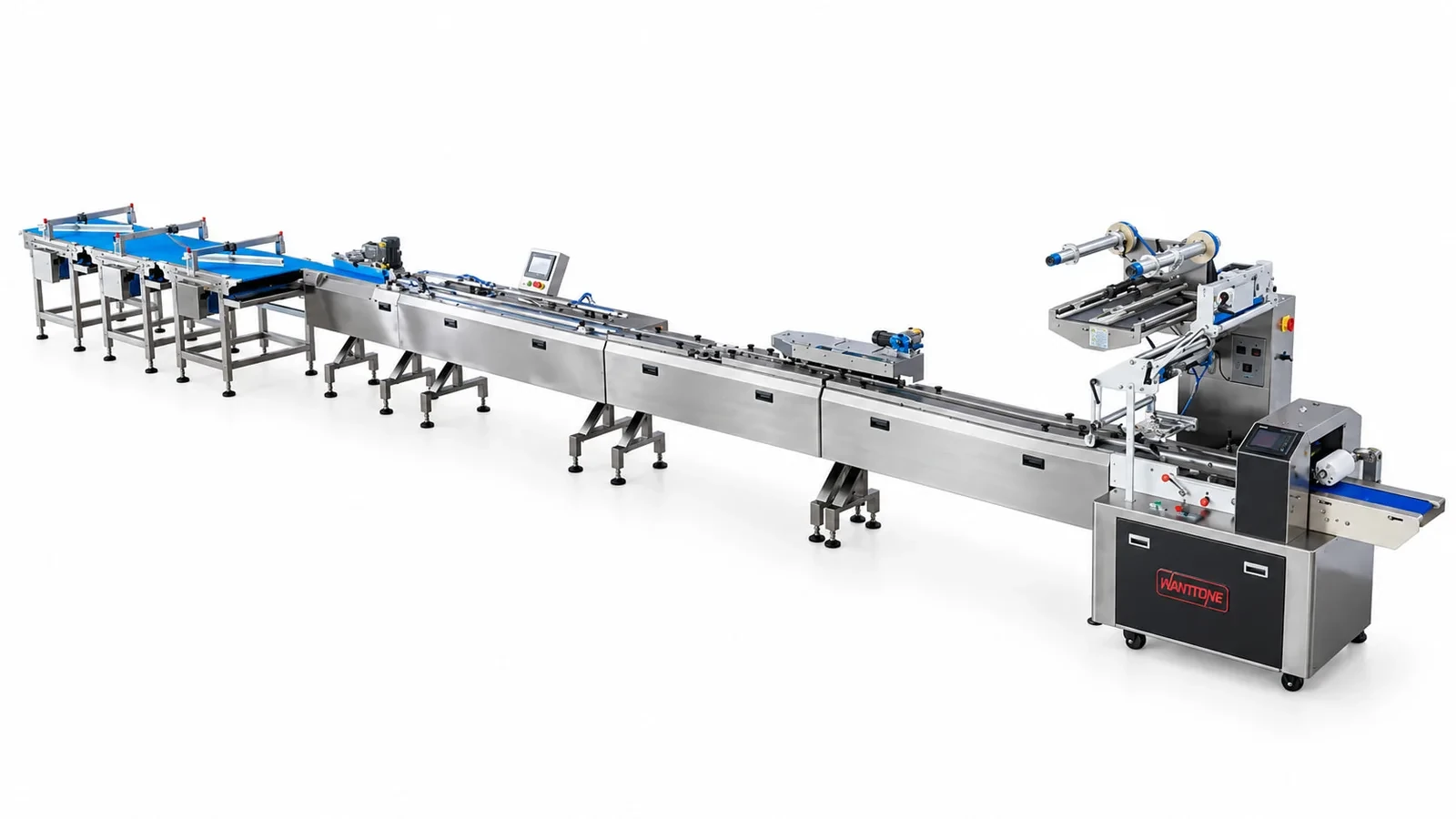
Convert the biscuit line's packing-ready kilograms per hour into packs per minute by product. Compare that demand with demonstrated good packs after short stops and rejects. Then check whether the crew can replenish film, clear an approved interruption and perform a changeover inside the planned production window. Wanttone shows several packing system formats. Use the specific pack drawing, product samples and film selection to choose which equipment should be trialed together.
Why Is the Wrapper Only One Part of Packaging Automation?
Start at the point where product reaches approved packing condition. Transfer and cooling must preserve piece geometry and temperature without creating congestion. At the receiving end, the group has to arrive in line with the wrapper's infeed, and inspection and downstream case handling must accept its output. A wrapper cannot substitute for a controlled supply of correctly counted and aligned groups. Map both the physical material flow and the points where a worker remains responsible for an approval.
| Handover | Equipment to scope | Output to observe |
|---|---|---|
| Cooler to feeder | Lane guides, distribution belts and transfer geometry | Even supply, acceptable temperature and limited handling damage |
| Feeder to grouping | Alignment, counted stack or controlled slug | Correct orientation and piece count |
| Grouping to wrapping | Timed infeed, forming box, film and seals | Correct package dimensions, coding and seal |
| Wrapping to inspection | Defined reject route and accepted pack counter | Rejects segregated and reconciled by reason |
| Inspection to case flow | Planned case packing, handling and finished pack collection | No unplanned interruption while meeting dispatch specification |
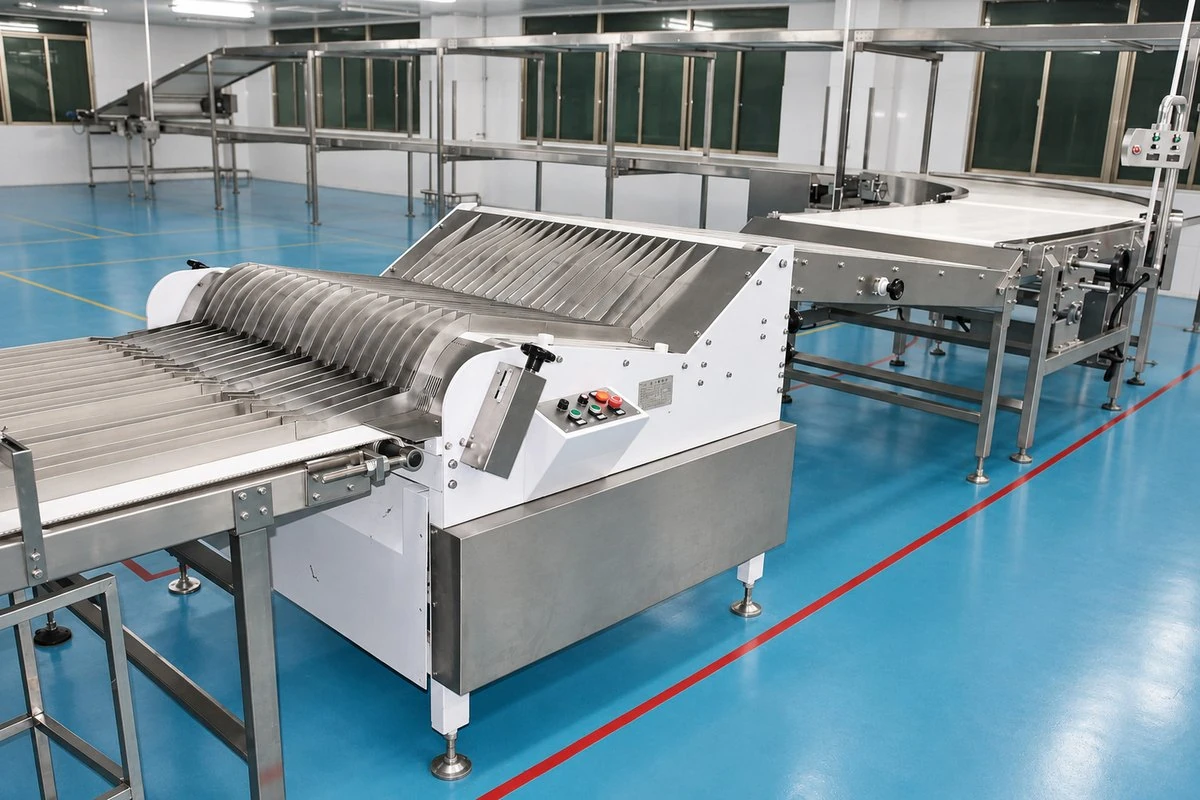
The automatic feeding, stacking and packing line lists configurable feeding and grouping, with alternatives such as servo belts, star wheels or lug-chain handling. It identifies downstream interfaces for flow wrappers, on-edge packers and cartoners. Read those as possible combinations. Ask for a drawing highlighting where each supplier's scope stops. For existing equipment, confirm dimensions, lane layout, expected speed and availability signal together. If a biscuit exits cooling on one belt and enters a wrapper on a second, the height and delivery conditions may matter more than a catalog headline rate.
Which Packing Format Fits the Biscuit and Retail Pack?
Choose orientation from the package, the geometry of the product and the way it is collected. Standardized crackers can be stacked upright in a slug, while a smaller single or grouped cookie pack may use a pillow wrapper. Some cookies nest in trays to protect fragile decoration. Products that tolerate bulk handling may fit vertical form-fill-seal, subject to tests of dosing, breakage and final pack shape. Request the physical sample and agreed acceptance criteria for every product family in the planned order book.
| Pack geometry | Handling approach | Confirm before purchasing |
|---|---|---|
| Pillow pack with single or flat group | Horizontal flow wrapper and matched collator | Group arrival, film tracking, seal clearances and acceptable product condition |
| On-edge slug pack | Count or group consistently on edge | Thickness variation, stack stability, pressure and breakage |
| Loose portion in a bag | Suitable weighing and vertical bagging interface | Tolerance, drop height and expected cosmetic damage |
| Product in tray | Trial tray loading and wrapping mechanism together | Tray dimensions, orientation and supported change parts |
The published flow packing machine guide states a typical 30–300 packs/min range depending on product and pack size. The on-edge packing machine lists 30–150 bags/min for its described dual-loader model, depending on biscuit and film. Those figures relate to different equipment ranges and package formats. Avoid selecting the larger maximum out of context. Ask the vendor to show the good rate for your smallest and largest proposed packs as well as the most fragile permitted product.
How Do You Convert Biscuit Output Into Required Packing Speed?
Take the net mass entering the wrapping section after the approved cooling and upstream inspection conditions. Convert kilograms per hour to grams per minute and divide by each SKU's net biscuit weight per retail pack. Exclude film and tray mass from the denominator unless the input flow includes them. Separate packing-ready input from finished accepted output when modelling reject rates. Piece count remains an independent check on the formation of each group.
| Nominal product weight per pack | Calculation | Approximate packs/min |
|---|---|---|
| 40 g | 500,000 ÷ 60 ÷ 40 | 208.33 |
| 80 g | 500,000 ÷ 60 ÷ 80 | 104.17 |
| 125 g | 500,000 ÷ 60 ÷ 125 | 66.67 |
The 40 g pack needs more than three times as many groups per minute as the 125 g one at the same biscuit flow. The extra group count can consume wrapper headroom even if the oven makes the same number of kilograms. For a mixed shift, calculate each SKU separately and confirm whether conditions can coexist. Assign film changes to the actual lane and include any packaging constraints shared across the lanes. If the customer accepts packs sold by count, reconcile nominal mass and average accepted weight so the plant uses compatible measures on both sides of the handover.
What Happens to Packing Capacity After Stops and Rejects?
A practical planning rate can start with demonstrated stable running packs per minute, then allow for active running fraction and accepted pack yield during that time. This simple product assumes the values use consistent boundaries and no losses are counted twice. If your trial already measures good packs against all elapsed time, use that observed basis directly. A new product with sticky surfaces or a less forgiving film may deliver a lower stable running rate than a simple cracker.
| Assumed configuration | Gross stable rate | Running share | Acceptance during running | Good packs/min over clock time |
|---|---|---|---|---|
| One lane | 125 packs/min | 88% | 97% | 106.70 |
| Two equivalent lanes | 250 packs/min combined | 88% | 97% | 213.40 |
| Two lanes with greater common loss | 250 packs/min combined | 80% | 97% | 194.00 |
If the commercial target is 500 kg/h of accepted 40 g packs, it requires about 208.33 good packs/min. The hypothetical two-lane case gives only about five good packs/min of headroom. If the two lanes rely on the same feeder, film or downstream transfer, a common stop affects both. The last row would miss the target. Compare the 208.33 demand and 213.40 demonstrated-equivalent supply only after confirming how rejects and losses affect the amount of feed needed. If 500 kg/h is a strictly limited input with no approved recovery, pack rejects also reduce saleable biscuit below that input. A buffer can absorb finite interruptions. Sustained differences require different output, available time or packaging capacity.
To illustrate the mass boundary, assume 97% of the biscuit mass sent to wrapping is shipped, with no validated return for rejects. Meeting a sales target of 500 kg/h would then require about 515.46 kg/h of biscuit input, even if the wrapper always has enough available capacity. If 500 kg/h is the maximum net biscuit mass supplied, those same assumptions give about 485 kg/h available for sale. Keep this mass calculation separate from the earlier estimate of wrapper headroom. A reject can remove a whole pack, while a sampling policy or a short feed can have a different effect on accepted pack count and product mass.
How Do You Protect Product and Film Through Changeovers?
Check variation before writing the package format. The thickest conforming biscuit may make a nominally six-piece group taller than expected. A delicate edge can rub a lane guide while several pieces wait. A flat or slug arrangement can require different constraints on biscuit dimensions and release from the stacker. Define the acceptable product and test real samples near its specified extremes. Evaluate breakage after the wrapper and again at the stage chosen for dispatch.
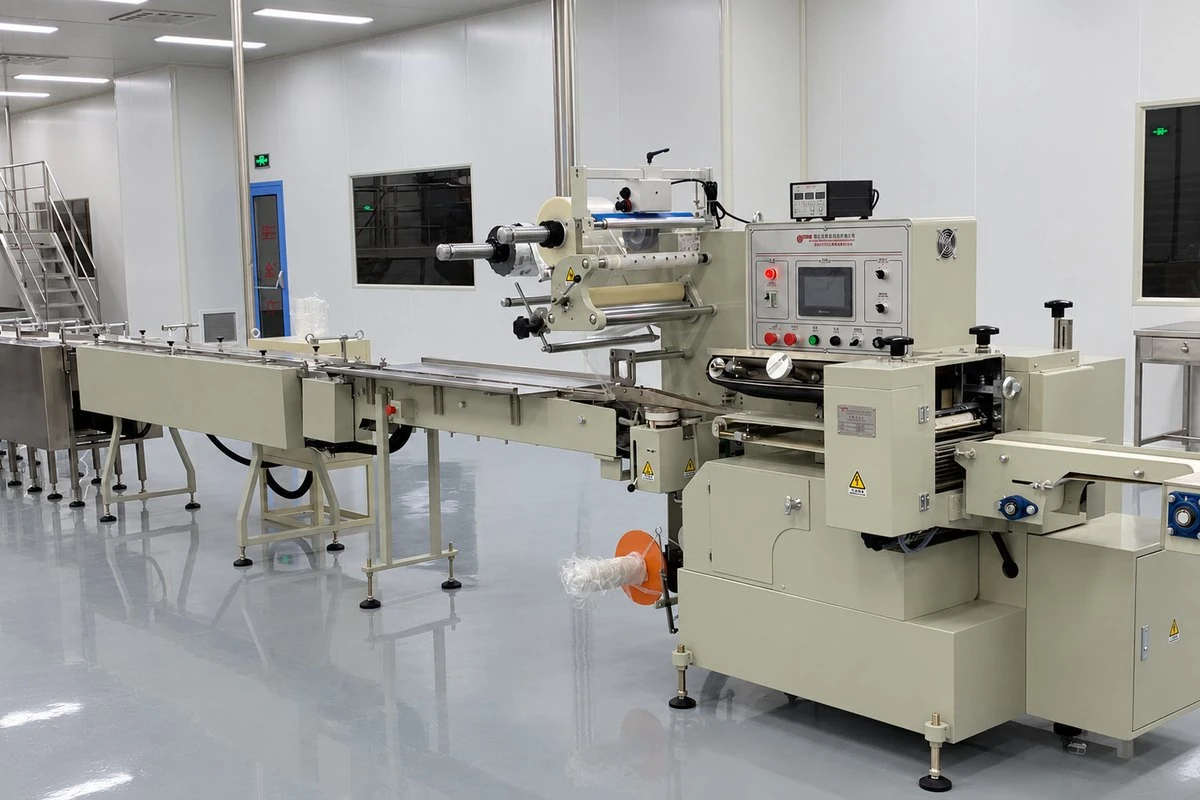
Film and sealing determine whether the package remains acceptable beyond the machine exit. Ask for a trial with the actual film construction and printed registration. A substitute film may feed through a demonstration and hide the approved material's sealing or friction behavior. Define the method for checking seals, film registration, code and finished pack appearance. Confirm which customer-specified code positions and artwork can be handled with the same change parts and which require a different setup.
Measure the changeover from last acceptable pack to first acceptable pack. Break it into removal and cleaning, guide or tooling swap, film replacement, recipe selection and release. Record the actual first acceptable count and what happened to intervening product. Small products may need many more packages and therefore more frequent replenishment measures. Agree who loads new film, how roll changes affect both lanes and where a supply of ready-to-wrap packs can safely be held during a brief interruption.
What Should Buyers Ask Packaging Suppliers to Demonstrate?
Provide the vendor with the format matrix, samples, films, pack drawings, code position, realistic upstream delivery and the accepted reject policy. Agree whether the verification is part of a dry factory test, a product trial or full site acceptance. For static speed demonstrations, ask how the vendor delivers groups continuously and how it records pieces that fail to arrive. Complete the later handover with a sudden loss of supply and a brief downstream interruption under the agreed procedures. Record whether pack quality and counts recover after each event.
Set the evidence up so the plant can reproduce it. Accepted packs should come from the final package inspection boundary. Record trial duration, planned stops, problem stops, product or film consumed and any intervention by supplier staff. Ask the vendor to show the actual tooling and reliability with your slowest function. A buyer should be able to compare a standalone flow wrapper against a full feeding-and-wrapping package with the differences in responsibility clearly marked.
Plan the stopping case using the physically usable buffer. For a hypothetical line with 120 spaces for valid groups and 90 already occupied, 30 remain. If 100 groups per minute keep arriving while none can leave, those spaces fill in 0.30 minutes, or 18 seconds, assuming no other outlet. This example shows why the mechanical arrangement and reaction time matter. The nominal tray area could hold considerably more loose biscuits while offering no usable space for approved groups. Confirm which product can be held and how the operator recovers count and position after a brief stop.
How Does Biscuit Packaging Demand Differ Across Markets?
United States | Plan around the customer's pack family
US imports reported for HS 190530 were about 843,029 tonnes in 2024, across sweet biscuits, waffles and wafers. This market context does not establish demand for a specific wrapper. A private-label bakery in the Midwest should use its planned customer SKUs to calculate pack-per-minute demand for singles, multipacks and larger formats. Syntegon publishes cookie packaging systems spanning grouping, flow wrapping and case handling. Verify what every bidder includes at your physical transfer and case packing boundary.
United Kingdom | Prove the real film and lot-print arrangement
A UK contract bakery serving grocery accounts in the Midlands can start by comparing test packs and film handling across retailer products. Use actual approved film roll dimensions, registration details and packaging geometry. Ask whether two short runs with the same net weight still require different bars, guides or code positions. An on-edge or flat distribution test should include change parts, controlled product hold and recovery after approved cleaning or inspection.
Saudi Arabia | Run artwork and changeovers with the local launch pack
For an expansion in Riyadh or Jeddah, pack trials can include the artwork and coding layout intended for local retail. Saudi Food and Drug Authority guidance identifies Arabic requirements for the prepackaged food labeling context. Have the responsible local team confirm the current requirements for the exact product. Test print and registration separately from biscuit orientation. The format that meets a distributor's launch needs may run at a different packing rate from the export format on the same oven.
Nigeria | Reconcile smaller wraps against a shared packer
For a Lagos or Ogun State biscuit plant, model the effect of small retail packs on existing wrapper load using your actual distributors' orders. Wanttone's Nigeria rotary-moulded planning reference targets 500 kg/h and identifies pack handover as scope. It supplies a context for enquiry, not accepted production performance. If a new oven shares a wrapper with a retained line, allocate actual time slots, film changes and spare capacity before projecting the output available to dispatch.
China | Compare complete packing cells with Wanttone
When evaluating biscuit packaging automation manufacturers in China, ask Wanttone in Yangjiang to compare feeding, orientation and wrapping at one handover. Provide likely film types, representative biscuits and the widest and narrowest pack formats. Ask to review the delivered parts list and which wrapper is included. The comparison is more informative when the supplier reports conforming packs by elapsed time, identifies the test product and shows where operators made corrections.
How Can Wanttone Specify Packaging for Your Biscuits?
Wanttone supplies biscuit production machinery and operates its own biscuit manufacturing. The product portfolio includes configurable stacking, pillow wrapping and on-edge packers. A buyer can use that range to discuss one new packing section or a connected path from cooling through finished packs. Keep the new and retained portions obvious on a line drawing, with the product and equipment specifications attached.
Bring Wanttone's team a physical biscuit sample, the pack matrix, draft order mix, line height, packing-ready kilogram rate and current equipment details. Ask which group format it recommends and which product tests should happen before the layout is fixed. Include the likely number of film changes, case handling and quality records in the brief. Where cooling also needs review, compare the cooling and turning conveyor against the wrapper inlet so additional handling does not compromise the product.
FAQ: What Else Should Buyers Ask About Biscuit Packaging Automation?
Does a higher maximum bag rate always improve throughput?
Accepted packing depends on product supply, pack format, film, stops and downstream case flow. Base sizing on witnessed accepted packs across representative elapsed time.
How many wrappers do I need?
Calculate packs per minute by SKU, compare with verified continuous and disrupted performance, and account for shared dependencies. Ask whether the line can operate acceptably with one wrapper unavailable.
Can the machine pack both plain biscuits and sandwich biscuits?
Possibly, if guides, collation, sealing and accepted protection fit both. Prove the change with approved samples, dimensions, films and normal operation staff.
Do I need automatic case packing immediately?
It depends on agreed labor, dispatch output and whether manual handling can continuously accept the wrapper's rate. Include the physical case packing boundary in the trial even when it is retained.
How do we count waste during a product change?
Reconcile biscuits, film and filled packs in the agreed period. Record rejects, samples and held product separately and time from last acceptable pack to first acceptable pack.

Wanttone Engineering Team
Wanttone’s engineering and project teams prepare practical guidance on biscuit machinery, production-line planning and factory requirements.